TANYA MARCUSE

@ Julie Saul Gallery

Collaborations

@ Julie Saul Gallery

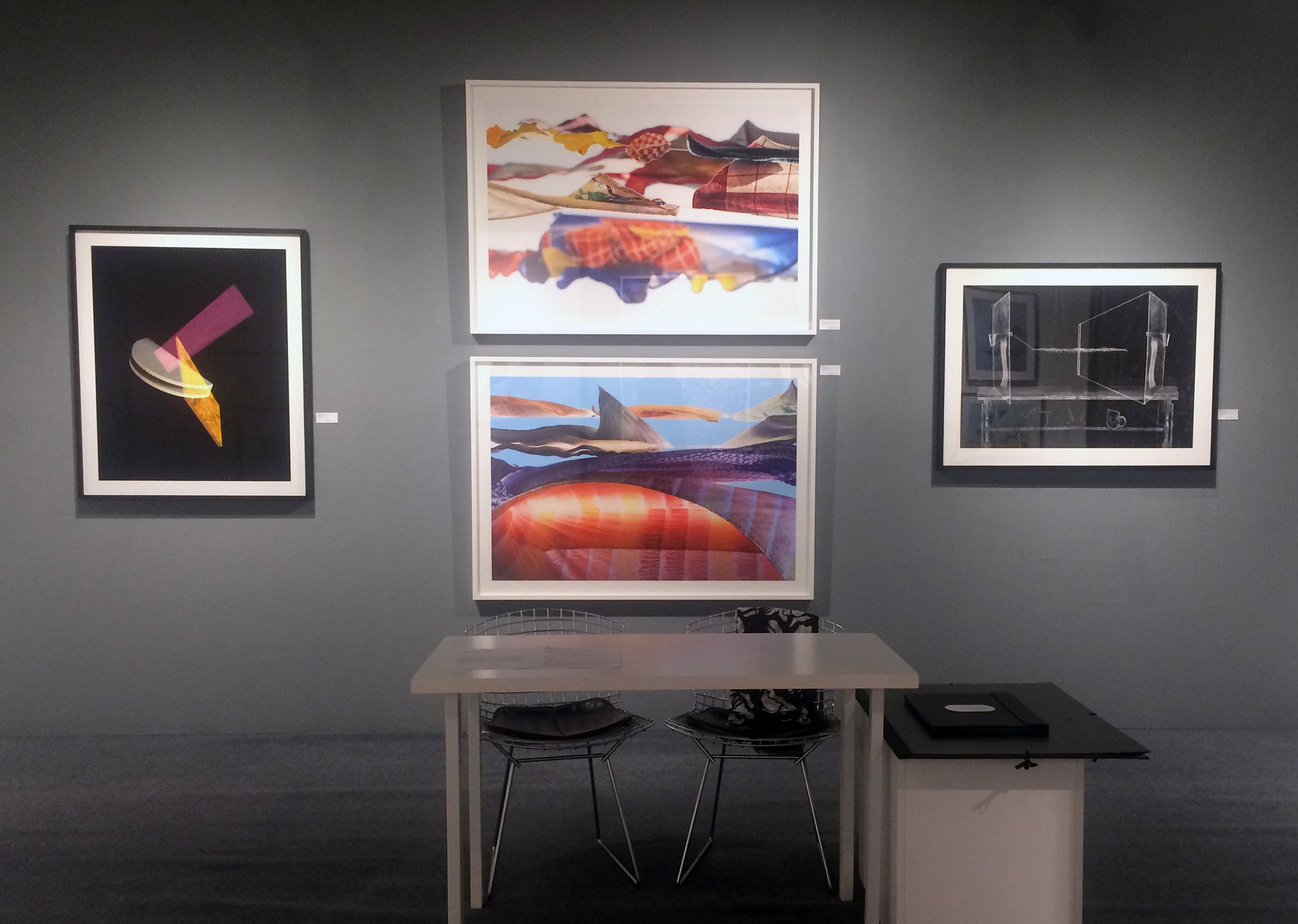
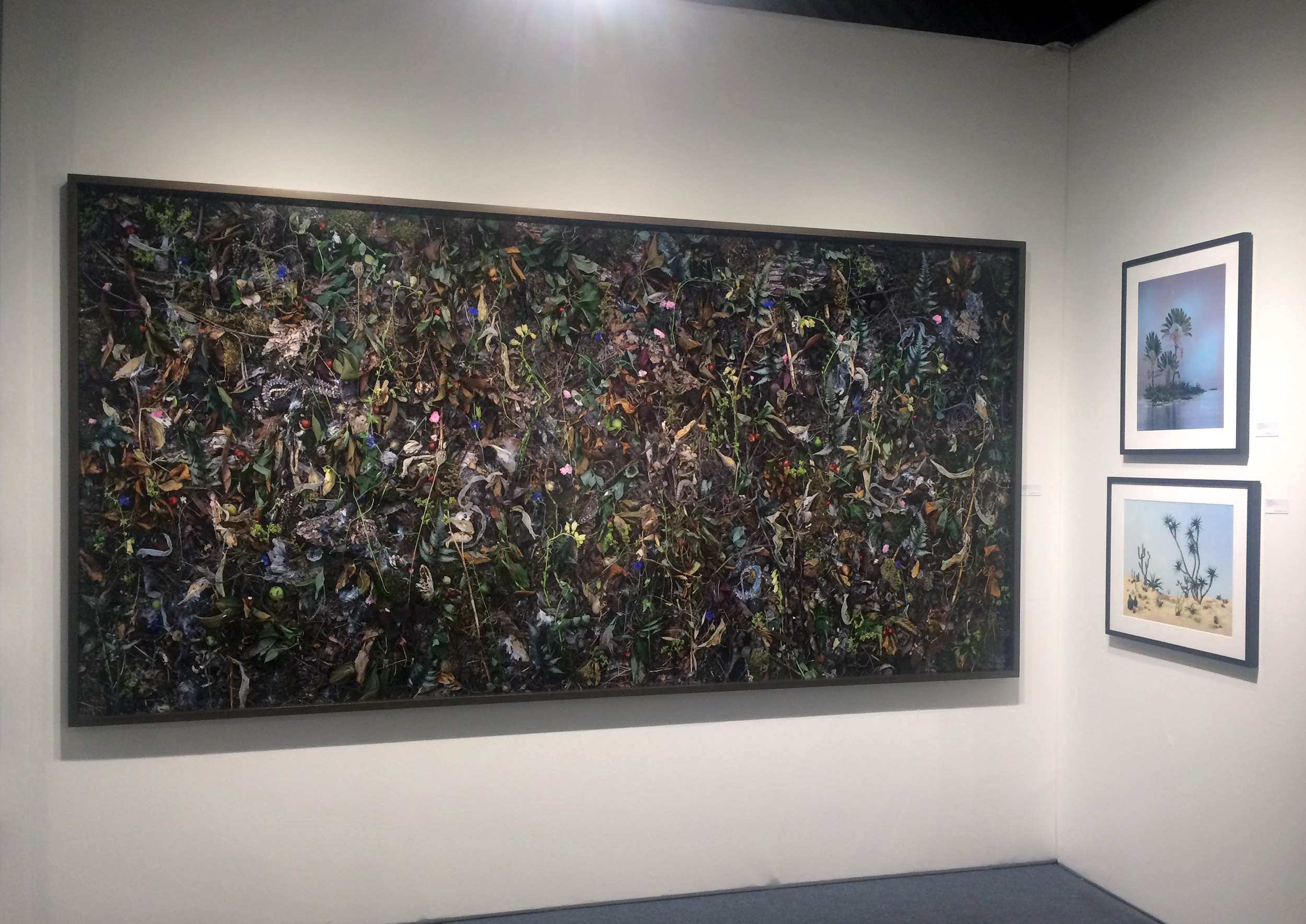
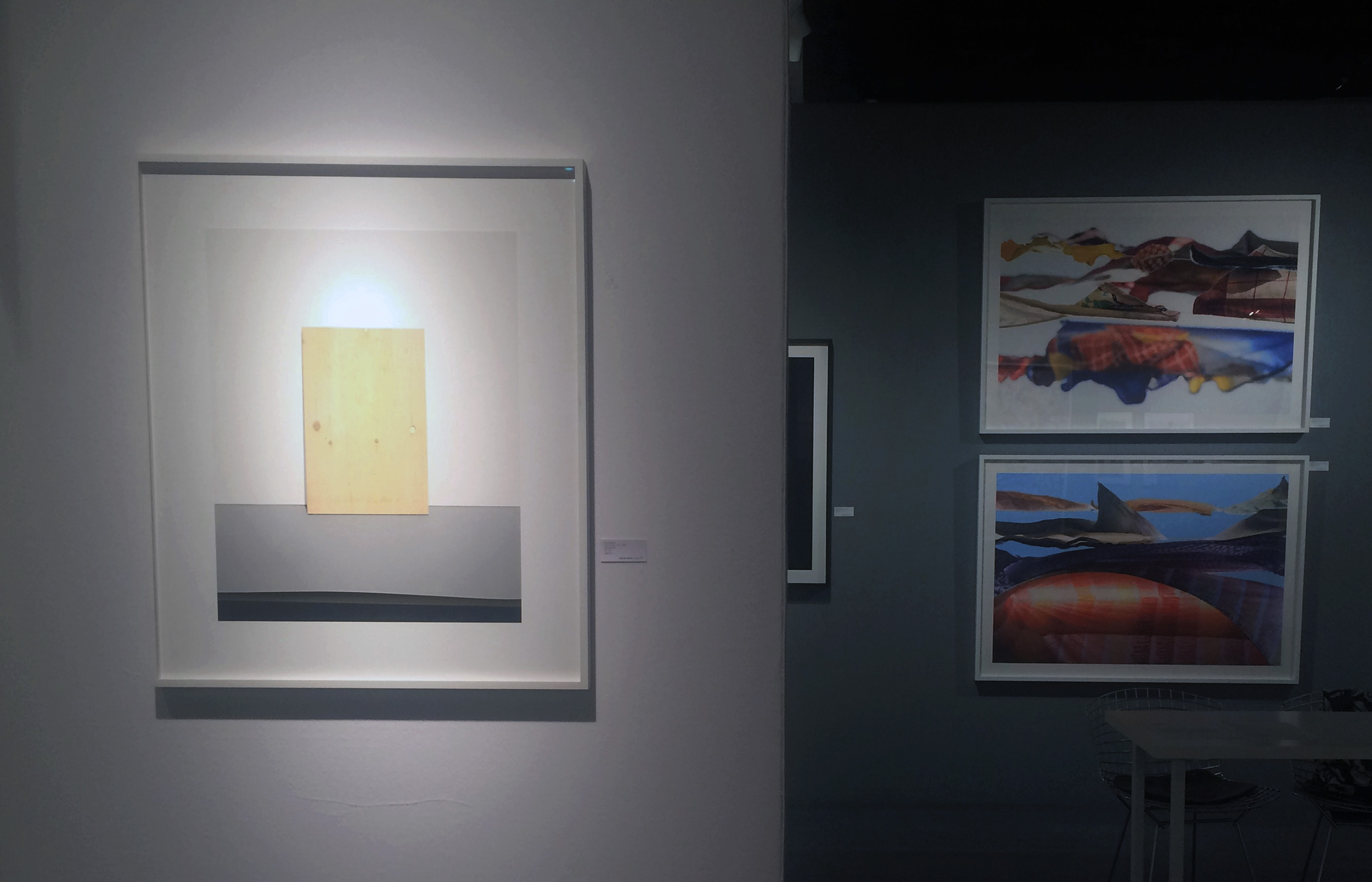
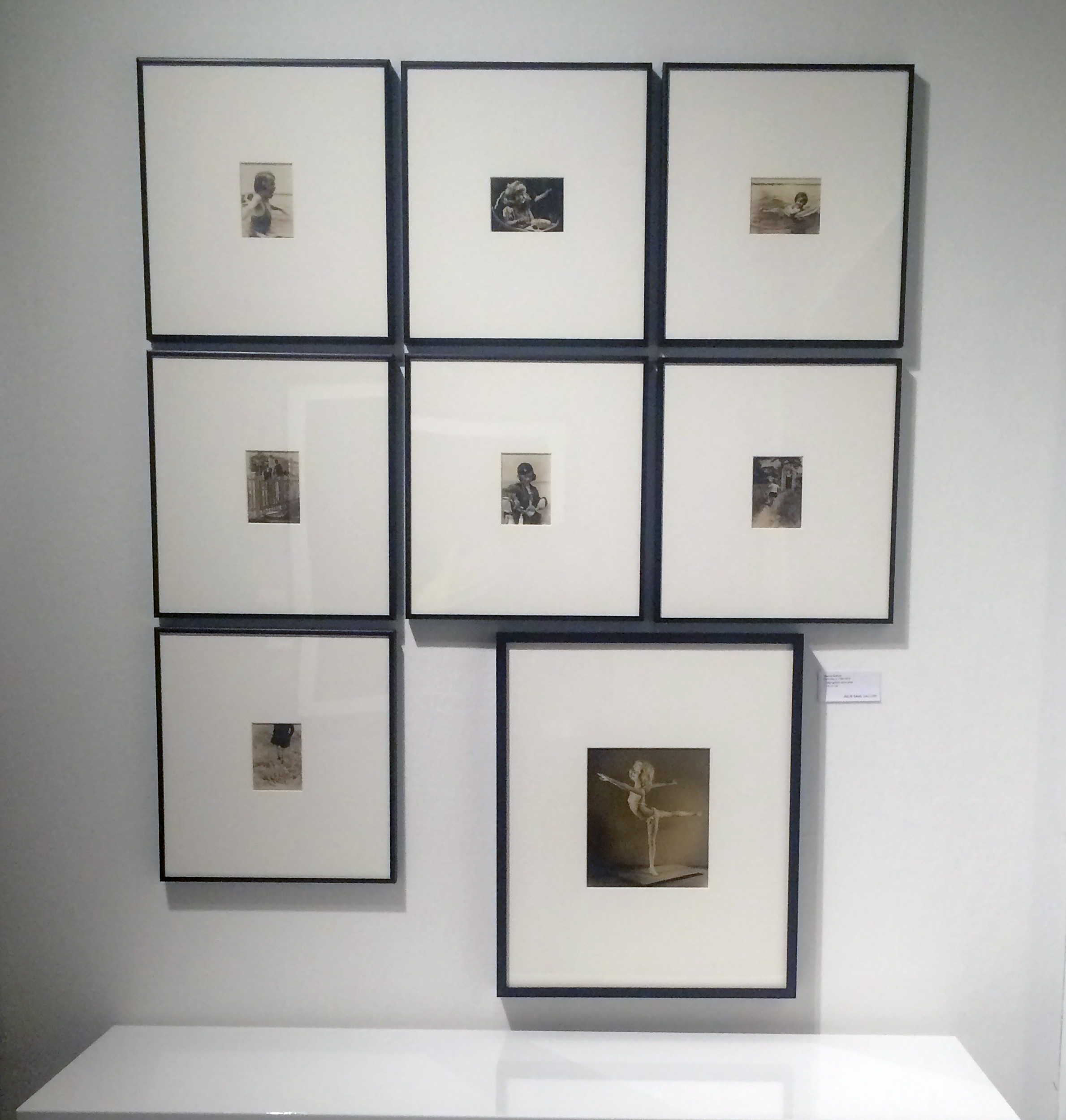
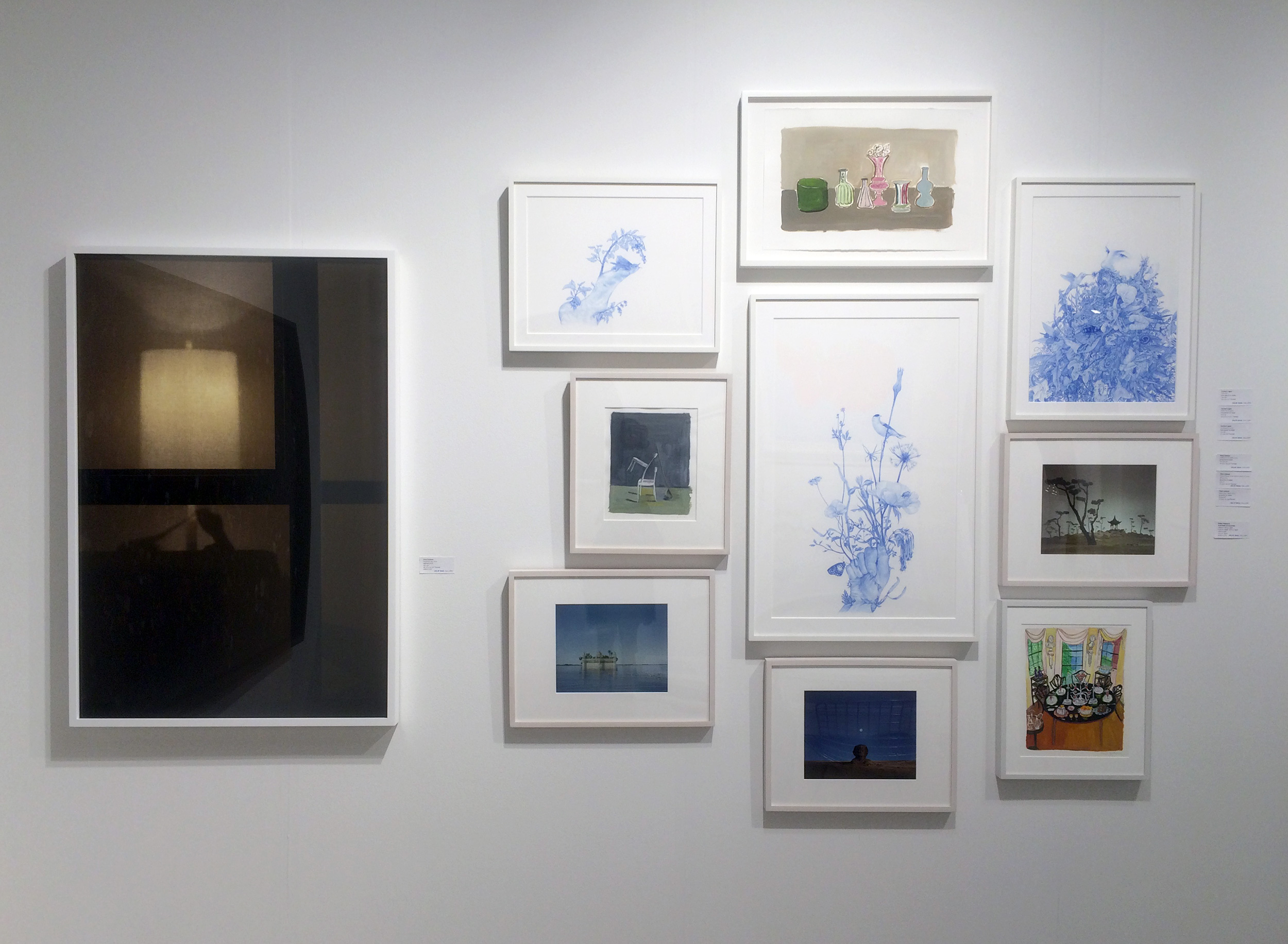
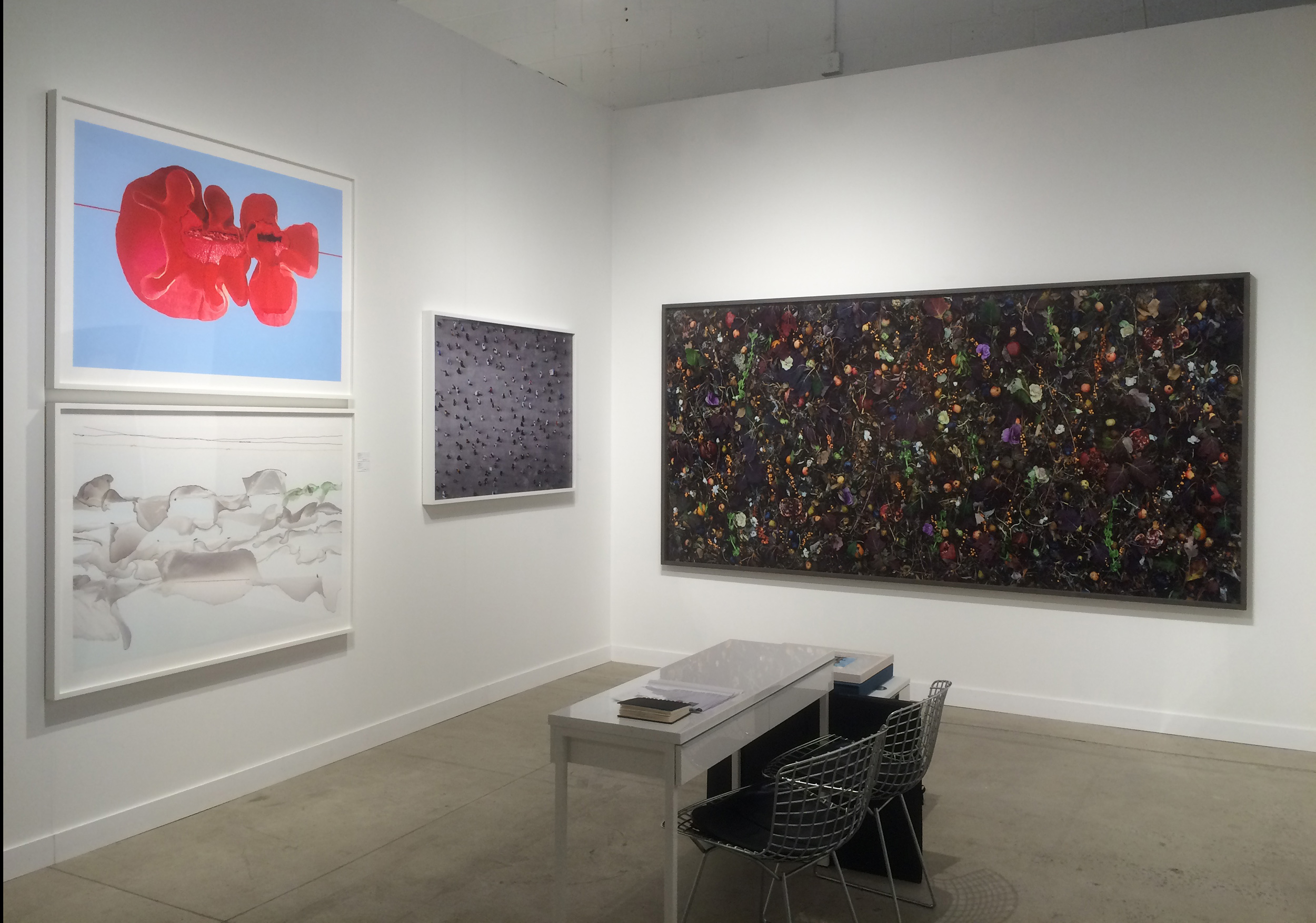
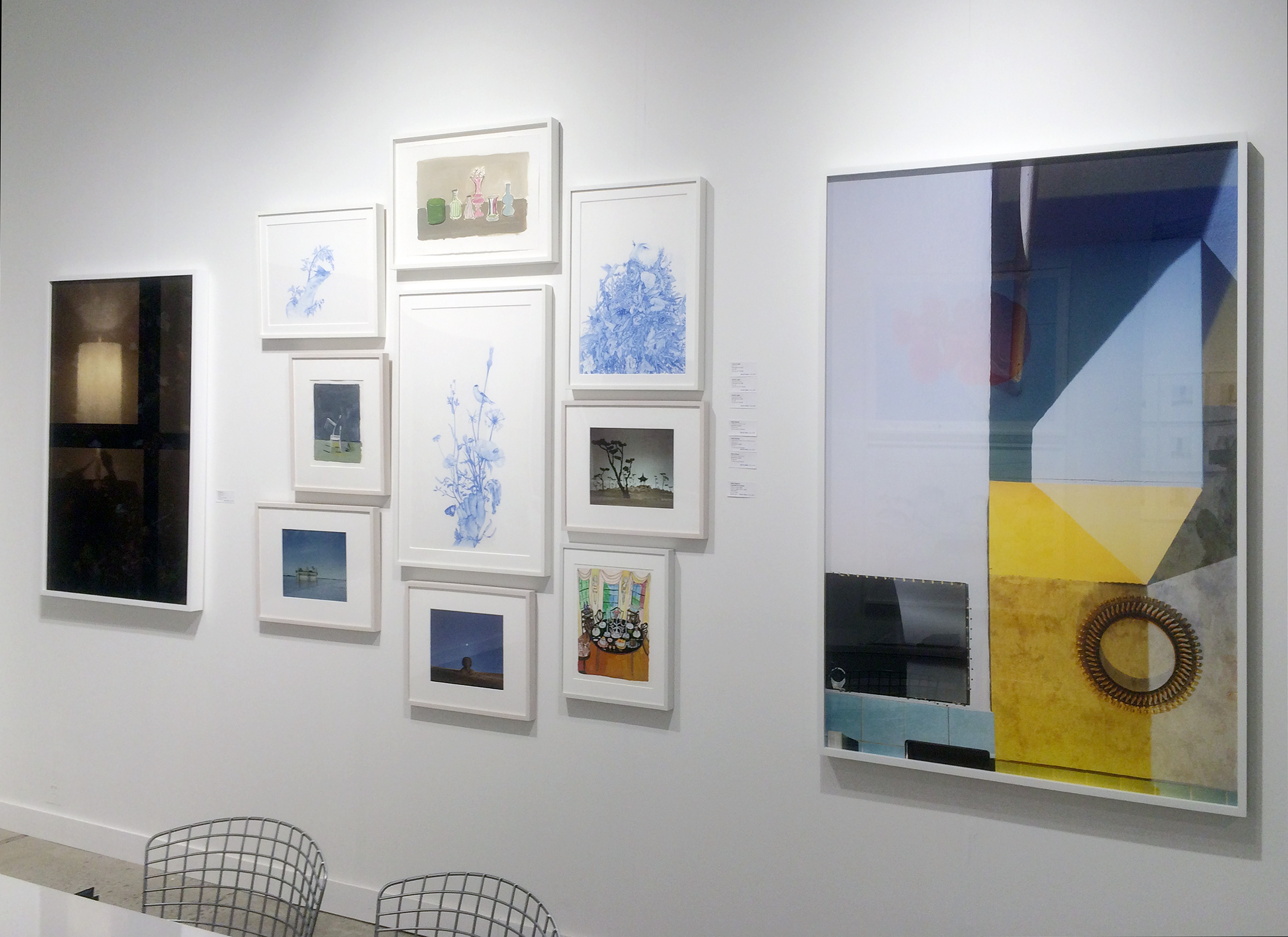
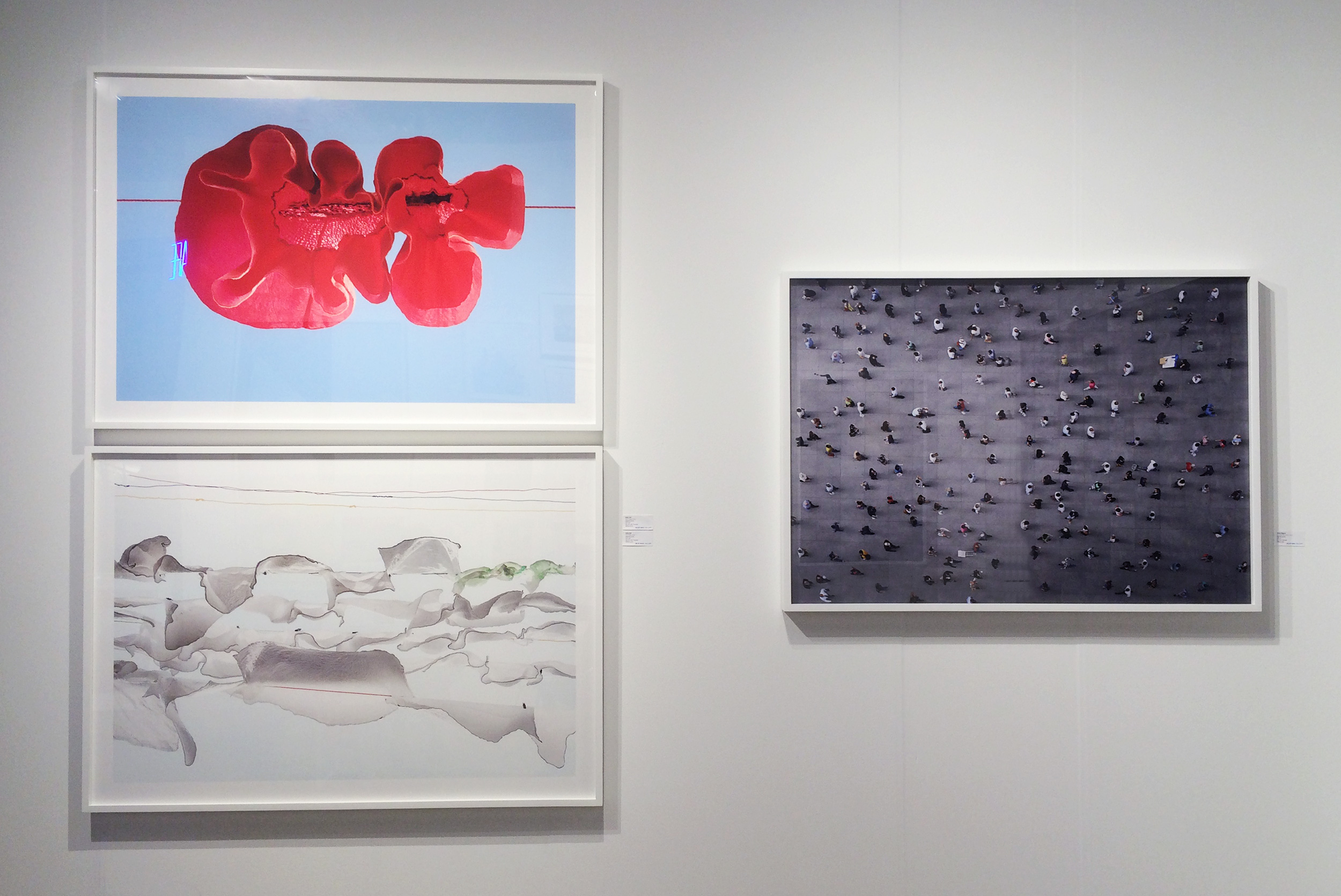
“Part I” is a partial record of exhibitions I worked on with Julie Saul during my 27 year tenure at Julie Saul Gallery, in Soho (1992-2000), and Chelsea (2000-2019). The gallery specialized in contemporary photo-based art, video, and works on paper. Over 150 shows were held during this span, featuring many different artists. A selection is included here. 

Group Exhibitions

19 Years at 535
June 20- July 26, 2019

The Space Between
Group Exhibition on Intimacy
March 7-April 20, 2019

New Vision/New Generation:
László Moholy-Nagy/Alejandra Laviada,
Luigi Ghirri/Andrea Grützner
December 2 – February 3, 2018

Hypernatural
Zachari Logan and Christopher Russell
June 16-August 12, 2016


LandMark:
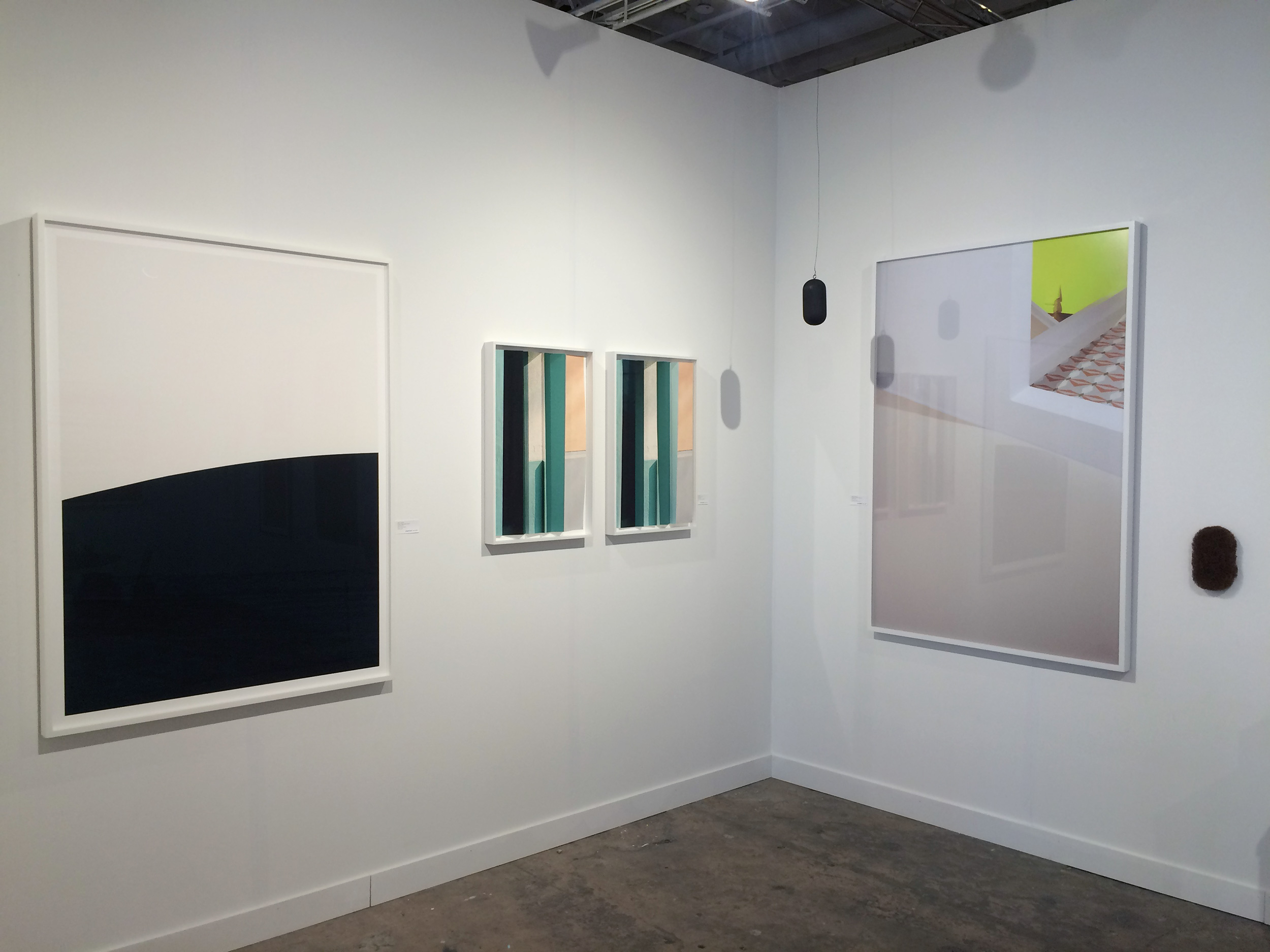
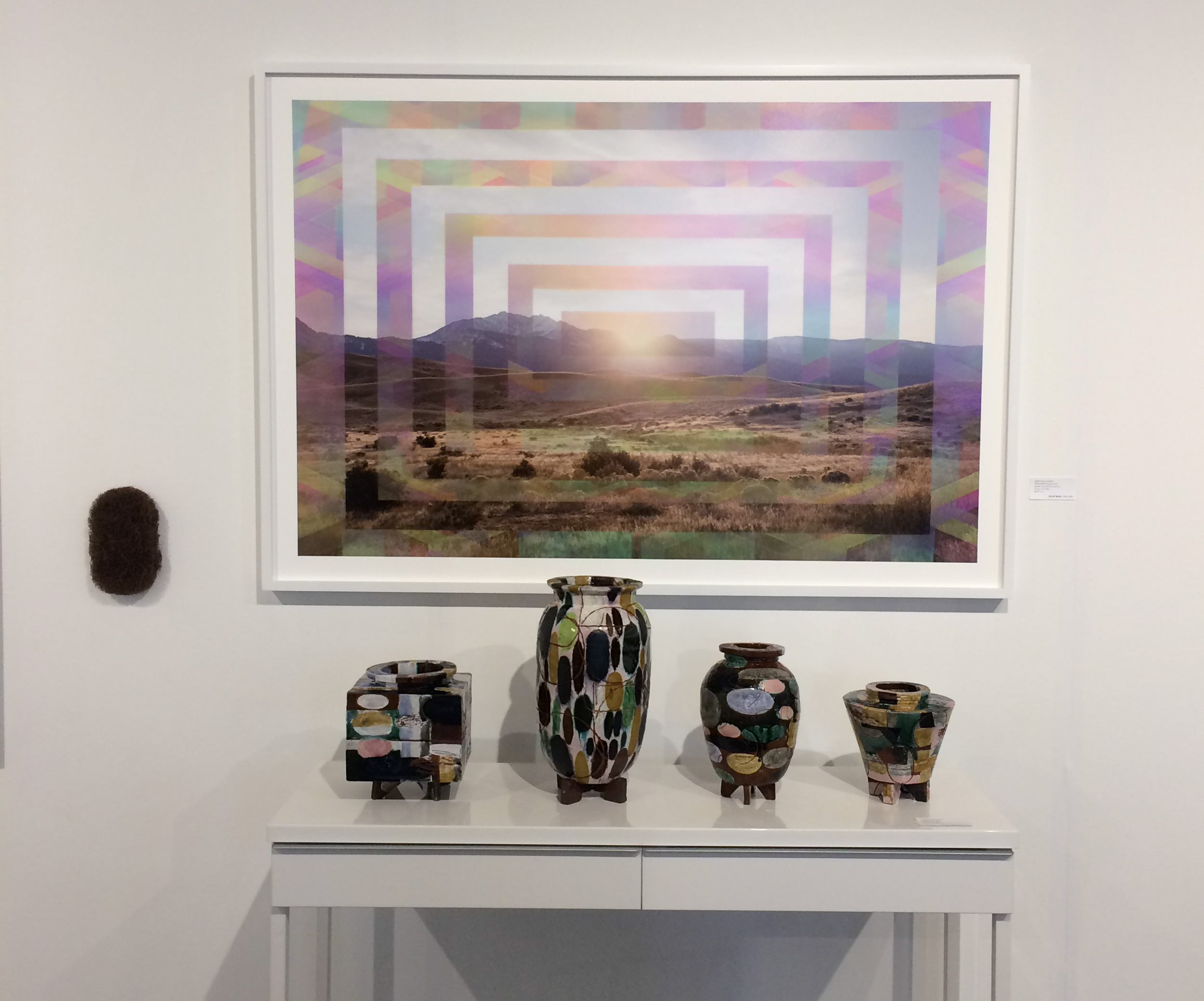
Sarah Anne Johnson,  Alejandra Laviada,
Chloe Sells
June 19-August 15, 2014

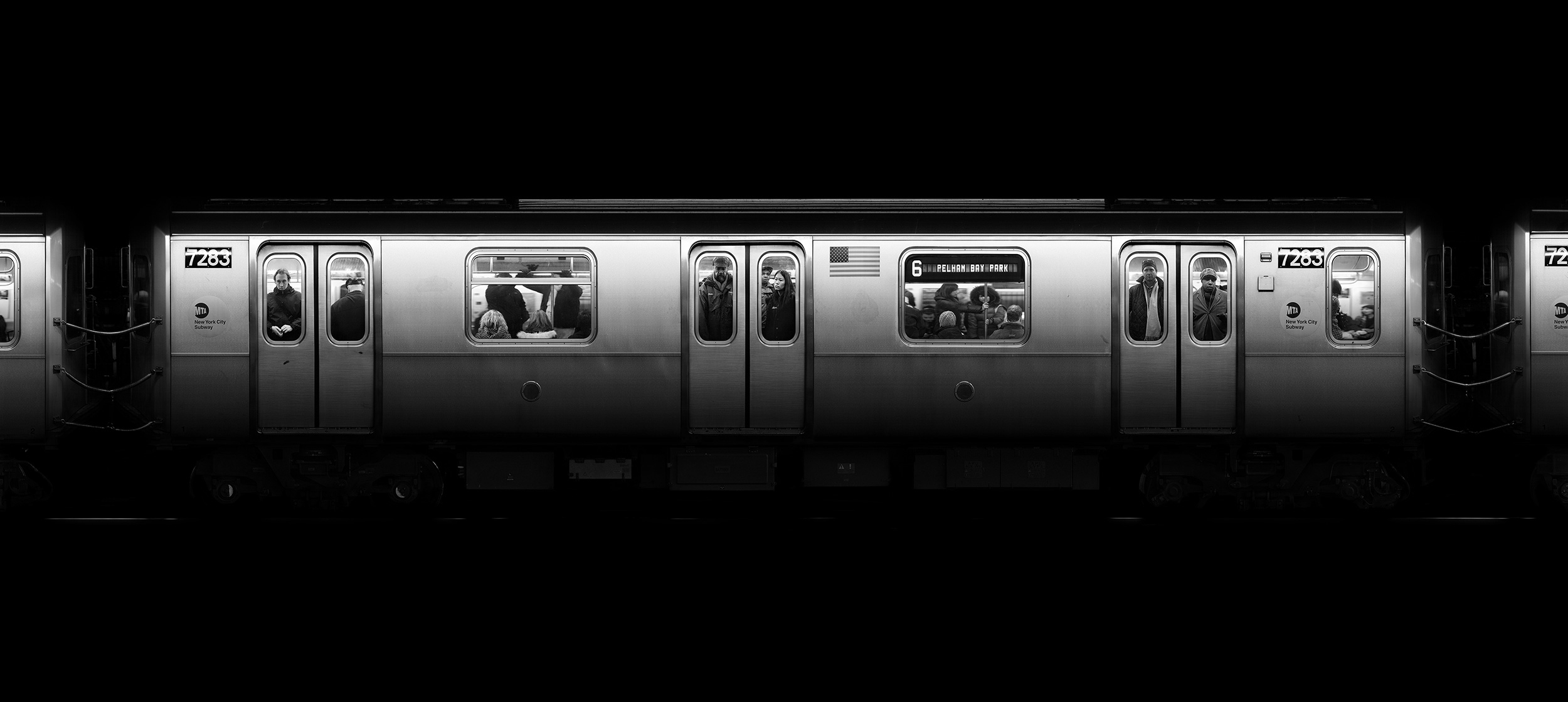
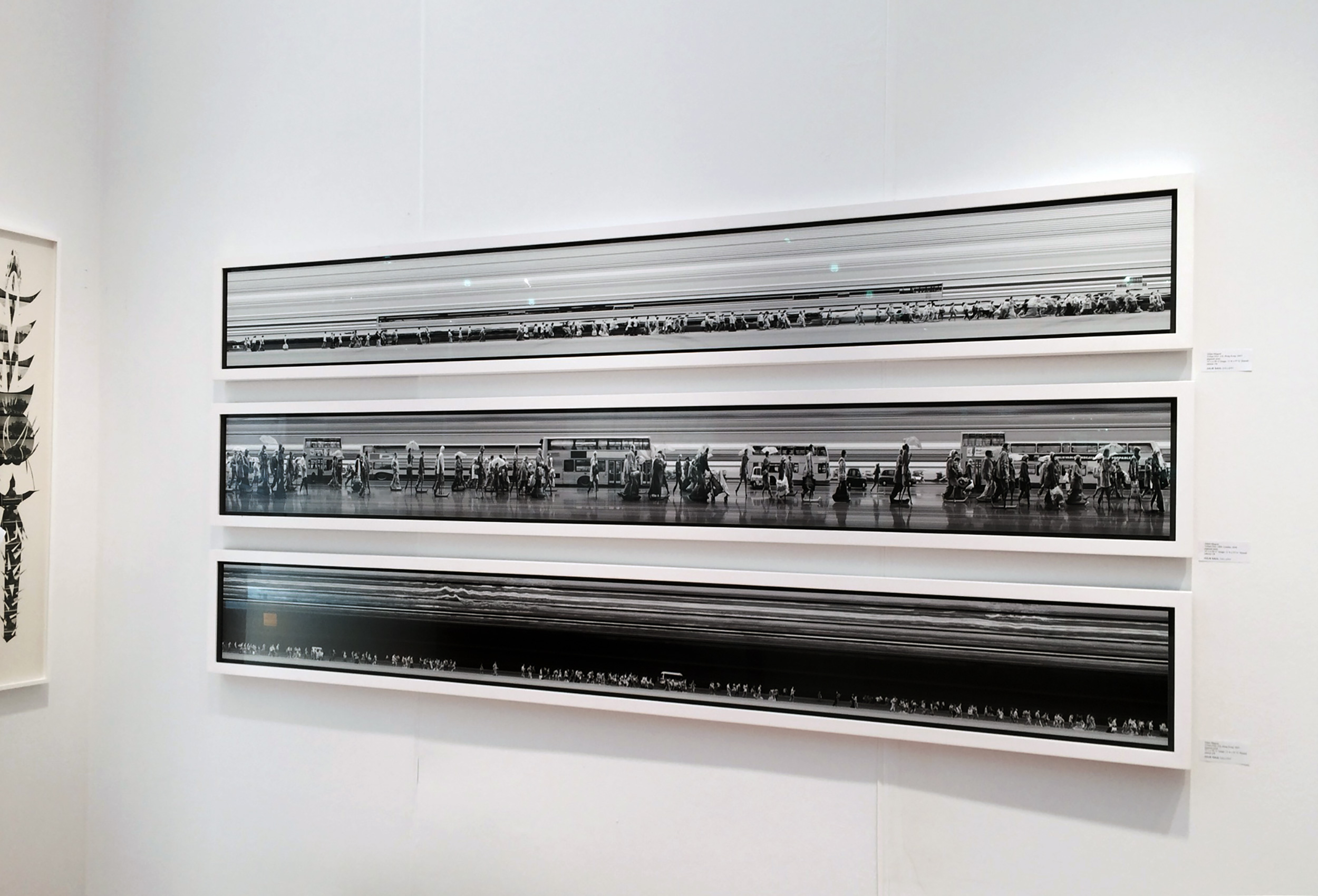
METRO
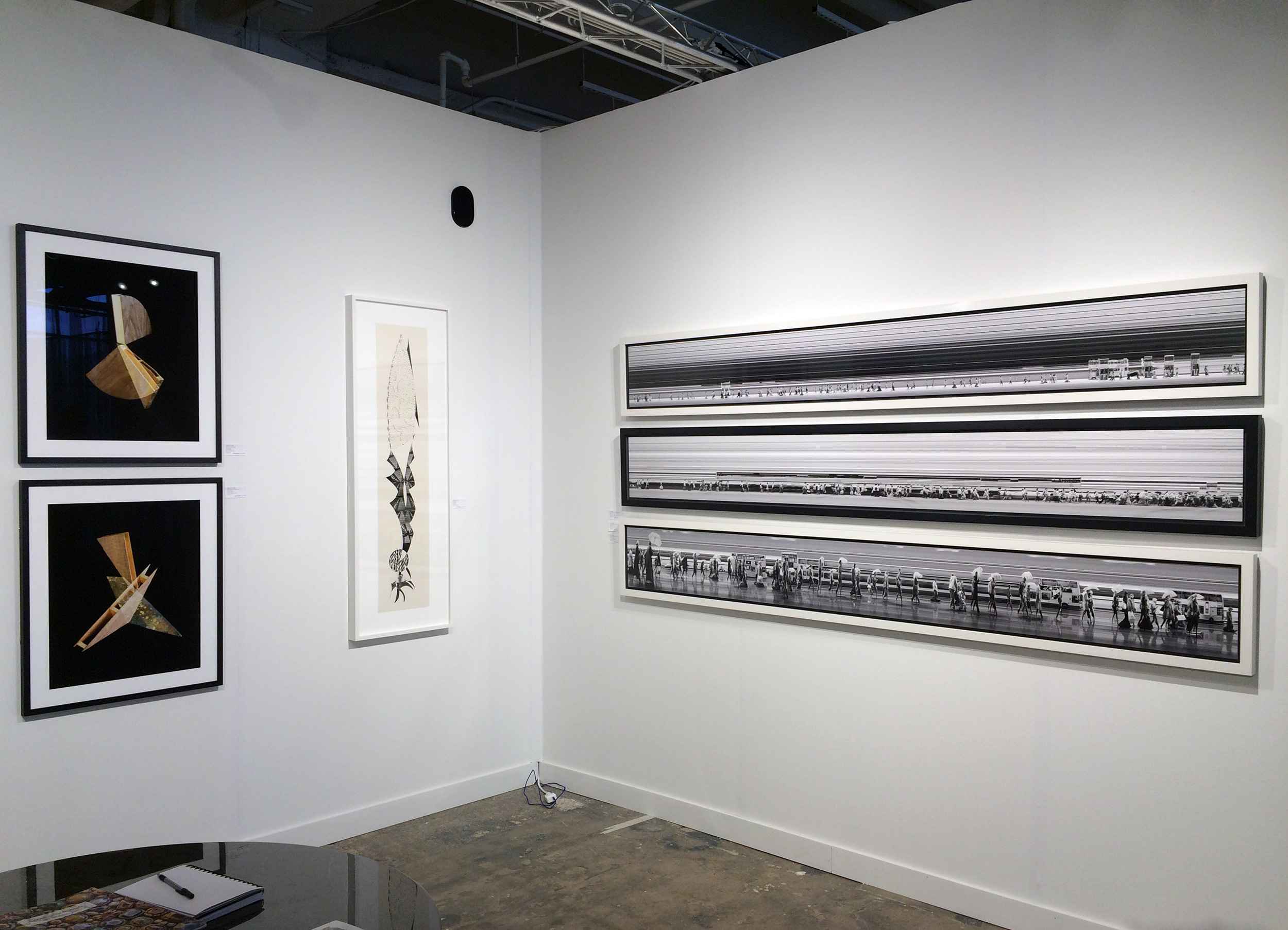
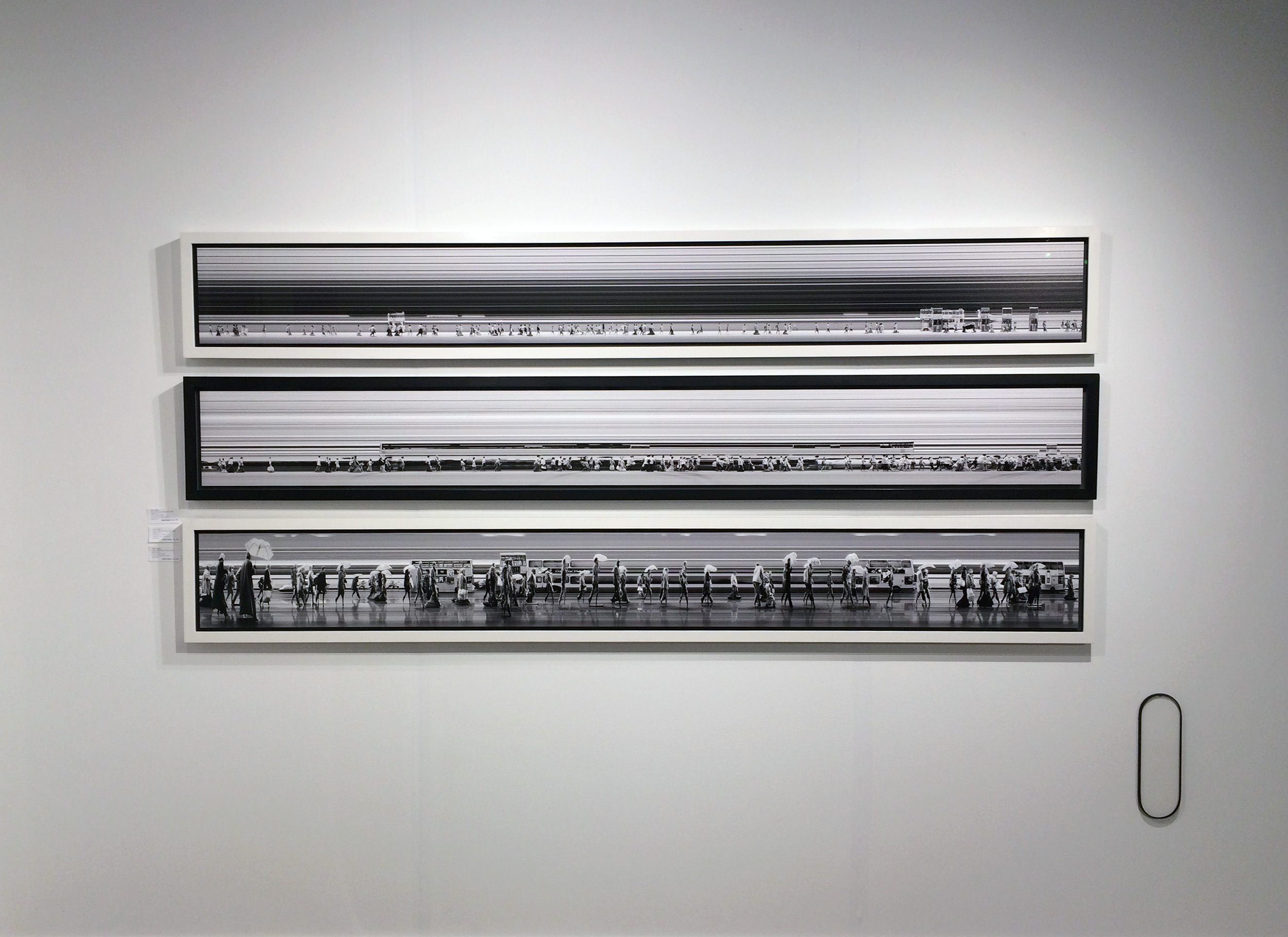
Reinier Gerritsen, Adam Magyar,
David Molander
February 27 – April 19, 2014

The Perfect Storm
June 28-August 17, 2012

Cèline van Balen and
Carla van de Putelaar
June 7-July 6, 2001

Looking back

Julie Saul

Behind the Scenes

History

Neeta Madahar
Falling
October 19 – November 25, 2006
535 West 22 Street, NYC

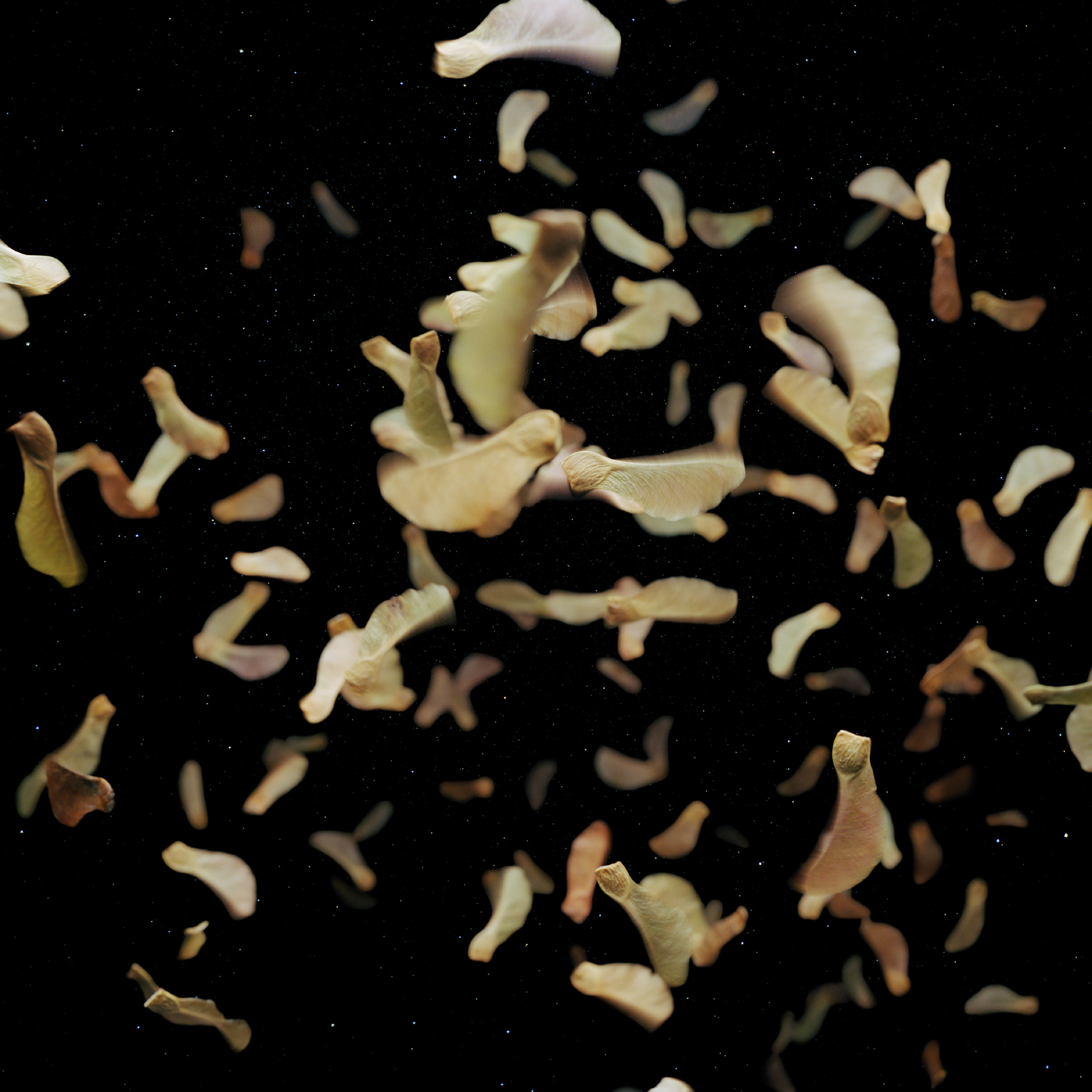
British artist Neeta Madahar will have her second exhibition with the gallery featuring a new series of five photographs and a video projection.    These works feature countless sycamore seeds spinning towards the viewer, seemingly without origin or destination.  In the video the seeds fall from a blue cloud flecked sky: their descent is slowed to a dreamlike pace.  The photographs, which are intended to be seen in an omni-directional manner, represent the leaves against a variety of backgrounds, and the final image brings the viewer back to earth.   The title Falling refers to the literal falling of the seeds but Madahar also uses it to allude to the loss of control.  The experience combines childlike wonder and adult anxiety.

This new project follows her project Sustenance in which she photographed birds feeding on her balcony.  Falling and Sustenance have been combined in a beautiful catalog entitled Nature Studies published by Photoworks in the UK who sponsored her film along with Fabrica and inVIA (Institute of International Visual Arts) in London.

Her work is in a number of public collections including the Victoria and Albert Museum,  the Nelson Atkins and the Kemper in Kansas, the Fogg Art Museum and the DeCordova in Masachusetts.

Exhibition @ Julie Saul Gallery

Skin/Deep:
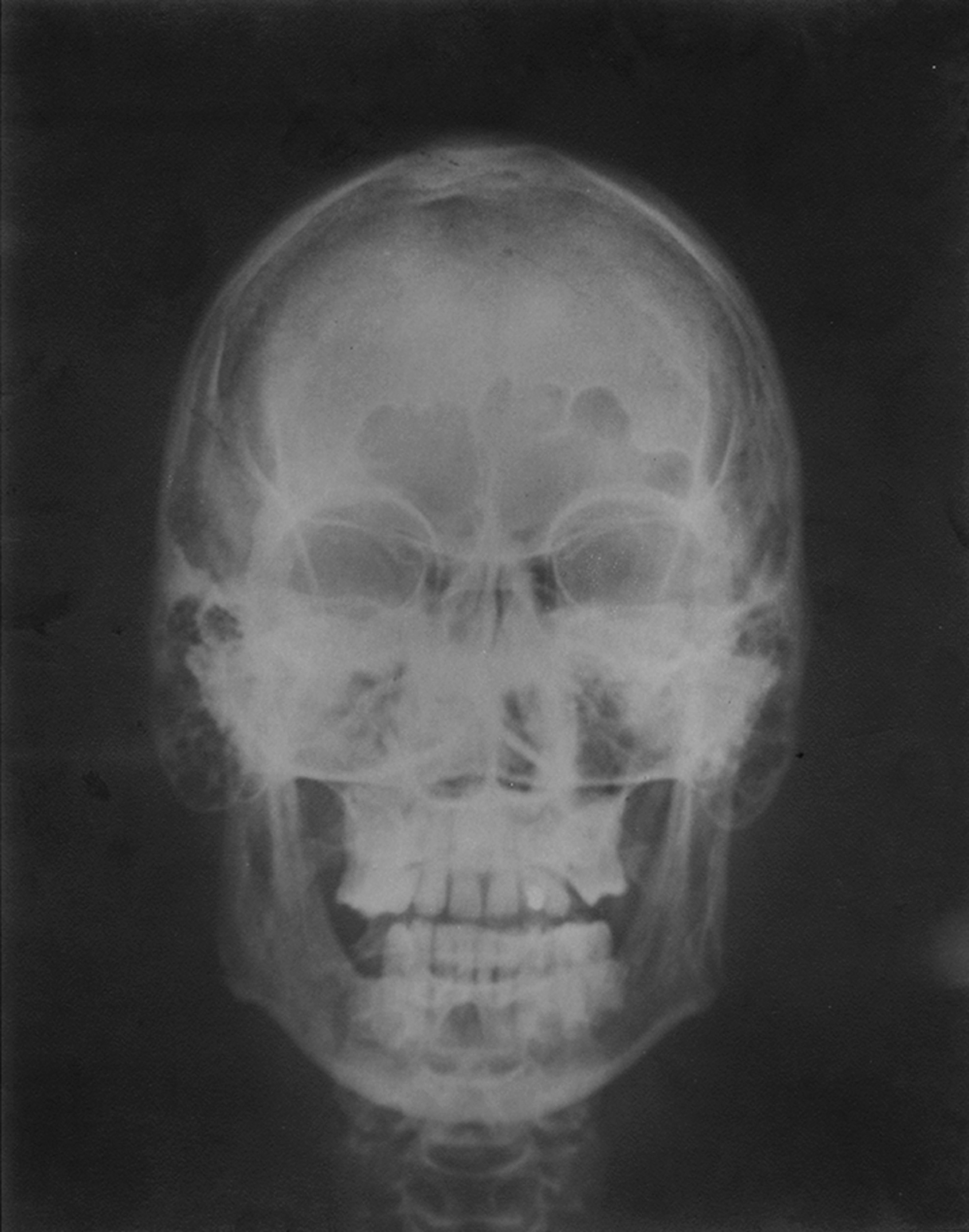
A Survey of Interior Imaging from X-Ray to MRI
December 3, 1998 through January 16, 1999
The gallery will be closed from December 24 through January 5th. 
535 West 22 Street, NYC

Skin/ Deep is the third in a series of historical photography surveys organized by the Julie Saul Gallery in which we look at the treatment of a scientific subject through time, and the attendant technical and aesthetic evolution. Previous surveys were on the topics of botanical and lunar photography. The thesis of each of these exhibitions is that there is always a strong presence of aesthetic choices in “pure” scientific or documentary imagery (partially due to available technology), which only becomes evident in retrospect.

The discovery of the X-Ray was announced in a paper published on December 28, 1895 by the German physicist Wilhelm Conrad Roentgen. This miraculous new method which enabled one to see the interior of solid bodies went into immediate use as a diagnostic tool and parlor game. Through time, its positive potential and harmful effects were explored and developed by scientists, doctors and technicians. In the last twenty years many new related technologies have been developed and put into use, including CT (computerized tomography), MRI (magnetic resonance images) PET (positive emission tomograph) and ultrasound.

Artists have explored the possibilities of the medium as a form of artistic and metaphorical expression and have used it in response to the wonder, beauty and horror of science and radiation. In fact analytic cubist painting can be seen as an early reflection of the transparent interior world of x-ray images.

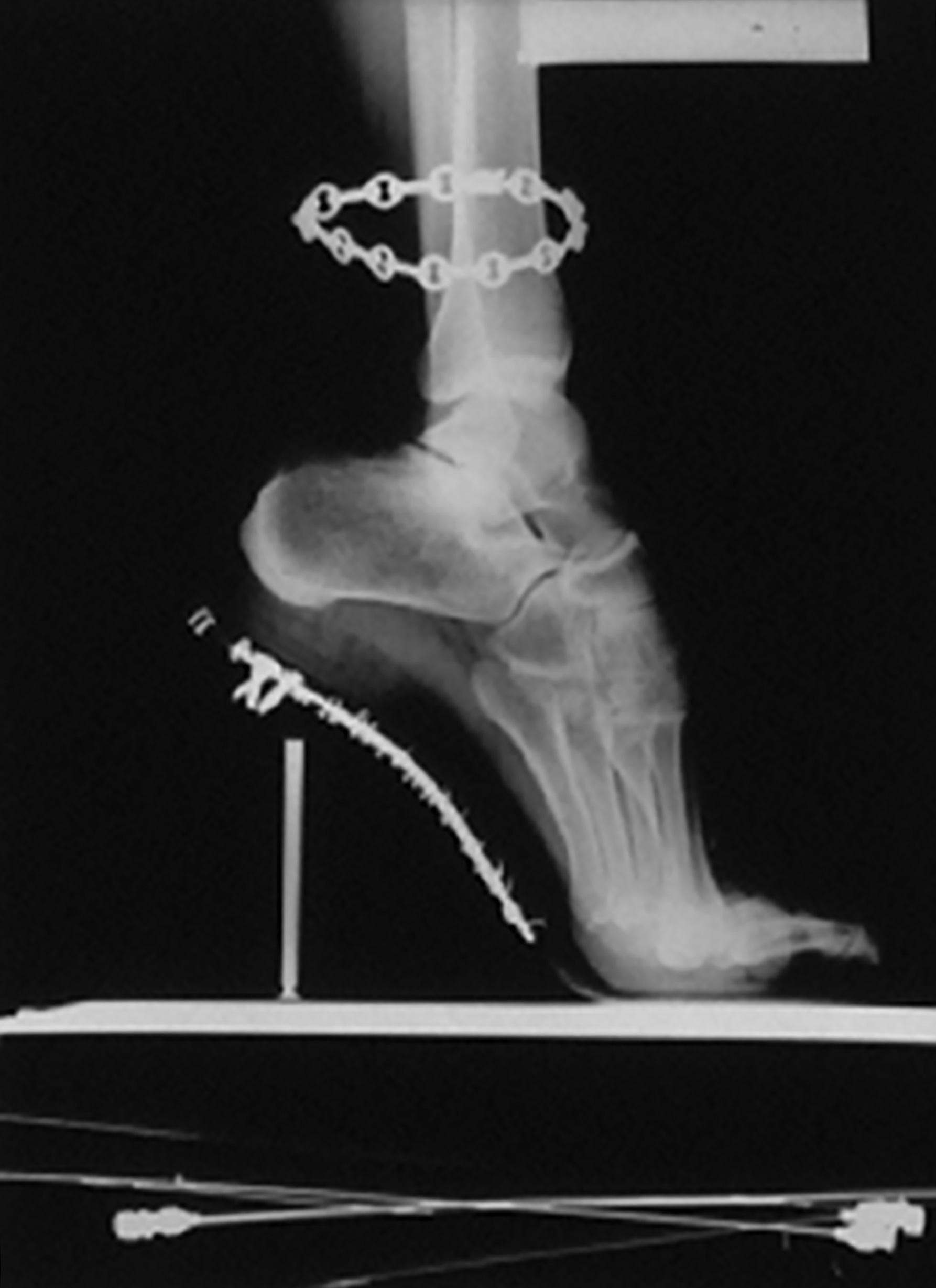
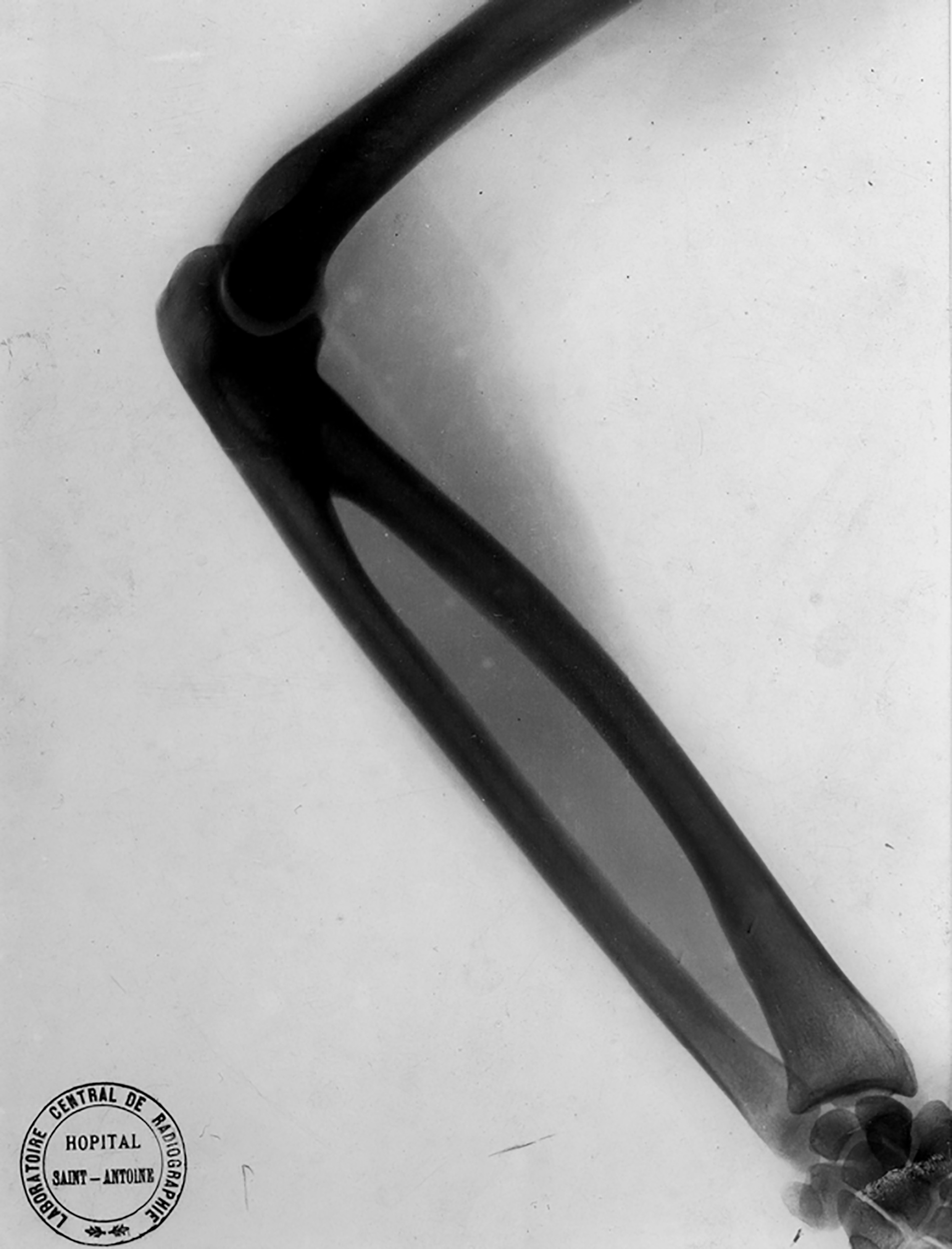
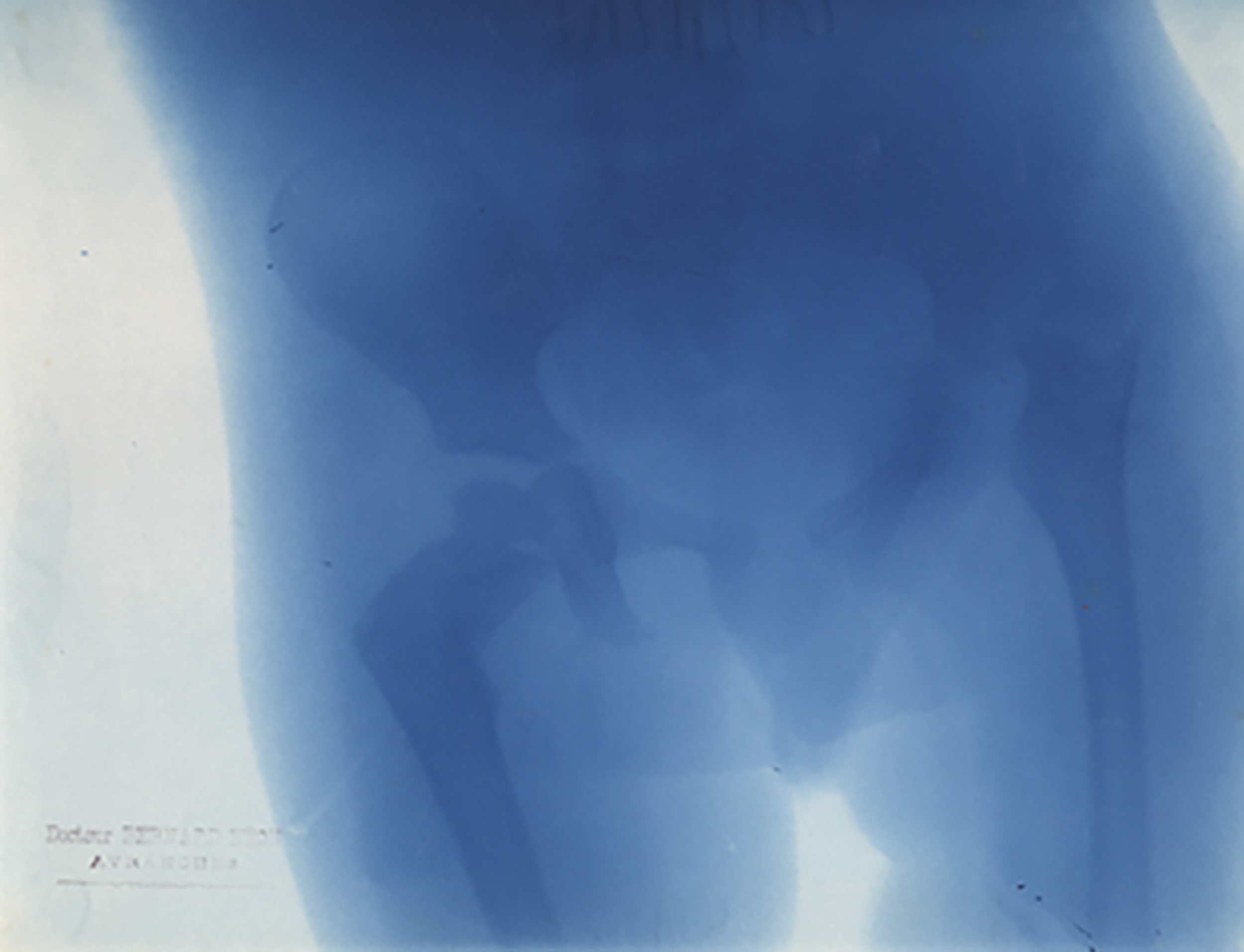
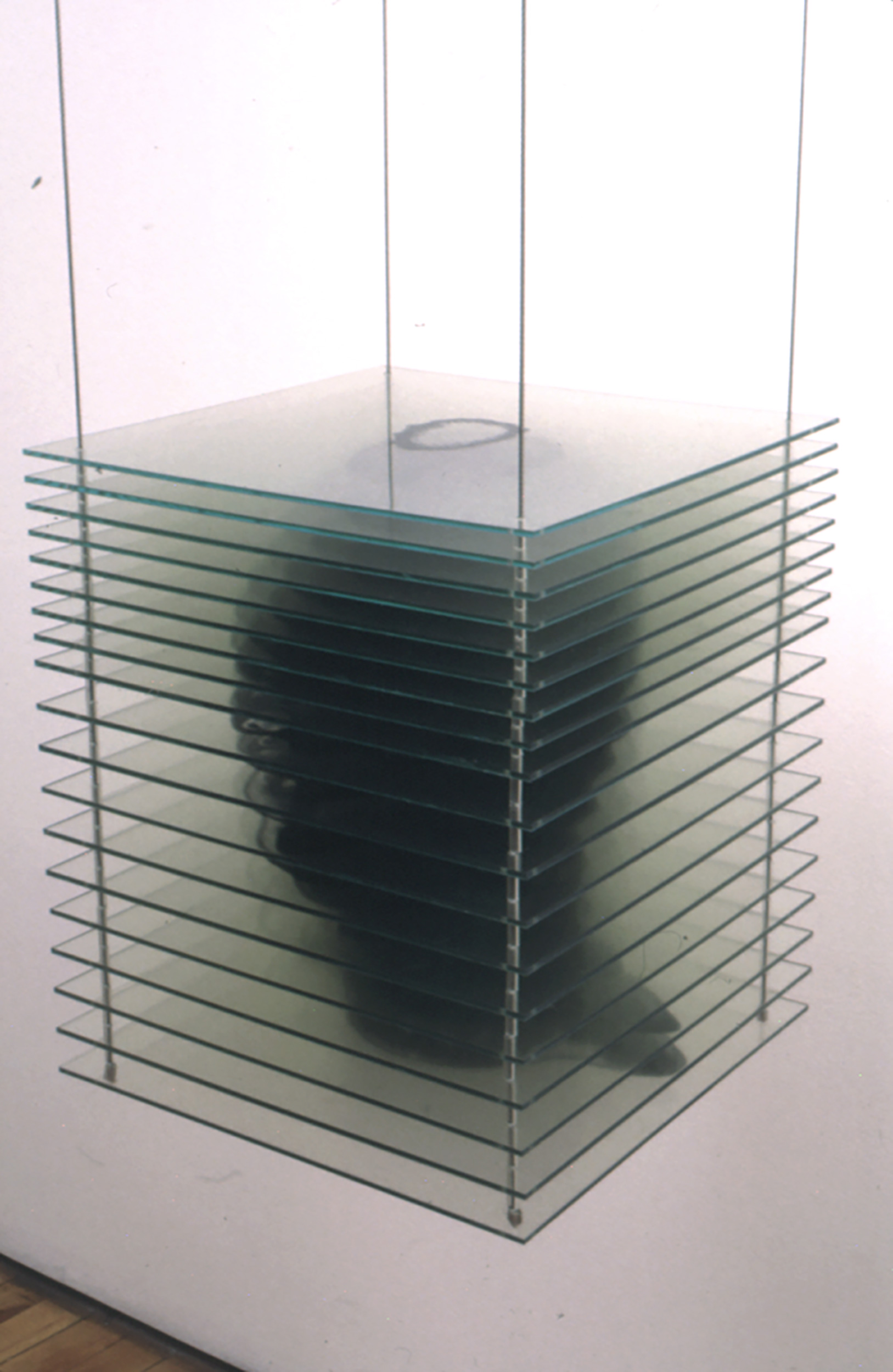
SKIN/DEEP begins with several examples of X-Ray which were produced before 1900, including an exquisite cyanotype of a pelvic bone, an albumen print of a hand and later examples from the 1920s in the form of silver prints. Other examples of imaging techniques include three cyanotypes made from life-size thinly sliced cross-sections of an entire human body. These haunting representations of bone, organs and tissue merge science and art.

Publications spread the knowledge of X-Ray to the scientific community and the general public. The show will include the first English language announcement of Roentgen’s discovery featuring the first published X-ray of his wife’s hand wearing her wedding ring. Also, the influential 1925 Painting Photography Film by Laszlo Moholy-Nagy in which the constructivist theorist places images by artists alongside scientific and technical imagery.

Contemporary works by artists using X-Ray prints include an enormous lithograph by Robert Rauschenberg from 1969, and recent works by Vik Muniz, Andrew Bush, Helmut Newton, Kunie Sugiura, Michael Spano and others. A portrait of Laurie Anderson by Annie Liebovitz in the form of a CT scan, and an MRI self portrait by Australian artist Justine Cooper demonstrate the use of advance imaging techniques by contemporary artists.

Exhibition @ Julie Saul Gallery

Chien-Chi Chang
Chinatown
April 16- May 22
Reception for the artist, Friday April 16, 6 – 8 PM
535 West 22 Street, NYC

We are pleased to announce an exhibition of color photographs by Magnum photographer
Chien-Chi Chang from his Chinatown project published by National Geographic in 1998.
Most of the works in the selection were shot in 1996, and several were made in 2002.
The Chinatown images are quiet and keen observations with an insiders eye of the private
side and everyday life of this New York community. Chang received a great deal of
attention at the Strangers Triennial Exhibition at the ICP last fall with his moving series
of large scale black and white portraits of mental patients chained together as a therapy.
This exhibition is part of the first annual Magnum in May celebration which will
encompass twenty exhibitions in New York. Additional press and a map with listings are
available through www.magnumphotos.com .

Chang has been a Magnum member since 1995. He has won several awards, including
the W. Eugene Smith Award on Humanistic Photography in 2000 and has two monographs in print: I do I do I do about marriage in Taiwan and the Chain. His work
has been exhibited internationally including at the Bienal de Sao Paolo and the Biennale di Venezia in 2001 and 2002. His work is in the Queens and the Los Angeles County
Museums of Art.

Exhibition @ Julie Saul Gallery

WORDPLAY
Curated by Tamar Cohen
June 17-August 19, 2005
Reception: Thursday, June 23, 6 to 8 p.m.
535 West 22 Street, NYC

The Julie Saul Gallery is pleased to announce our summer group exhibition WORDPLAY.
The curator, Tamar Cohen, has assembled a collection of recent work created by twenty three
well known and emerging artists. This group of work, executed in a range of mediums and
materials, celebrates the diversity of letter forms, words and text as a visual expression in
contemporary art.

The playful use of words and typography in art, first introduced in the early cubist
collages of Picasso and Braque, has became a visual staple in the vocabulary used by
artists since that time. One has only to look at work ranging from the Futurists,
Constructivists and Marcel Duchamp to Bruce Nauman, Jenny Holtzer and Jean-Michel
Basquiat to appreciate the variety, richness and wealth of visual opportunities that text
can provide.

There are myriad sources of typographic and textual inspiration represented by the artists
in WORDPLAY. There are found moments as seen in the photographs of Jeff Brouws
and Orit Raff, as well as quotes and expressions used by Maira Kalman in her text and
image embroideries, Shannon Ebner in her photograph, Joe Amrhein in his glass sign
painting, Bill Rowe in his neon sculpture, Steve Powers in his aluminum supergraphic
signs and Beth Campbell in her drawing. Kate Shepherd, Elaine Lustig Cohen, Abelardo
Morell and Meena Park focus on the formal purity of the letter form in a range of
mediums from painting and photography to collage. Literary texts form the basis of both
Nicholas Knight’s diagramed sentences and Steven Roden’s witty pencil drawings. Mel
Bochner cleverly uses word synonyms in his monoprint and Vik Muniz employs the
letters of his name to create his self portrait. Tao Rey uses his own graffiti style
handwriting on a sculptural street sign. Also included are the colored pencil drawings of
Edward Fella, well known in the world of graphic design. Other artists included are
Matthew Brannon, Graham Gillmore, Priscilla Monge, Larry Mullins and Jack Pierson.

Exhibition @ Julie Saul Gallery

Didier Massard
Artificial Paradise
September 4 – October 11, 2003
535 West 22 Street, NYC

The Julie Saul Gallery is pleased to announce our second solo exhibition of new photographs by French artist Didier Massard. Massard works slowly, and it has required five years since his last show here for him to complete a new cycle of work, following “Imaginary Journeys”. Massard’s fabricated photographs are records of elaborate studio constructions requiring meticulous craftsmanship and masterful lighting. Like a magician he conjures up fantasy worlds which have one foot in reality and the other in the imagination. The eight large scale prints in the show are all landscapes which evoke associations ranging from Shangri-la to a haunted forest. “Artificial Paradise” includes a series of trees representing the four seasons, a Japanese architectural folly, an enchanted waterfall and a mangrove forest.

Roberta Smith described Massard as having “a genius for lighting effects (with a) seamless refinement so perfect and strangeÙthat it gradually gives itself awayÙone’s willingness to suspend disbelief is a measure of Mr. Massard’s skill. Fastidious detail create(s) a sense of illusion and artifice that is more usual to painting, Magic Realist Painting in particular.”


The sense of illusion is subtly challenged by details of scale and space. In this new work one is reminded of the enchanted landscapes of opera and classical ballet stage sets, harkening back to Massard’s early experience with theater lighting and film. The most recent work, “Mangrove”, is so densely filled with details that it fully requires the large format of the cibachrome prints to take it in.

A monograph was published in France of Massard’s work last year by Le Passage, which is available at the gallery and a solo exhibition of his work was recently toured throughout France by FNAC. He also participated in a traveling group exhibition entitled “Constructed Realities” organized by Cooper Hewitt curator Barbara Bloemink.

Massard’s work is featured in many international collections including the Musee d’Elysee in Lausanne, the Museum of Fine Arts, Houston, SEI Corporation, Citibank, Deutsche Bank, U.S. Trust, Reader’s Digest, AXA and the Progressive Corporation.

Exhibition @ Julie Saul Gallery

Todd Hido
Roaming: New Landscapes

September 9 – October 16, 2004
Opening Reception and Book Signing: Thursday, September 9, 6 to 8 p.m.
535 West 22 Street, NYC

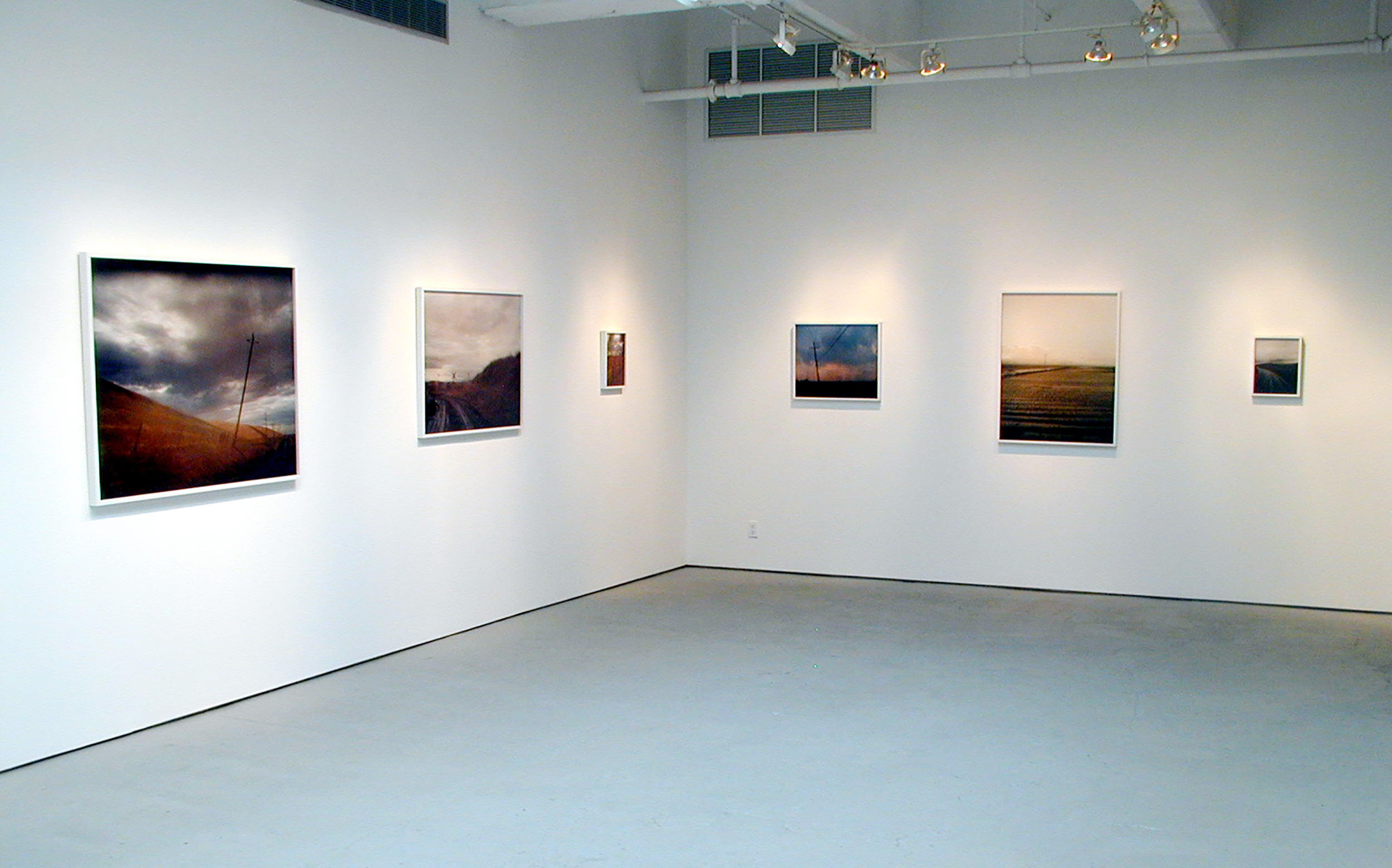
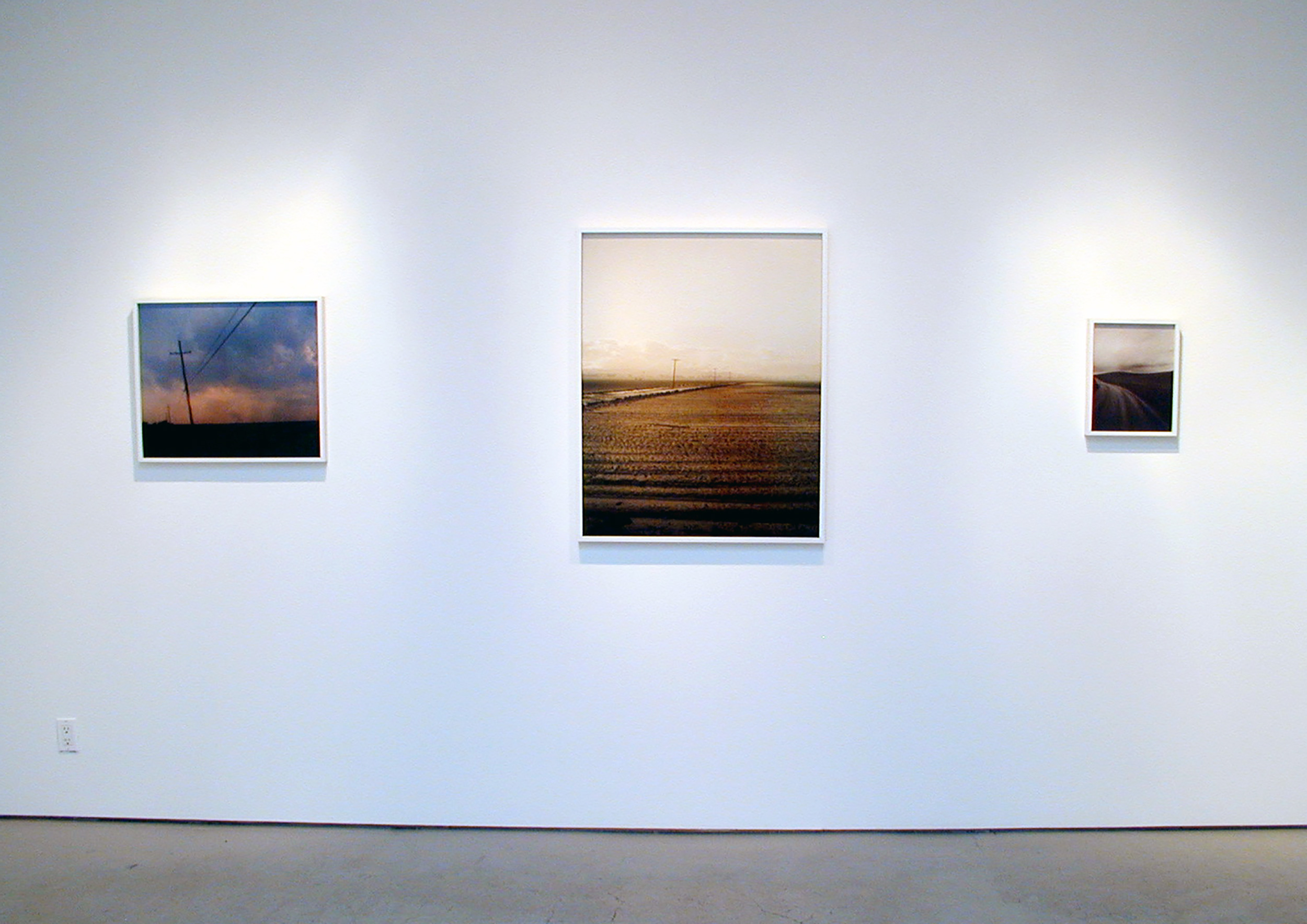
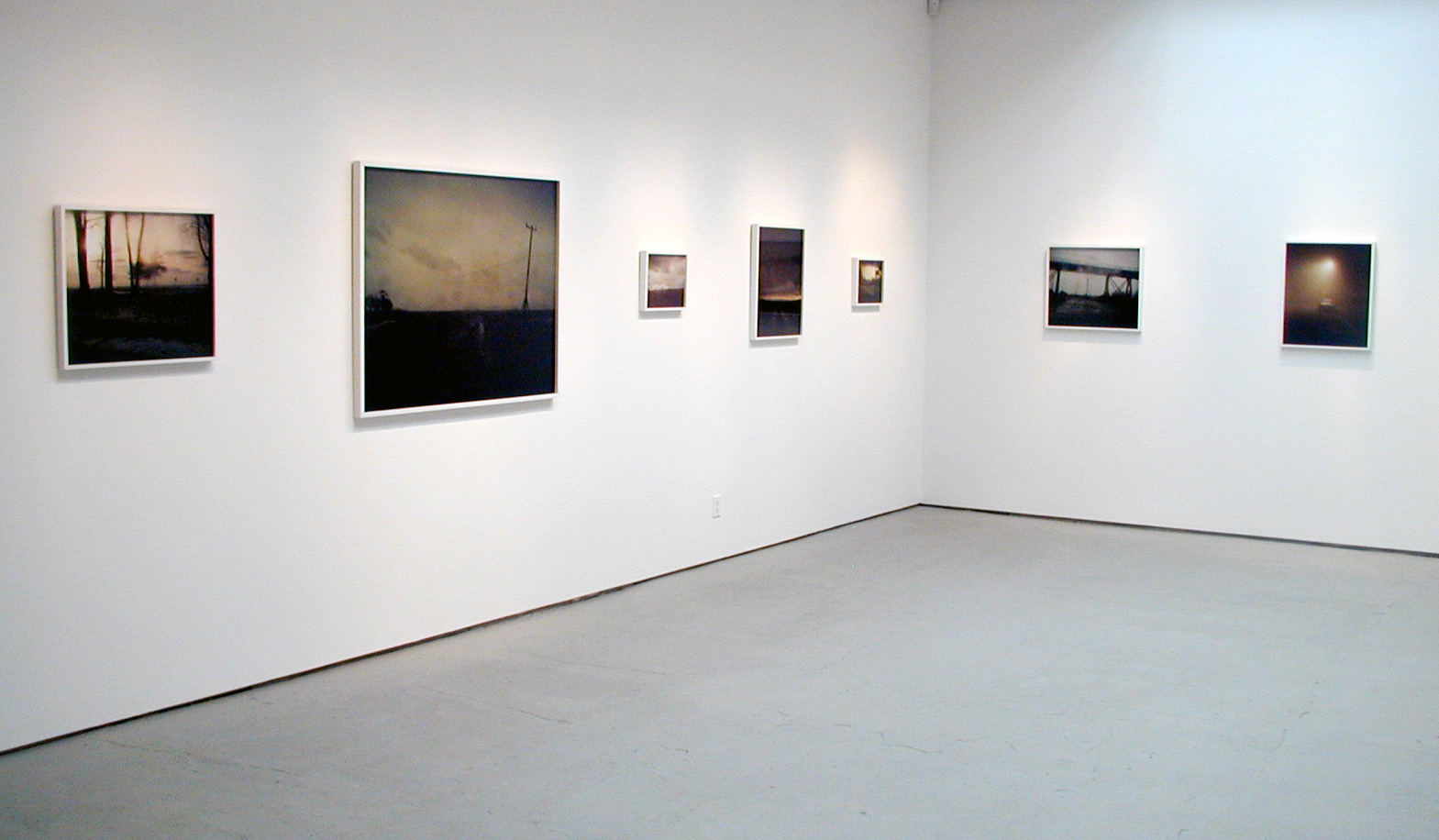
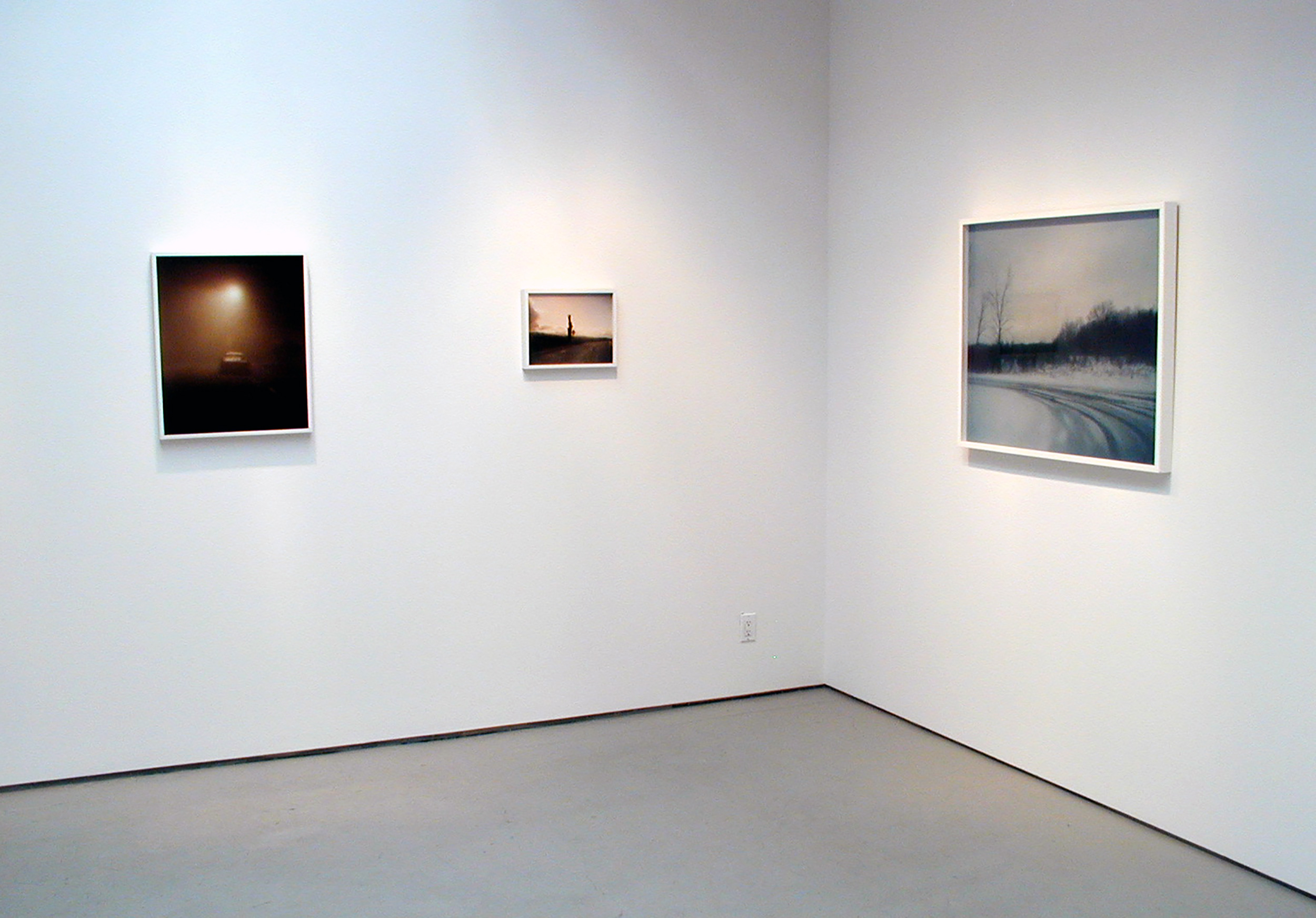
The Julie Saul Gallery is pleased to announce Todd Hido’s first full scale solo exhibition with the gallery, in conjunction with the publication of his third monograph Roaming by Nazraeli Press. The exhibition is designed to create an installation which includes eighteen new color landscape images in various sizes.

This new work is very different in both content and style from his earlier work. There is a woozy slightly hallucinogenic feeling to the landscapes seen through windshields, as if he has suddenly put his foot on the gas pedal and driven into the next day. The sense of a set up film still continues, however there is no staging at all, simply observations made in his car travels through Eastern Washington State, the California Central Valley, Indiana, South Louisiana and beyond.

Hido first caught the attention of the art world with a portfolio published in Artforum magazine in May 1998. Later that summer, he was featured in our summer group exhibition on the theme of suburbia entitled Neighborhood Watch and subsequently had two second gallery shows here, and a solo show with Paul Morris Gallery in 2002. The two previous oversized monographs published by Nazreali Press: House Hunting (2001), and Outskirts (2002) have also contributed to Hido’s wide recognition in the art and photography world.

Since 1998 Hido has had fifteen solo exhibitions at commercial galleries and museums, and his work has entered the collections of many public institutions, including The Guggenheim Museum , The New York Public Library, The George Eastman House, the Los Angeles County Museum of Art, the Museum of Fine Arts, Houston, and the San Francisco Museum of Modern Art.

Exhibition @ Julie Saul Gallery

Morton Bartlett
“The Sweethearts of Mr. Bartlett”

June 29 – August 17, 2007
535 West 22 Street, NYC

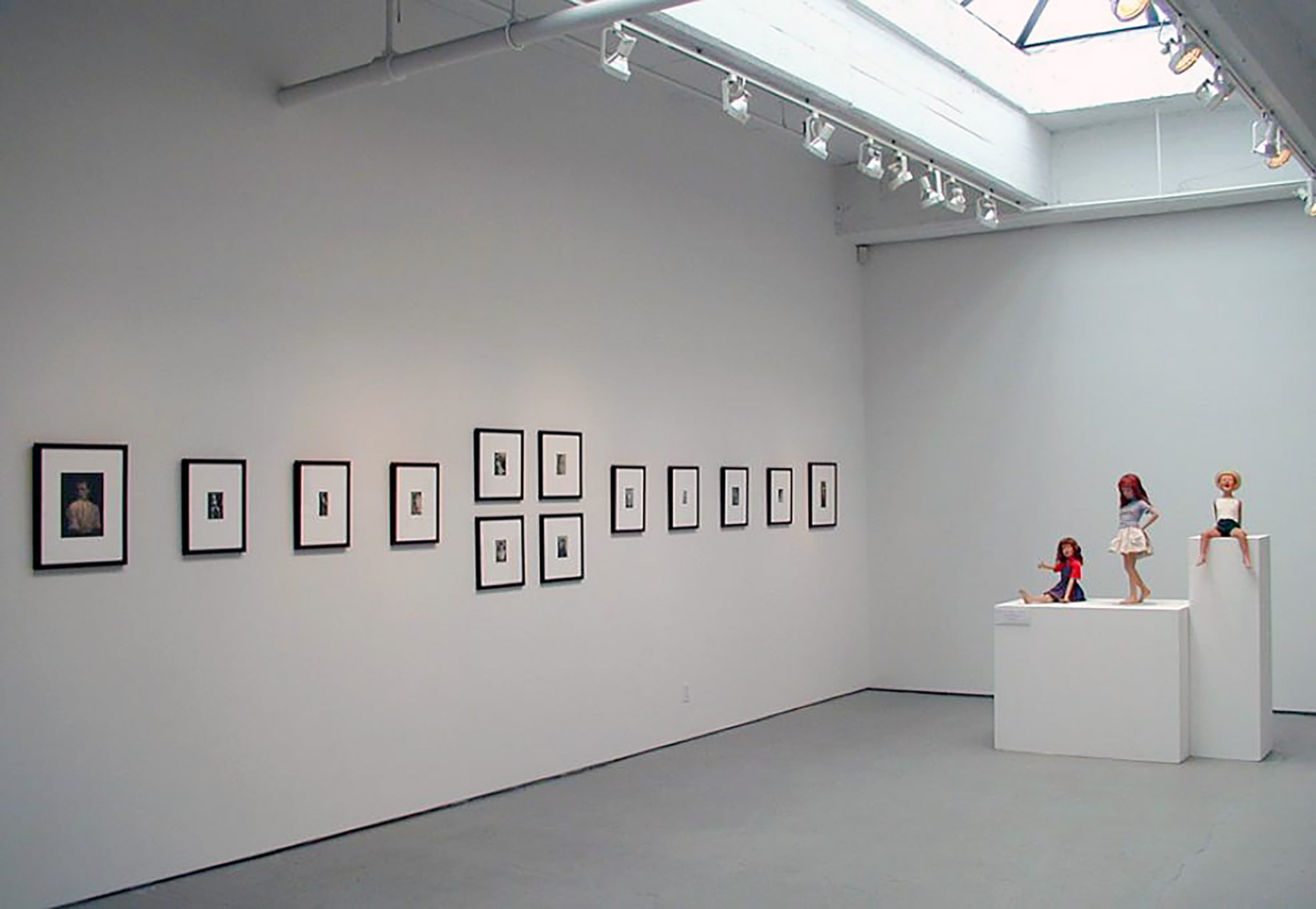
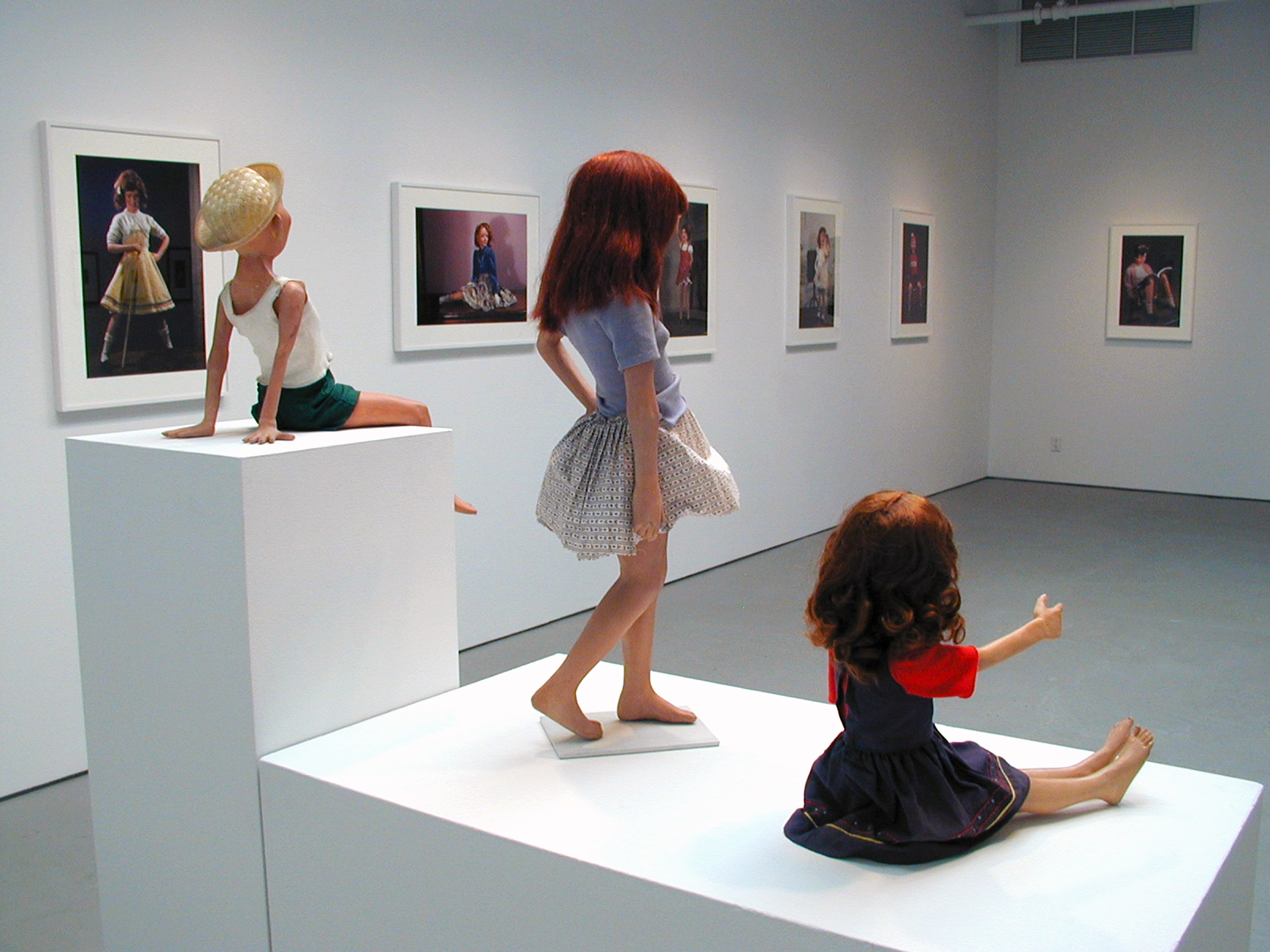
The Julie Saul Gallery is pleased to announce a solo exhibition of photographs, sculptures and drawings by the self-taught Bostonian artist Morton Bartlett (1903-1992). For those familiar with the work of Bartlett this exhibition enriches our knowledge with the addition of a number of modern color photographs made from original Kodachrome slides c.1955, as well as new archival material including self portraits by Bartlett. For those unfamiliar with Bartlett’s world it will be a revelation.

Bartlett was born in 1903, orphaned at eight, attended Harvard for two years and lived alone in Cambridge working at a variety of design and graphics jobs. The title for this show comes from an article published on Morton Bartlett in Yankee Magazine in April 1962- the only information every published on him and really the only exposure which Bartlett’s passion ever received during his lifetime. The author describes how Bartlett began working with clay in 1936, and began to sculpt “dolls”, anatomically perfect sculptures of children at about ½ life size. For the next 25 years, slowly and with obsessive attention to detail and verisimilitude , he sculpted around one figure a year. He then clothed these figures in clothing, sweaters, shoes all made by him, and finally photographed them in tableaux, seen individually and in groups.

Bartlett’s legacy -15 sculptures, over 200 vintage black and white photographs, a small number of drawings and a great deal of clothing- was discovered by art dealer Marion Harris who first exhibited the work at the Outsider Art Fair in New York in 1995 and published a monograph entitled Family Found: The Lifetime Obsession of Morton Bartlett in 1994.

The discovery of an additional archive of Bartlett material by a Los Angeles collector has helped to enlarge our understanding of Bartlett’s production. A group of 17 Kodachrome slides depict the dolls in a similar fashion as the black and white prints. Seeing the lifelike dolls dressed in vividly colored clothing in tonalities reminiscent of the 1950s brings a new dimension to the work. The exhibition will include work from both archives, and is the first show to bring all of this material together. This show furthers our ability to see the aesthetic of both the sculptures and photographs as fully entrenched in the popular visual culture of that time.

Exhibition @ Julie Saul Gallery

Second gallery
Roz Chast
Theories of Everything

January 4 – February 10, 2007
535 West 22 Street, NYC

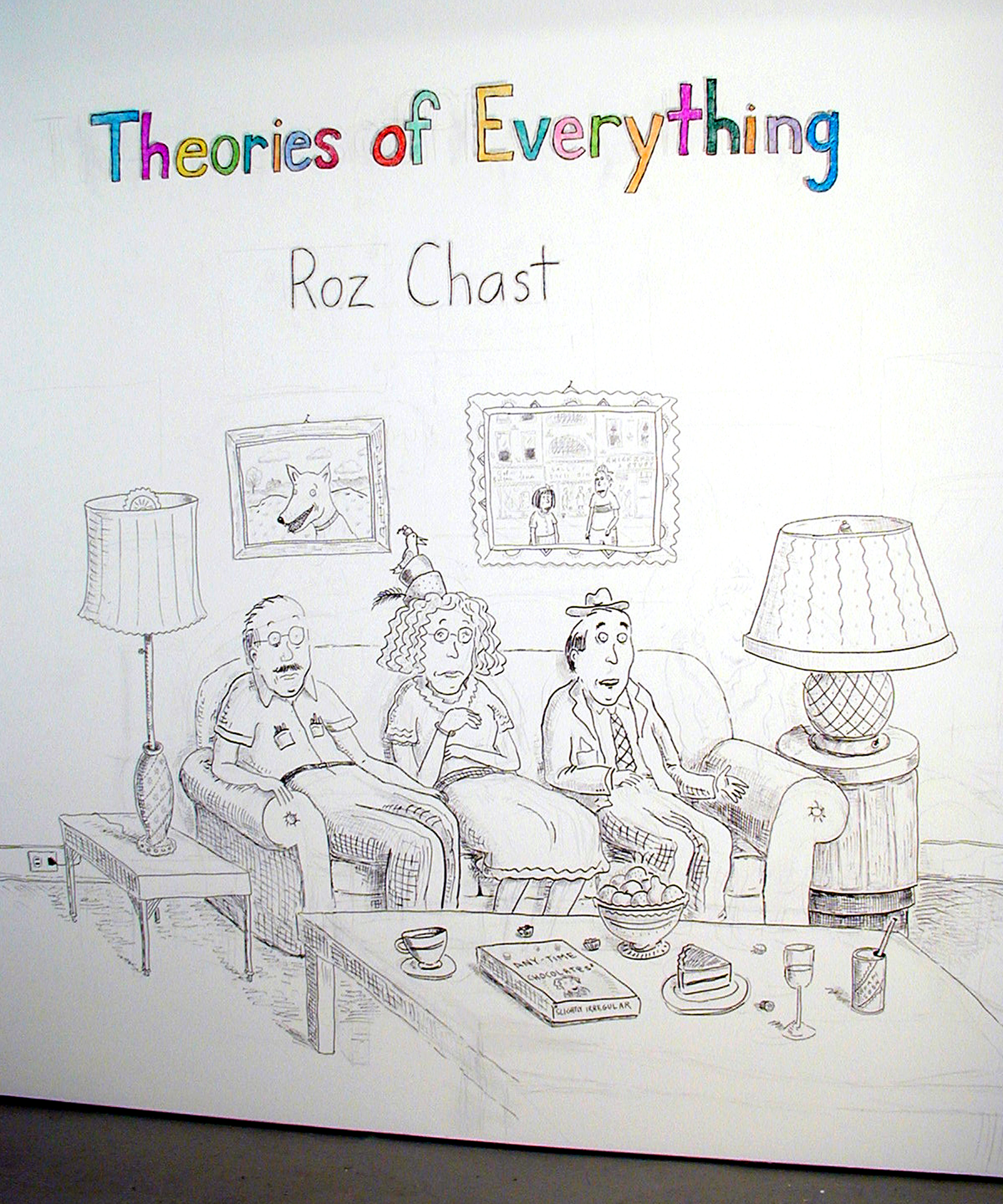
Our second exhibition of work by noted artist and cartoonist Roz Chast is scheduled to coincide with the publication of a 400 page monograph surveying her work from 1978-2006. Our exhibition will feature more than forty of these works, with a selection of drawings in black and white and gouaches. Chast’s classic themes and characters are seen in their nascent forms in the late 70s and evolve along with her life and our history. A majority of the cartoons were originally published in the New Yorker, and others have appeared in Town and CountryPopular ScienceTravel and Leisure.

Exhibition @ Julie Saul Gallery

Petah Coyne
Spring Snow
October 27 – December 8, 2001
Opening reception, Saturday, November 3, 2001
Gallery hours: Tuesday- Saturday, 11-6
535 West 22 Street, NYC

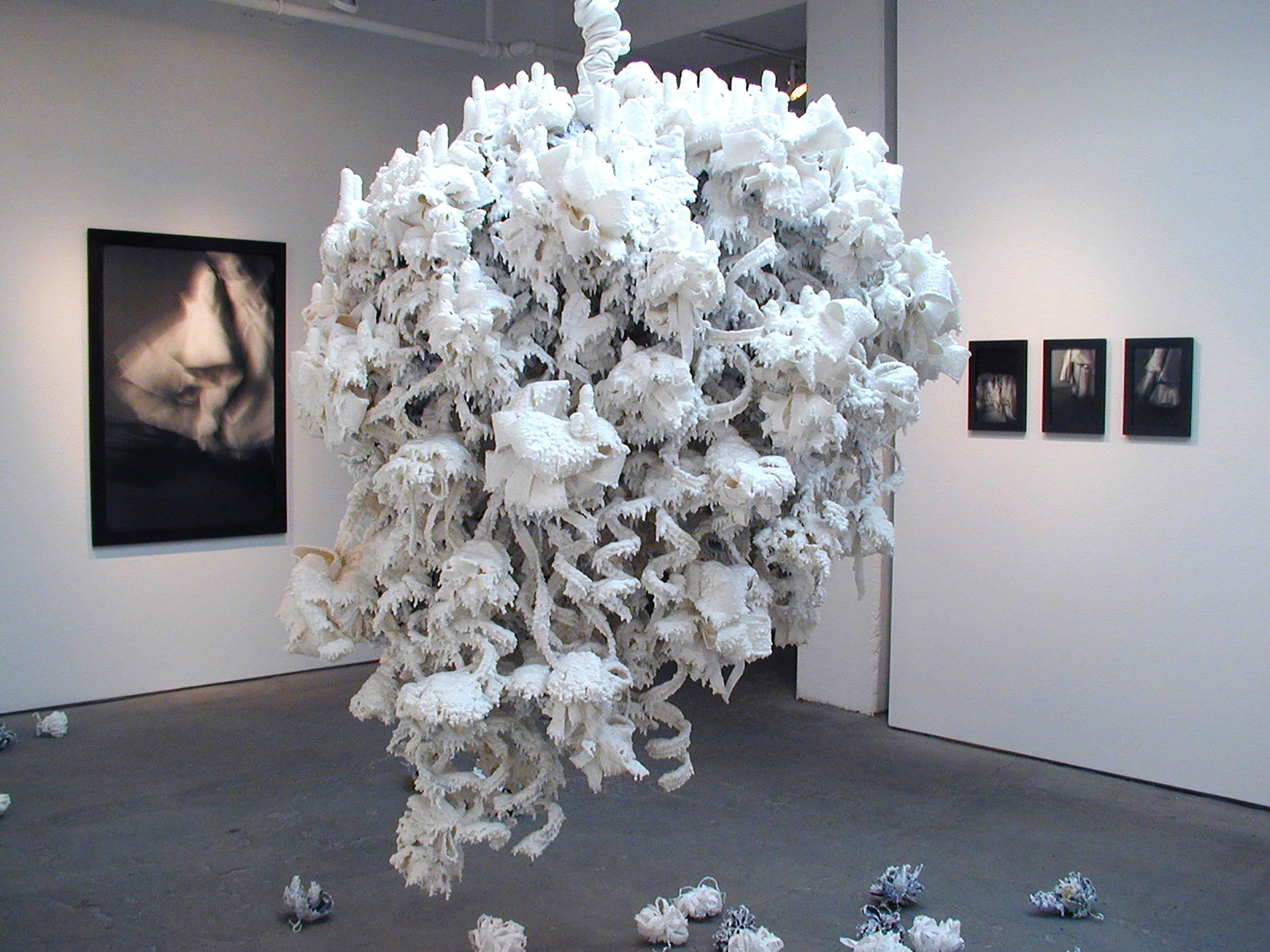
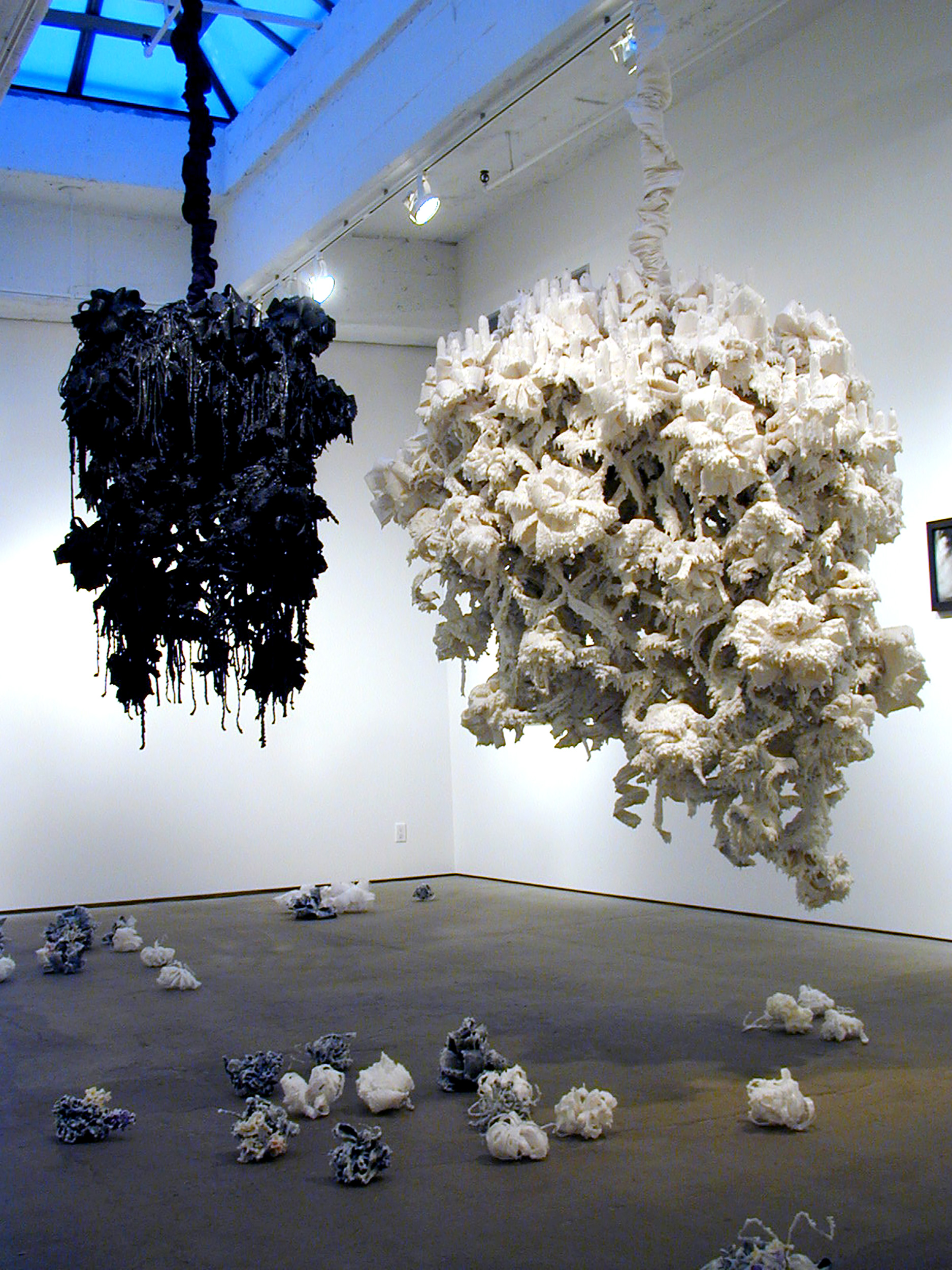
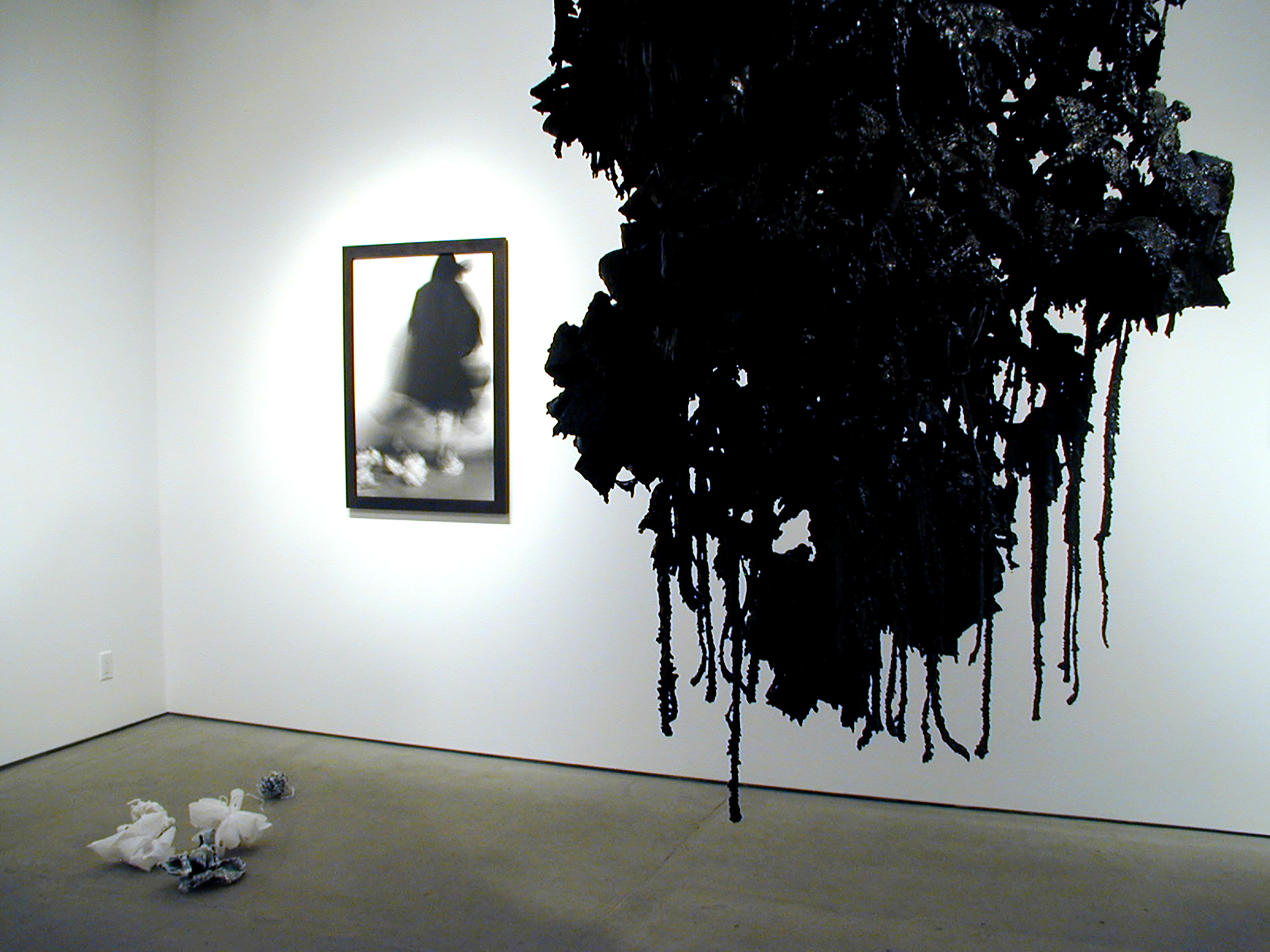
The Julie Saul Gallery is pleased to announce our first solo exhibition of new photographic work and a sculptural installation by Petah Coyne, entitled Spring Snow. This is Coynes second photographic exhibition in New York, the first was held in 1996. The installation will include fifteen prints and two hanging sculptures from 1996/97 in her characteristic medium of assembled bows, ribbons and birds melded with wax.

The photographs convey a sense of youth and energy. The swirling imagery of the black and white prints features tumbling children, gliding brides and debutantes dancing through dreamy space. The subjects relate to the female sculptural figures incorporated into Coynes new sculptural work- Madonnas transformed into metaphoric nuns, birds and veiled sirens. This new sculpture will be exhibited concurrently in an exhibition entitled White Rain at the new Galerie Lelong space at 528 West 26th St. from November 3 through December 8.

The title Spring Snow was inspired and derived from the Japanese writer Mishimas final series of novels which were written at a time in his life and concern matters similar to those of Coyne. The artist sees new beginnings in this series- an attempt to capture the freshness and energy of youth- as something remembered in feeling rather than narrative. She also intends for the viewer to bring their own emotional and visual memories to create their own reality in relation to the images. The installation includes prints ranging from small to monumental, creating a sense of moving in and out in the same way that Coyne herself moves around while making photographs. The sculptures, one black, the other white, evoke the duality of all Coynes work, a celebration of life joined with a recognition of death and mortality. Coyne sees her photographic work as both independent and linked to her sculpture activity. She has noted that in some ways they function as the drawings relating to the sculpture- both studies and summations.

Coynes work has been shown extensively in the United States and abroad, including the 2000 Biennial of the Whitney Museum of American Art, The Irish Museum of Modern Art, Dublin, the Aldrich Museum, Connecticut and a photographic survey appeared at the Weatherspoon Museum at the University of North Carolina in 1997.

Exhibition @ Julie Saul Gallery

ALISON JACKSON
Election Year 2004
October 21 – December 4, 2004
Reception for the artist: Thursday, October 21, 6-8 PM
Hours: Tuesday- Friday 11-6
535 West 22 Street, NYC

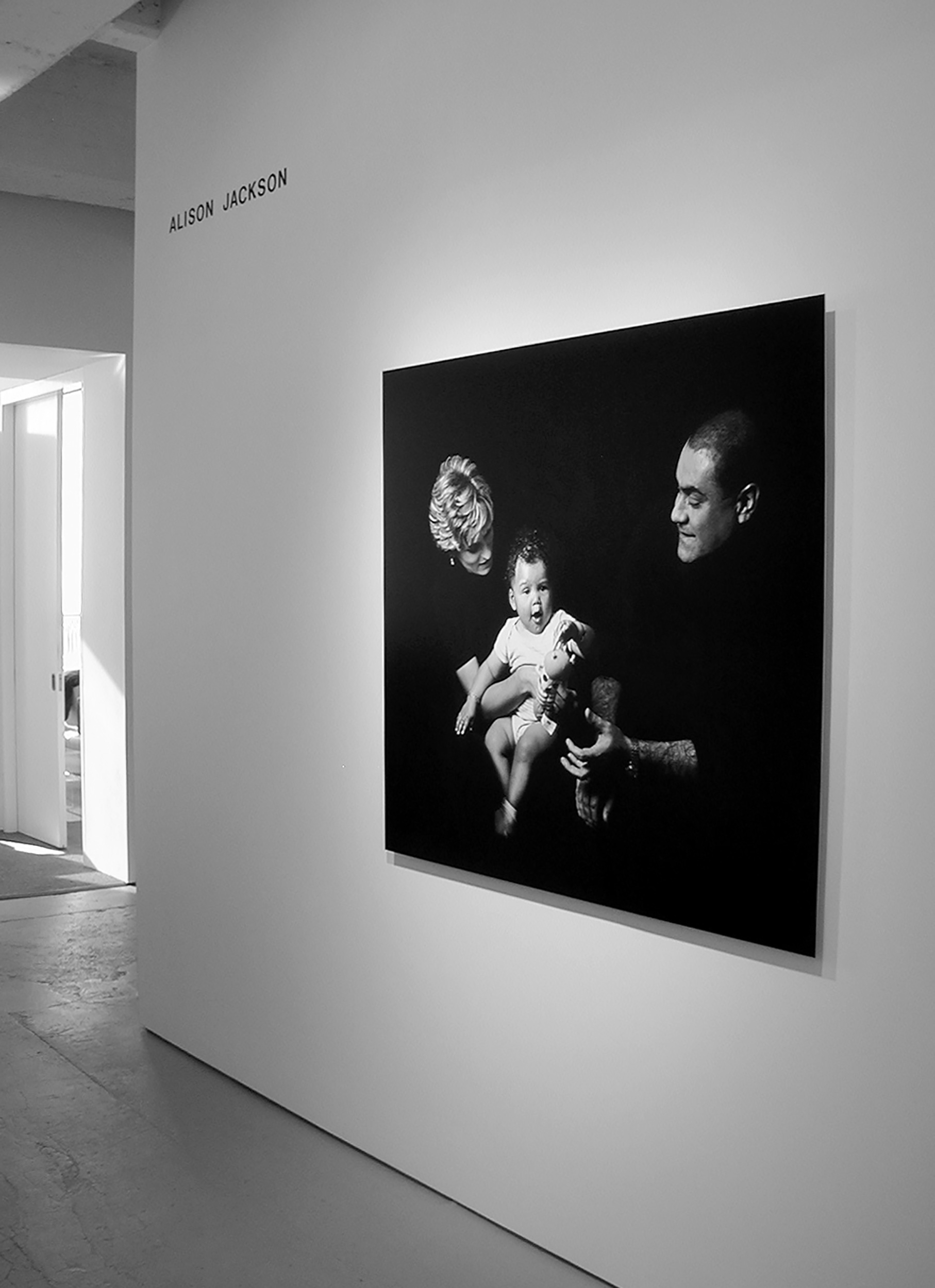
British conceptual artist Jackson will have her premier exhibition in the U.S. with a new
body of work focusing on the Bush Whitehouse. The show will also present work which
Jackson has created over the last several years which satirizes British politics and pop
culture. Since 1999 Jackson has been notorious in the UK for her staged performances,
video films and stills utilizing look-alike actors that parody tabloid journalism.

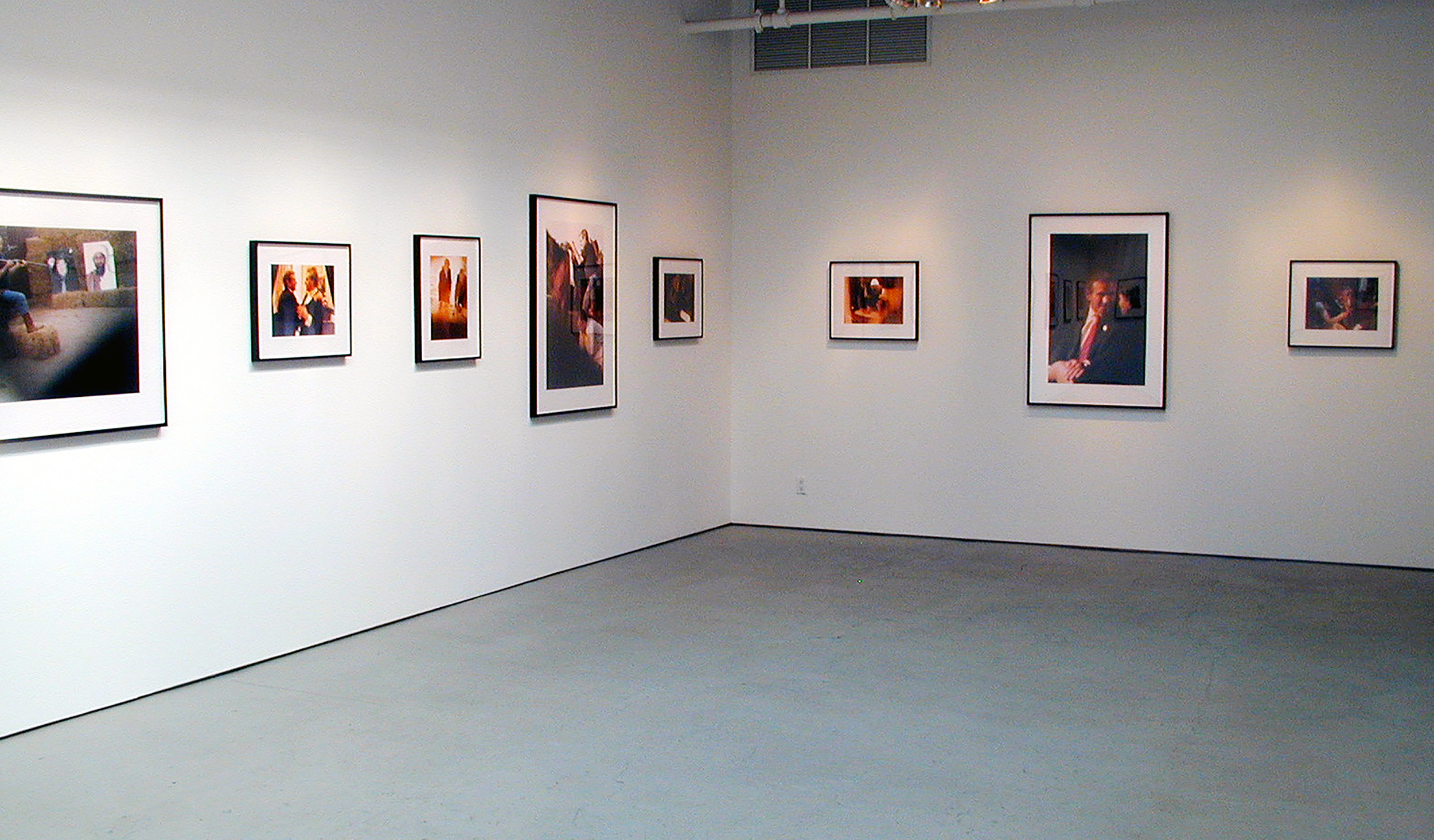
New images offer a “behind the scenes” glimpse of the campaign trail with Bush
practicing his aim using targets of Michael Moore and Osama bin Laden and the
president’s hand stroking the knee of a familiar black female political appointee. Tony
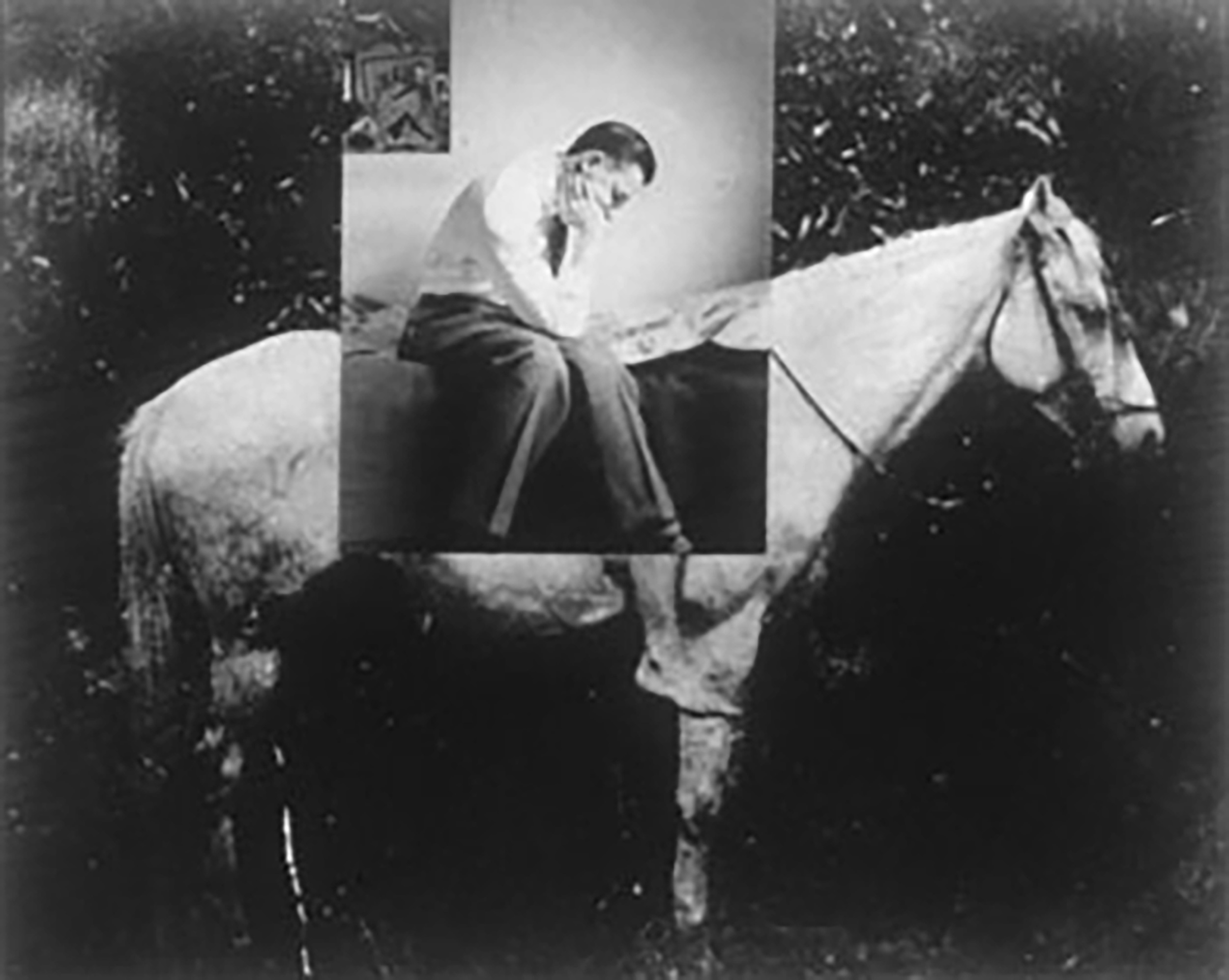
Blair gives him a leg-up to mount his horse, and prays with him as well. Jackson
describes her work as operating on the basis of fantasies created by the “mass mind”.
Her simulations are confusing and seductive – exploring the gap between true and false-
real and imaginary. Given the hints and suggestions Jackson creates, we fill in all the
additional information and convince ourselves of the reality of these staged tableaux.
Although her wit is biting, the ultimate theme is not political but an exploration of
celebrity, those who exist independently in the public imagination. As the British art
critic Waldemar Januszczak expressed it in the London Sunday Times Magazine last fall
“although the work appears to be about the famous people who appear in her
photographs, it is actually about the audience that consumes those photographs: us.”

Her book Private published in 2003 has over 70,000 copies in print. She has received
numerous awards including an Infinity award by the International Center of Photography
in the spring of 2004, a BAFTA for Innovation for her Doubletake film made for BBC2,
and the top awards from Creative Camera Magazine and the Photographer’s Gallery,
London. She has lectured widely in the UK.

Exhibition @ Julie Saul Gallery

Reiner Leist
Eleven Septembers

September 5 – October 14, 2006
535 West 22 Street, NYC

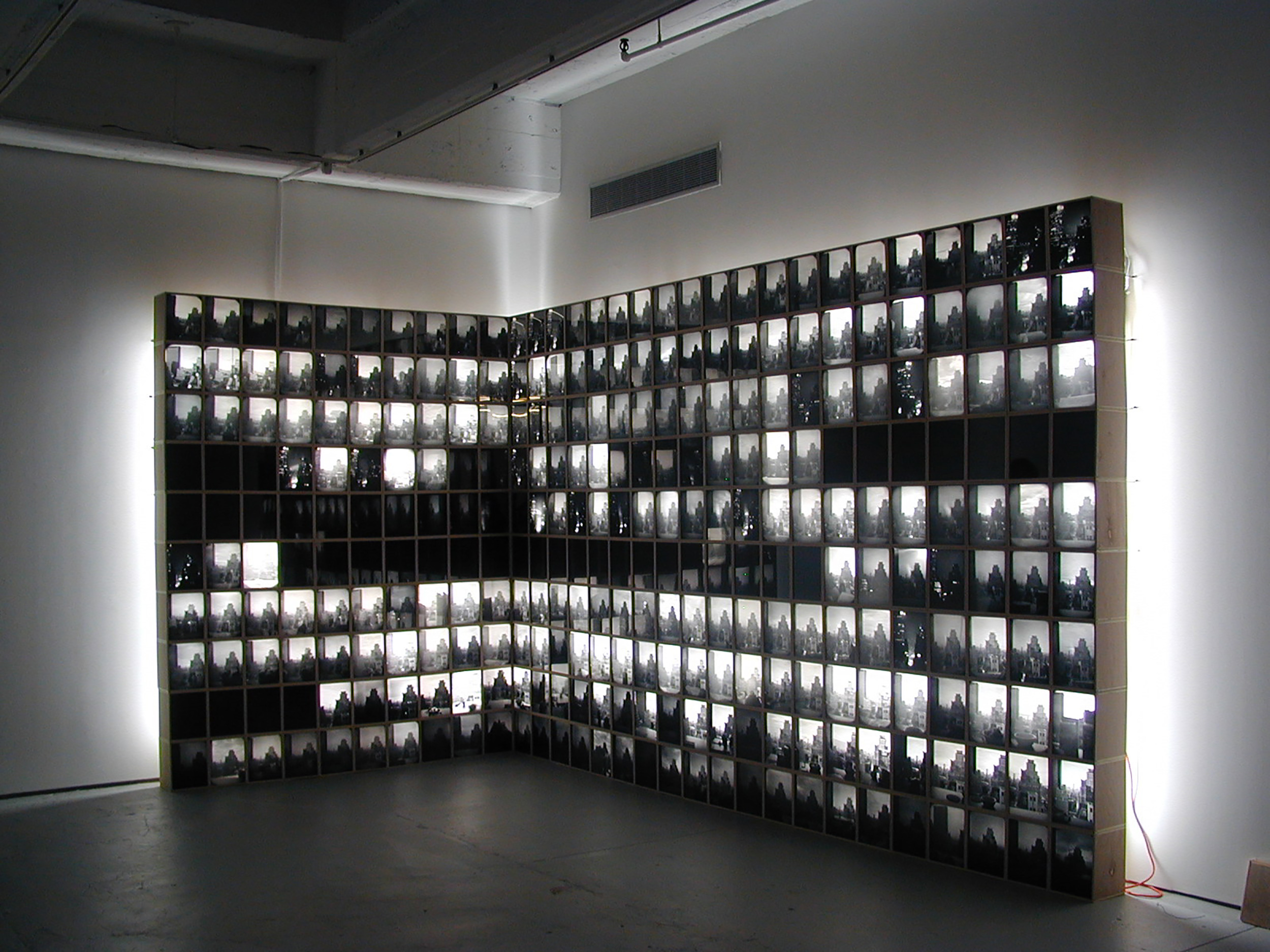
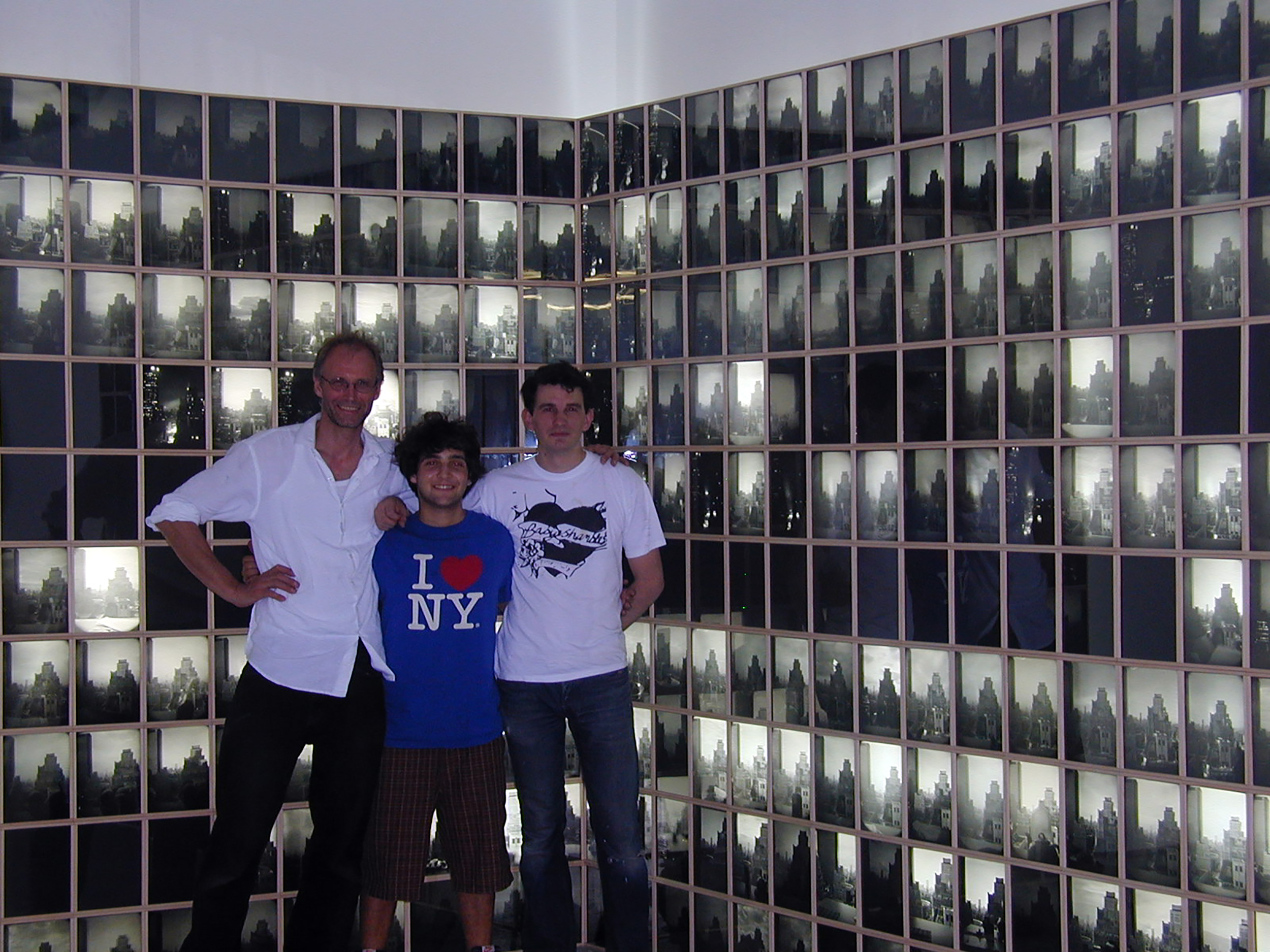
The Julie Saul Gallery is pleased to announce the exhibition of German-born photographer Reiner Leist’s installation, Eleven Septembers. A 512 page book by the same name will be published by Prestel and released in September. Since 1995, Leist has photographed the view from his apartment on the 26th floor of a commercial building on 8th Avenue in New York. Using a nineteenth century full-plate camera with 8 x 10 inch negatives he has captured the architecture and life of downtown Manhattan. To the left is One Penn Station and the round structure of Madison Square Garden; in the center are the skyscrapers of the financial district, including the World Trade Center; to the right is the famed New Yorker Hotel. The foreground is framed by the window and objects of daily use in Leist’s window sill.

When in New York, Leist photographed daily, at no particular time, and in all weather conditions. He acquired a routine: placing the camera on the kitchen table, opening the window, focusing, measuring light, inserting the negatives and making the exposure. He also marked the date and time in a journal.

Over the decade, roughly 2,200 exposures were made in this way. They show the everyday, a breathing Manhattan, and the big historical censure, the destruction of the World Trade Center. None of the images are the same, demonstrating the ever-changing view from the window. Eleven Septembers /Window is also being exhibited in its full form of every month of the entire eleven years in a massive installation at the Museum for Photography, Berlin from September 8, 2006-January 7, 2007.

Leist’s works are ongoing, long-term–often participatory–projects that examine the relationship between individual lives and societies, history, landscape and architecture. For South America/ Blue Portraits, he interviewed and portrayed 200 participants from highly diverse backgrounds in South Africa from 1989 until 1993. Since 1994, he has worked on the long-term project American Portraits, a collection of photographs and interviews of people from across the country that was shown at the prestigious German Historical Museum, Berlin, I.M. Pei Building. Leist continues work on projects in Japan and Vietnam, both of which combine photographs of the subjects and brief autobiographies and viewpoints. Leist has exhibited widely, with one-person exhibitions at the Fotomuseum München, Stiftung Moritzburg, Halle, Meridian International Center, Washington, D.C. and Musashino, Tokyo. He taught at the Visual Arts Program at MIT, Cambridge, Mass. from 2000 until 2003, and since 2003, has taught at Hunter College, City University of New York.

Exhibition @ Julie Saul Gallery

Uncharted Territory:
Subjective Mapping by Artists and Cartographers
March 5 – April 14, 2004
535 West 22 Street, NYC

Jennifer Bartlett, Doug Beube, Jonathan Callan, Maria Martinez-Caúas, Elaine Lustig Cohen, Luigi Ghirri, Maira Kalman, Joyce Kozloff, Paul Laster, Charles Luce, Meridith McNeal, Ati Maier, Rick Meyerowitz, Abelardo Morell, Karin Apollonia MŽller, Vik Muniz, Gabriel Orozco, Kathy Prendergast, Gonzalo Puch, Lordy Rodriguez, Dan Zeller

The Julie Saul Gallery is pleased to announce a group exhibition on the theme of mapping. The show will include historical maps and works by a wide range of contemporary artists working in a variety of mediums including painting, collage, drawing, photography and printmaking.

Maps have been a compelling theme for contemporary artists throughout the twentieth century. The ever evolving systems used to record distances and terrain, the shifting of geopolitical borders, our increasing understanding of space- both near and distant- have offered visual and conceptual inspiration and springboards for provocative contemporary work. Artists have looked backward and forward for their cartographic inspiration and visual sources. For example Joyce Kozloff in her recent project Boys Art combines quotes of historical maps, with collage elements derived from her son’s childhood combat drawings and other narrative elements. Elaine Lustig Cohen uses a map of Berlin and collage elements to create a biographical portrait of the architect Mies van der Rohe. Gonzalo Puch, a conceptual photographer from Seville creates a homage to Vermeer with a burning telescope as if to literally ignite the excitement of scientific exploration.

In order to establish a precedent for both the artifice and subjectivity of the cartographic tradition, the exhibition will include three fascinating examples of early maps: a world map from 1493- before word had gotten out that the earth is round, a 16th century map of Europe depicted upside down, and a 17th century map of the Northeast in which the Dutch publisher pirated an earlier map and inserted his own changes- an early act of appropriation.

The arbitrary yet fixed nature of measurements and scientific systems was a rich source for Marcel Duchamp- and no one who encounters the standard stoppages can help but apply the illogical elegance of that concept to any system we encounter in daily lives.

Two map works of Benin by Jennifer Bartlett from a new series about Africa point to the complicated relationships between countries and form a commentary on the arbitrary nature of the divisions we use. The use of names or text according to alternative systems is another mapping strategy as seen in the work of the Irish artist Kathy Prendergast. She is known for her exquisite drawings of international capitol cities and has been working with mapping software since 1999. Her large map of America is an accurate rendering of state borders, topography, rivers and lakes, but the only places identified with a name are those that include the word “Lost”- the title of the work.

Another example of linguistic shenanigans is Maira Kalman and Rick Meyerowitz’s NewYorkistan map. The show will include an original study and final version of the well known New Yorker cover. The humorous “Balkanizing” of New York neighborhoods to names like “The Moolahs” for Wall Street and “Gaymanistan” for Chelsea, helped mitigate our urban anxiety, and provided the first opportunity to laugh after 9/11. Several examples from Italian conceptual photographer Luigi Ghirri’s Atlante (atlas) series from 1973 break up maps into tiny details of text and graphics, which when enlarged become subtle and beautiful abstractions.

Vik Muniz has created a topographical map of Antartica using sugar and other granulated materials with his usual Duchampian playfulness- in a color work from 1996. Abe Morell humorously evokes topography by his crumpled map series in which he literally creates a “lake” by the addition of water. Jonathan Callan and Doug Beube use books and maps to recreate meaning by unlikely segues and juxtapositions, as does Charles Luce in his proposal to combine the rivers of the world. The graphic techniques and stylistic conventions of cartography are sometimes used by artists in purely abstract ways as seen in the work of Dan Zeller and Lordy Rodriguez.

Exhibition @ Julie Saul Gallery

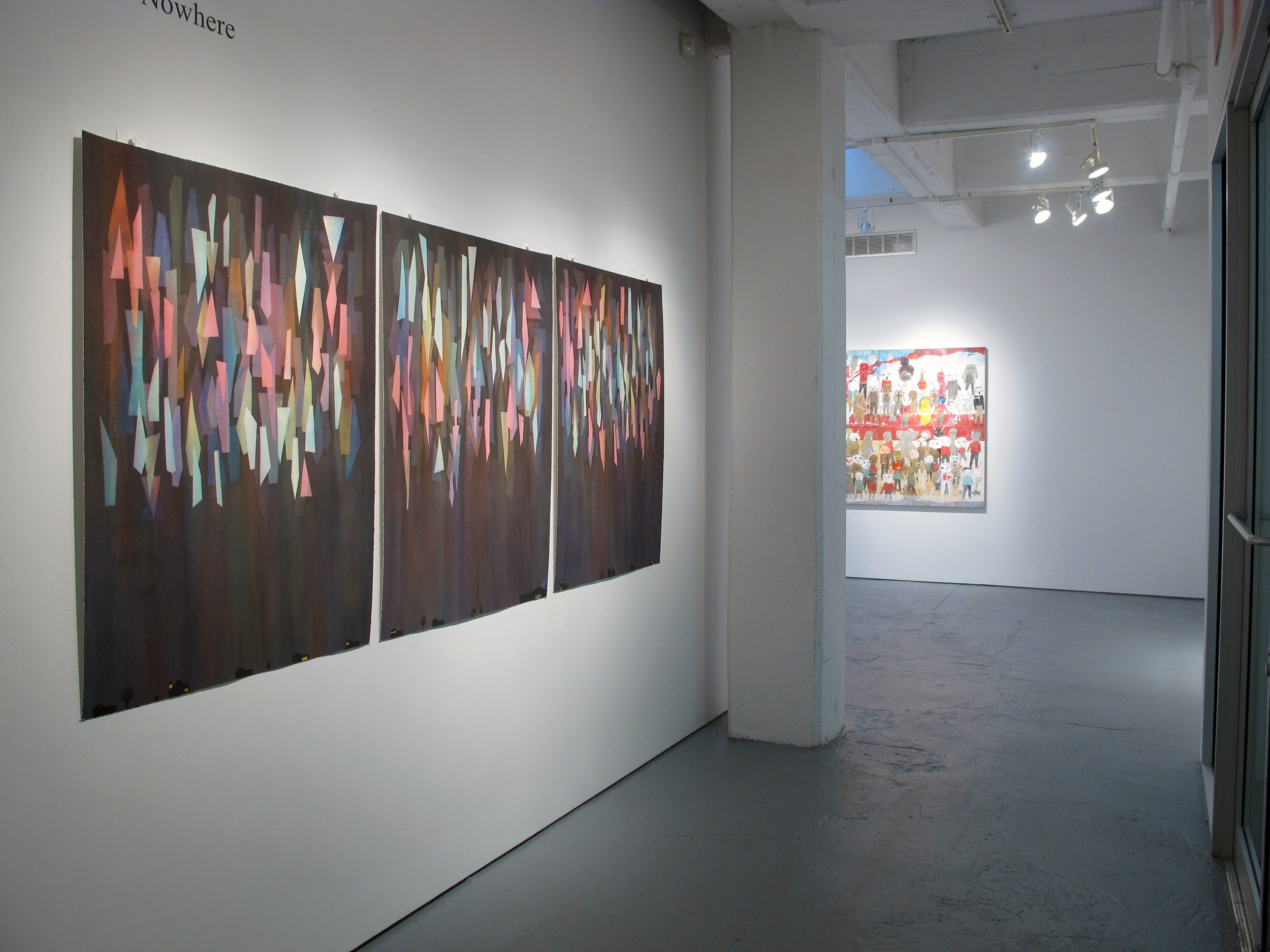
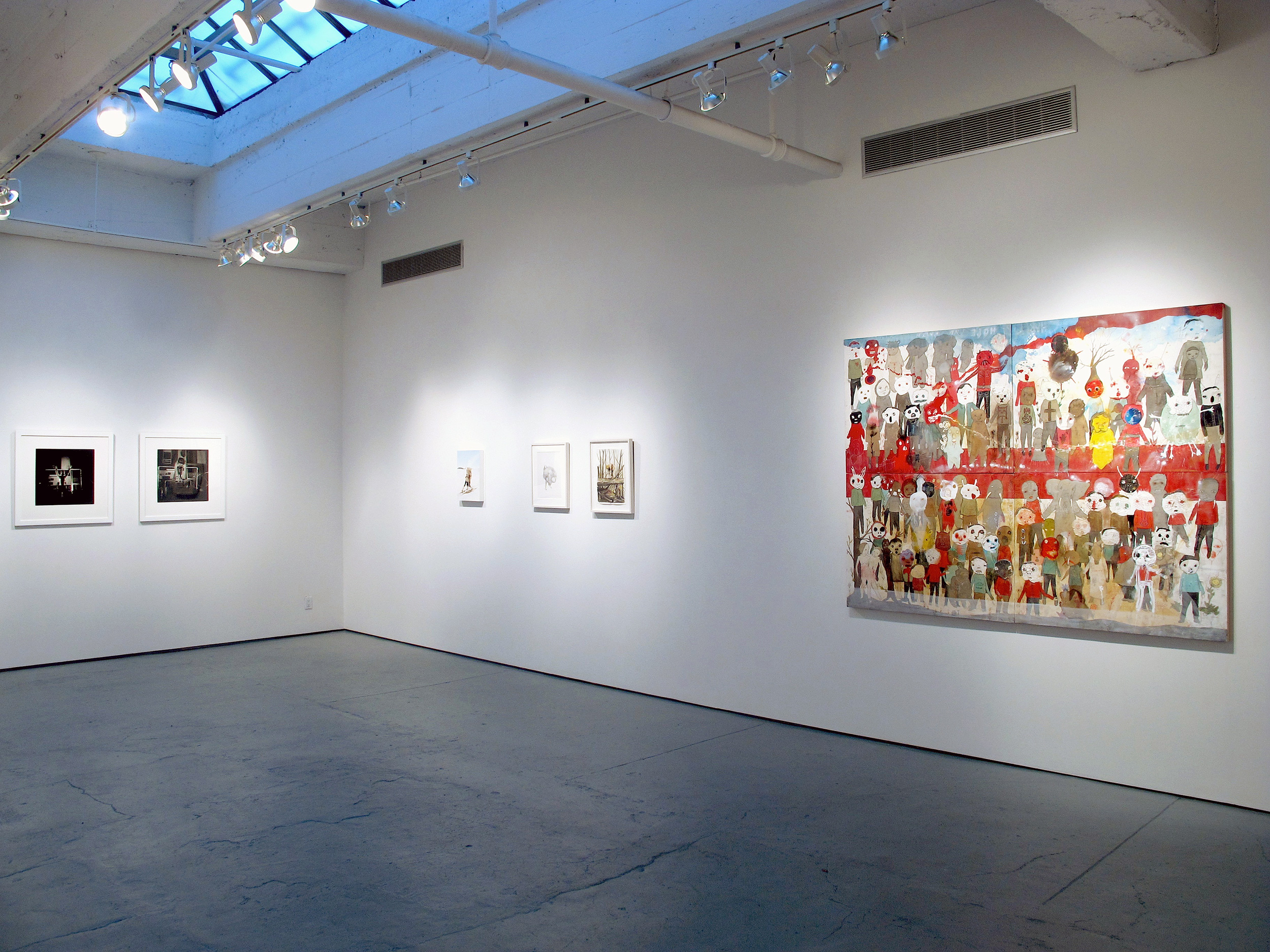
Out of Nowhere: a group show of Winnipeg artists
Curated by Sarah Anne Johnson and Meeka Walsh
December 15, 2011 – January 28, 2012
535 West 22 Street, NYC

For the exhibition, “Out of Nowhere”, gallery artist Sarah Anne Johnson and Border Crossings editor Meeka Walsh have selected a group of ten artists from their native city of Winnipeg. The work of these Winnipeg born artists represents a range of media: painting, drawing, photography, video, and collage. Drawing on Winnipeg native Marshall McLuhan as source, these artists have clearly massaged their mediums. Most are relatively young and several were shown in the acclaimed “My Winnipeg,” an extensive exhibition that premiered at La maison rouge in Paris and recently opened at the Musée International des Arts Modestes in Sete, France. This show, however, marks the first US exhibition for most of them.

Winnipeg enjoys an almost mythical reputation as a creative center. The region has produced the internationally recognized Royal Art Lodge collective – a group of artists that included Marcel Dzama, Neil Farber, Michael Dumontier and Jon Pylypchuk, among others. The noted filmmaker and director of ten feature length and countless short films, Guy Maddin, is a Winnipegger, as are painters Tim Gardner and Karel Funk and photographer Laura Letinsky.

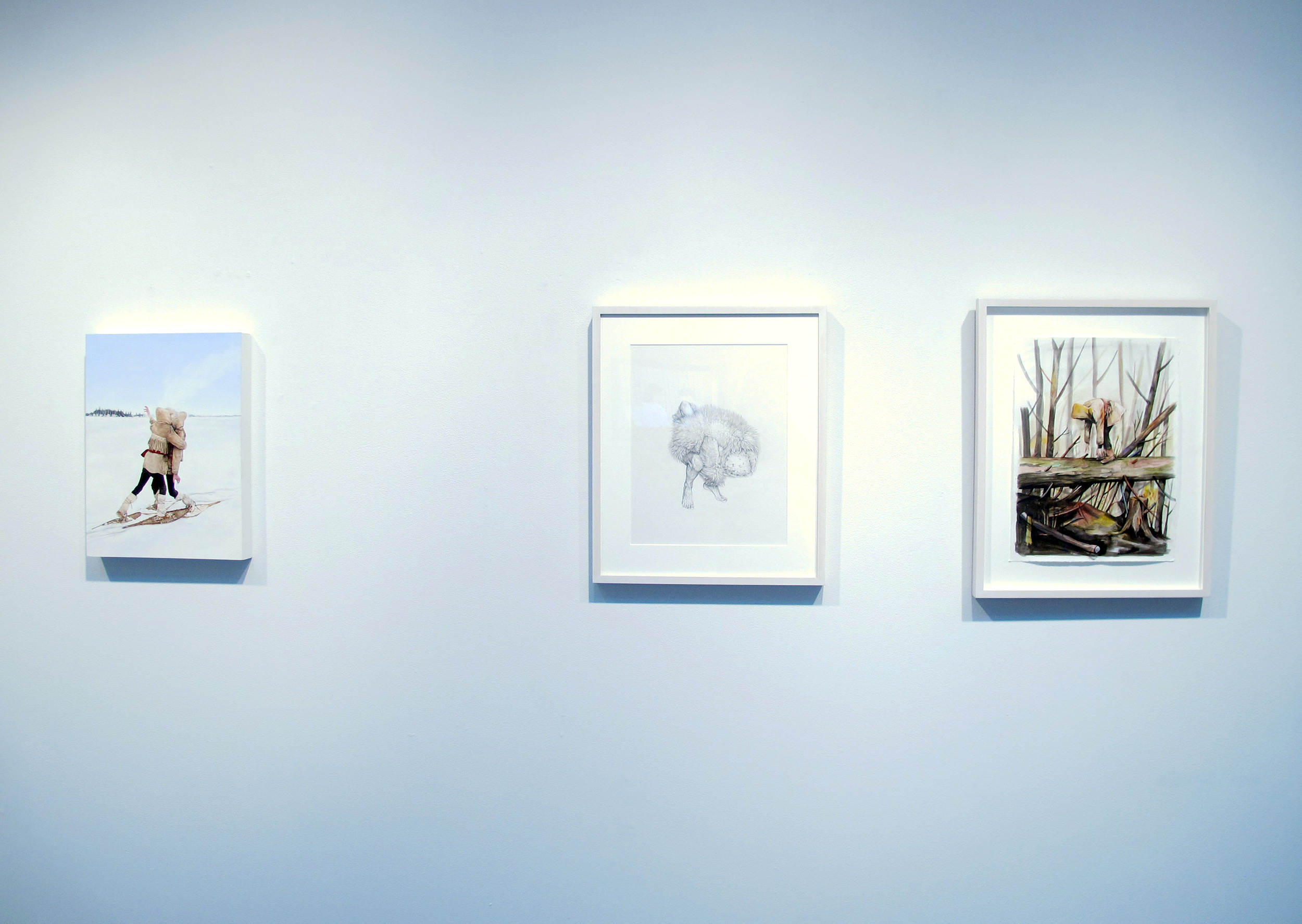
The most senior artist in our show is Neil Farber, one of the founders of the Royal Art Lodge who is well known for his distinctive style of densely populating worlds filled with a curious cast of characters. Some are human and others not, and in his works he combines a fulsome intensity with wry and particular humor. The video team of Lasha Mowchun and Rachel Schappert also produce work which is intense and their video provides a Surrealist’s lampoon of the artist’s role in society. With Ted Barker, they are the youngest participants in the show but Barker’s work, densely drawn and closely rendered in its exactitude shows a careful and precise representation of a history which is at once personal, historic and specific to place. Simon Hughes applies a mid century aesthetic to playful materials such as stickers and building blocks and adds a repertoire of Canadian iconography from ice flows and snow to the dazzling Aurora Borealis.

Erica Eyres is interested in the fragile and resilient, inventive human condition. Her drawings and videos examine, with uncanny psychic accuracy how we perceive others and how we portray ourselves but her scrutiny is off-set with a certain humane generosity. Lisa Wood’s painting and graphic works center on the subject of self-portraiture, rendered up-close and personal. Her gaze is unflinching.

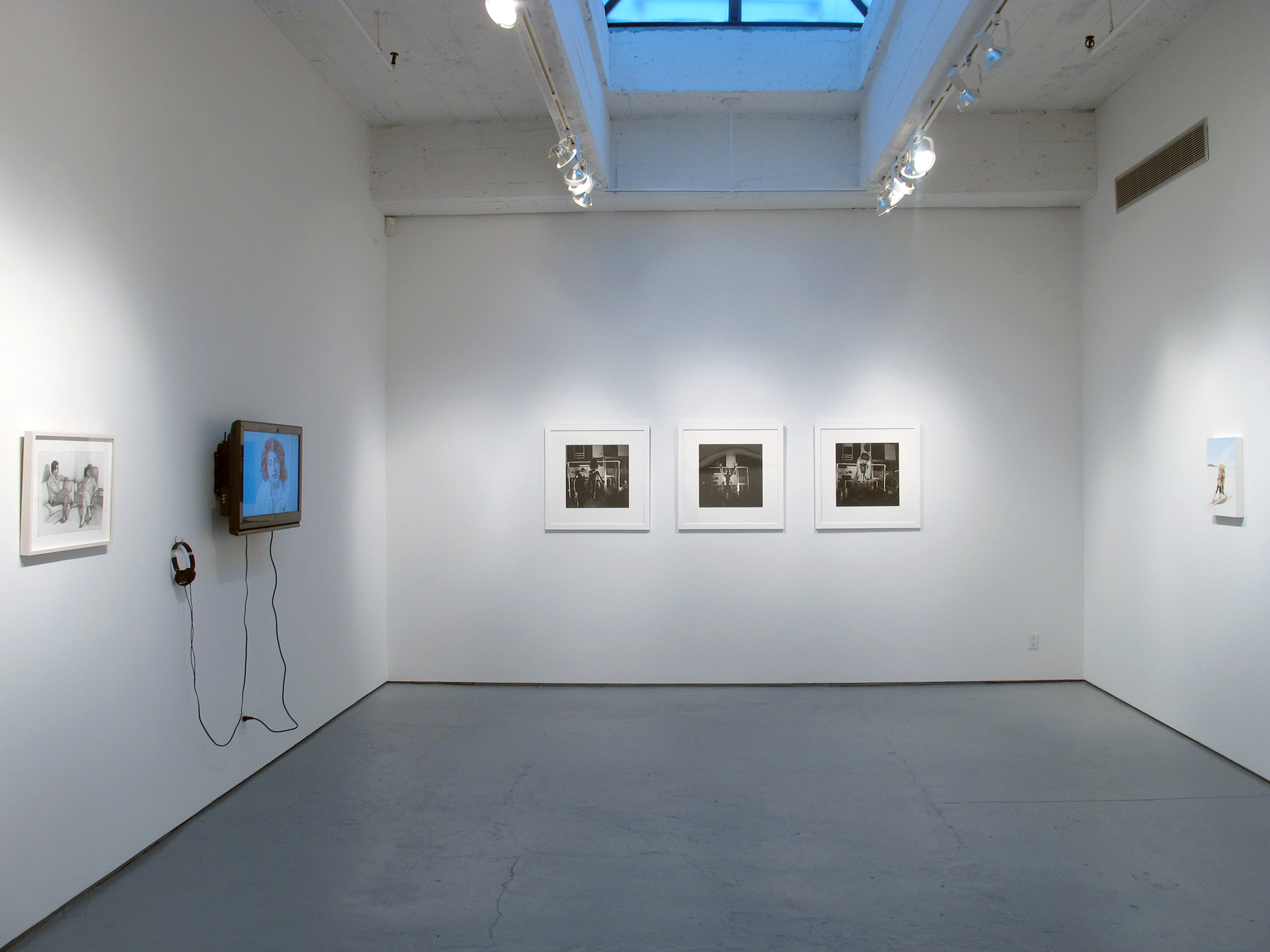
There are two photographers in the exhibition, Steve Ackerman and Elaine Stocki. After having lived in New York Ackerman has now returned to Winnipeg, working on occasion with Guy Maddin and also producing his own work which often reflects the rough setting and indigent characters in his community. Elaine Stocki, who, like Sarah Johnson has an MFA from Yale lives in New York but identifies Winnipeg as home. Stocki theatrically challenges the expected limits of documentary photography and will be showing platinum-printed images of gymnasts who appear, like many of Stocki’s figures, to inhabit a space of their own time and making. They are unique and other-worldly. Paul Robles, using a sharp blade and a fine hand, renders porn magazine images into lacy fret-work moths and butterflies, mounting their small forms in boxes that would have Vladimir Nabokov applauding.

Located in the geographic center of the country, Winnipeg sits on a vast flood plain that was once prehistoric Lake Agassiz. The wind sweeps across the wide expanse which, in winter, becomes what noted poet Robert Kroetsch called “the white erasure of snow”. Artists are impelled each year to re-inscribe this clean sheet. It’s this sense of opportunity, necessity and vulnerability that draws Winnipeggers together to work collectively and at the same time to assert an iconoclastic individuality. The city is both isolated and central. Its inhabitants have a strong sense of themselves and this generative quality produces the art which is attracting attention wherever it is seen.

Presented in association with the Consulate General of Canada’s Upper North Side Canada in Conversation Series.

Exhibition @ Julie Saul Gallery

Gary Schneider
Portraits
February 28 – April 19, 2003
535 West 22 Street, NYC

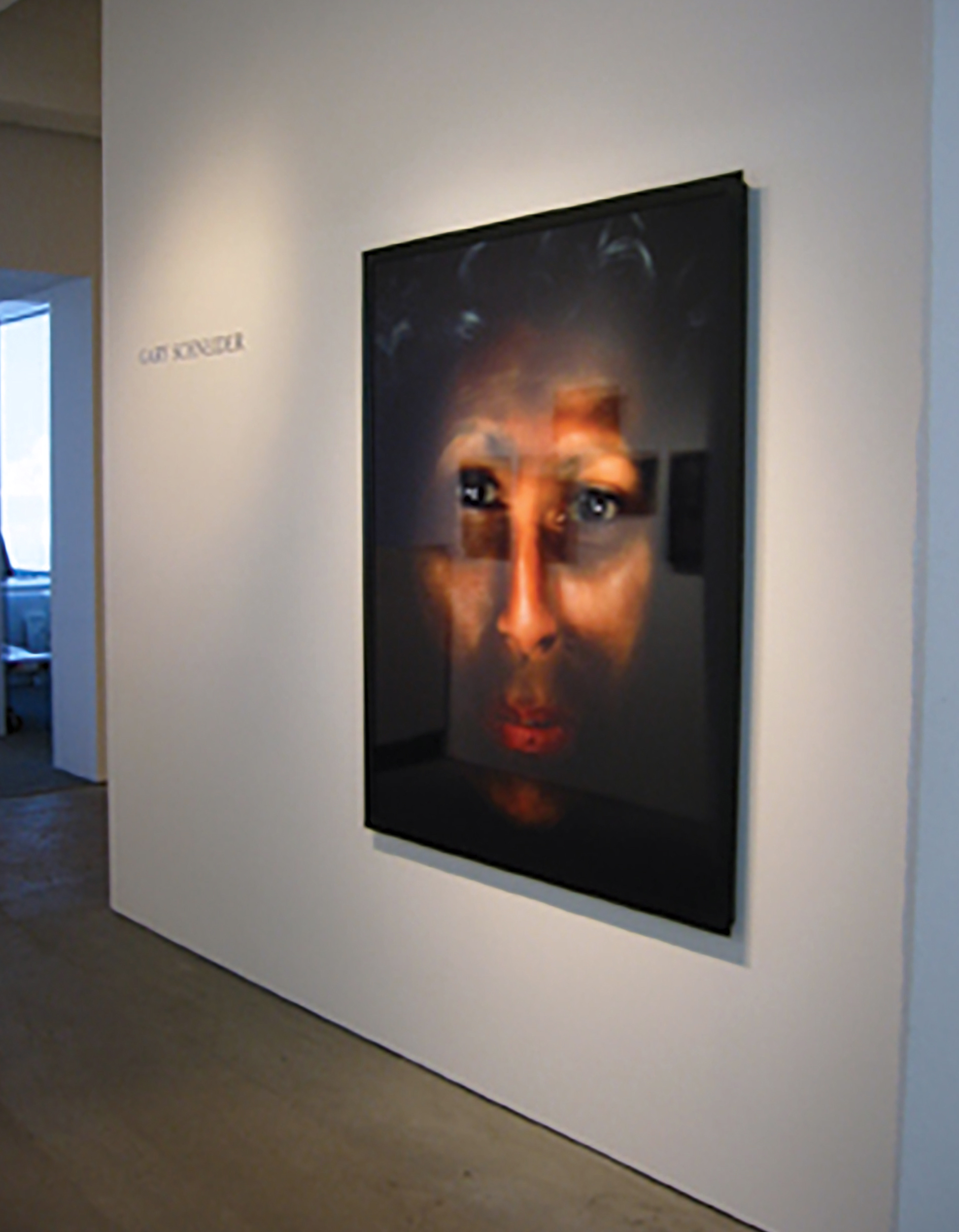
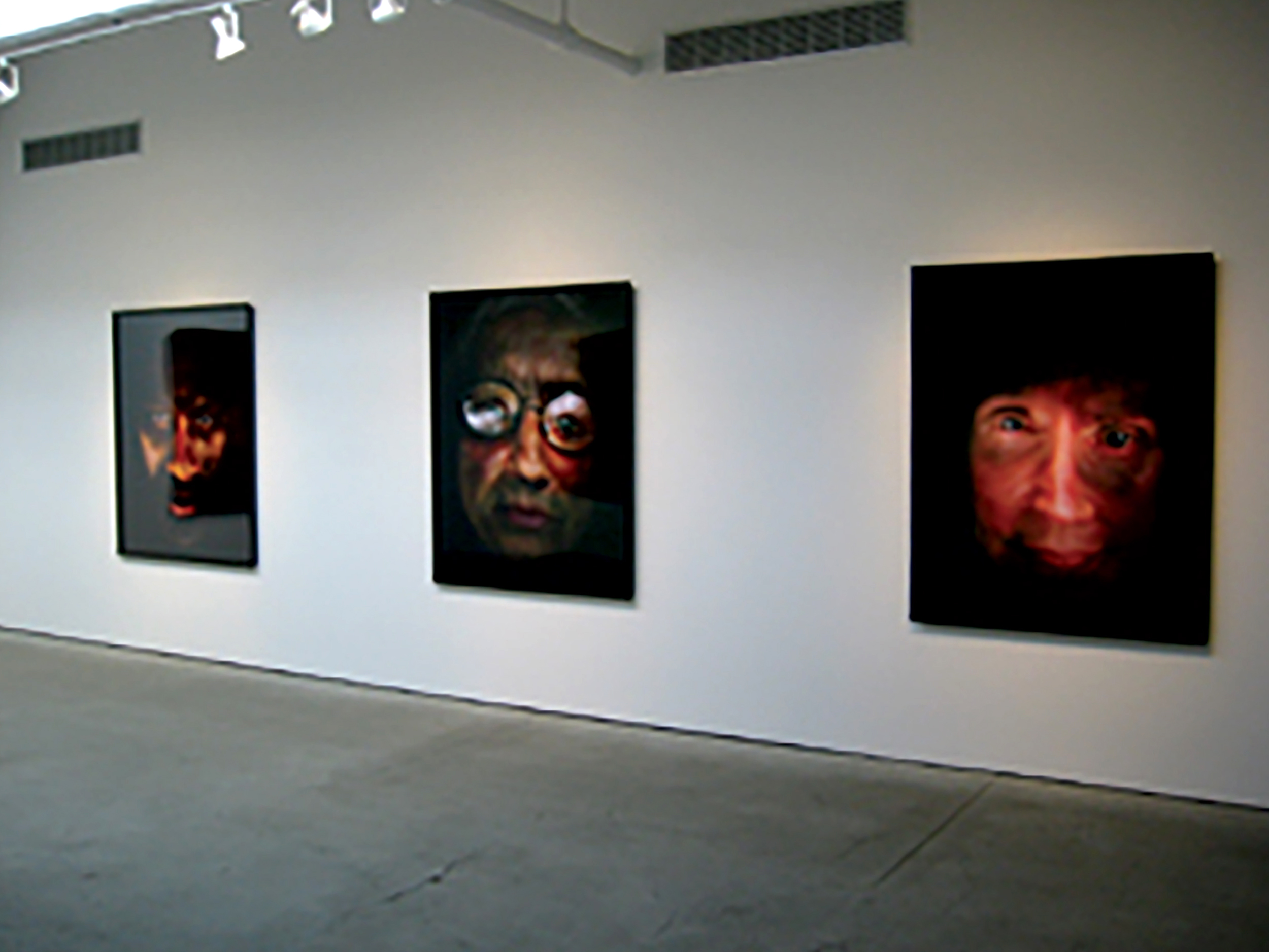
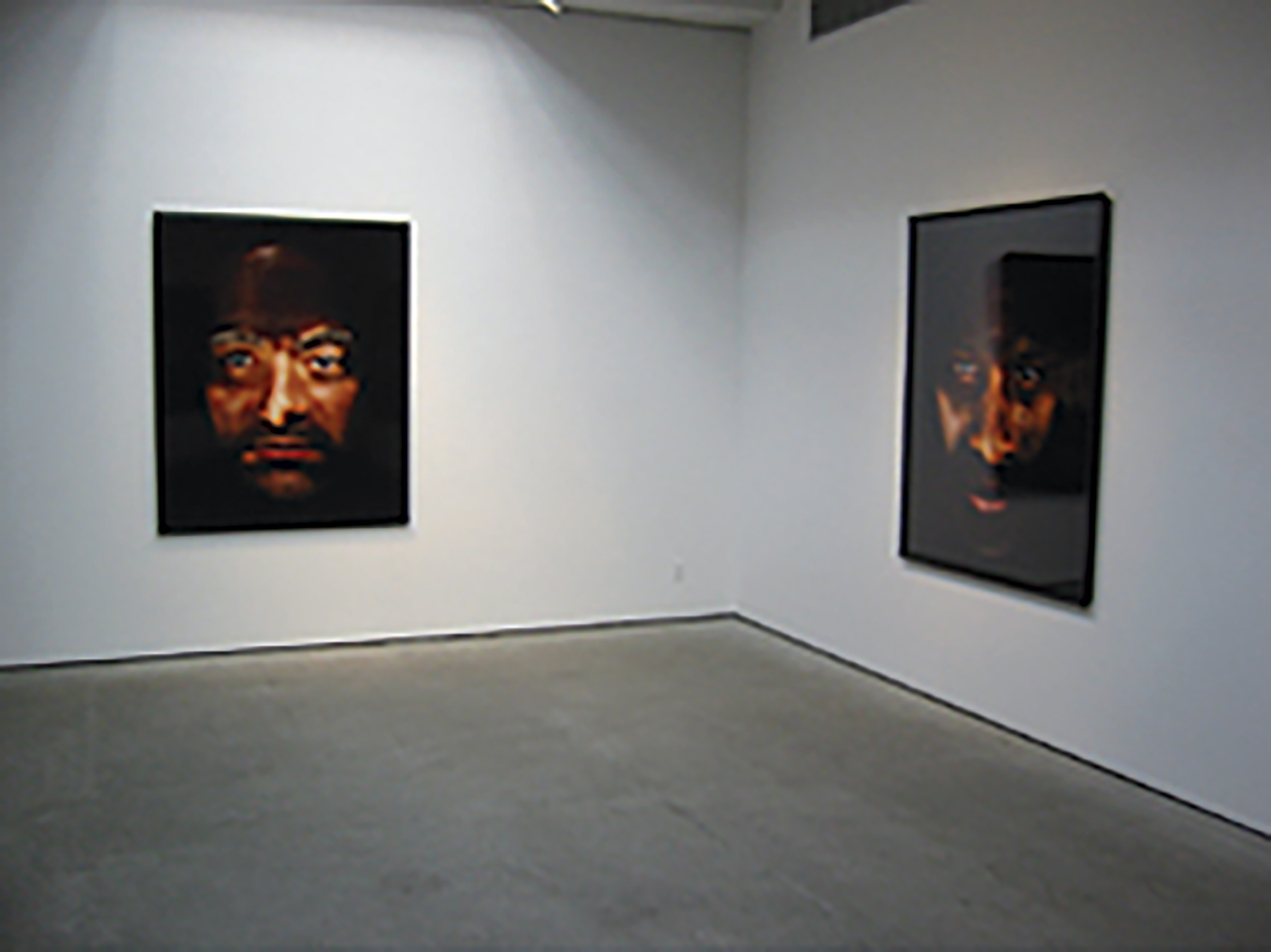
The Julie Saul Gallery is pleased to announce an exhibition of new color photographs by Gary Schneider, the culmination of a four year project entitled Portraits”. In Schneider’s first solo show with this gallery, he will present eight large scale portraits of friends.

Schneider began making portraits using a large format camera in 1989. His approach to portraiture is anti-decisive moment by using very long exposures- in the case of this body of work up to ten minutes. He has used a process in which the exposures are made in a darkened space with a flashlight in a kind of durational performance between artist and subject. According to Schneider, these portraits say as much about him as do the subjects. He was particularly inspired by the way Julia Margaret Cameron worked in the nineteenth century in which during a long exposure she was unable to control the expression of the subject. Schneider places his subjects in a darkened room in a prone position, with a camera placed over the face. He then takes all the information that is deposited on the 8 x 10″ sheet film and begins to interpret. What is recorded on the film is an accumulation of expressions, the emotional performance the subject went through during the exchange.” Although in the final image the subjects are not recognizable in a mimetic way, they convey a soulfulness and sagacity that is mesmerizing.

This is the first time Schneider has worked in color since 1977 in a solo show at Artists’ Space. Work from this portrait series will be included in a solo exhibition at the Fogg Art Museum at Harvard University planned for February 2004.

Schneider was born in South Africa and received an MFA from Pratt Institute in 1979. He has exhibited widely in group and solo exhibitions, and his work has been discussed and reproduced in numerous publications (see our website for a full CV.) Among many public collections, Schneider’s work is included in those of the Guggenheim Museum, the Metropolitan Museum, and the Whitney Museum and the International Center of Photography in New York, the Art Institute of Chicago, the Museum of Fine Arts in Boston and Houston, the National Gallery of Canada, and the Musee de l’Elysee in Lausanne.

Exhibition @ Julie Saul Gallery

Thomas Glassford and Claudia Ferñandez
CONSTRUCCIÓN

December 5, 2003 – January 17, 2004
535 West 22 Street, NYC

The Julie Saul Gallery is pleased to announce a two-person exhibition of new work by Mexico City-based artists Claudia Ferñandez and Thomas Glassford. The show, curated by James Oles, includes photographs and sculptures inspired by the vernacular design and architectural forms of a mega-city whose size and complexity has led to a boom in artistic practice over the past decade. Though much attention has been drawn recently to the traumas and disasters of living in a city of 20 million, in their own ways Ferñandez and Glassford each peel away the chaos to discover the elegance and humor beneath.

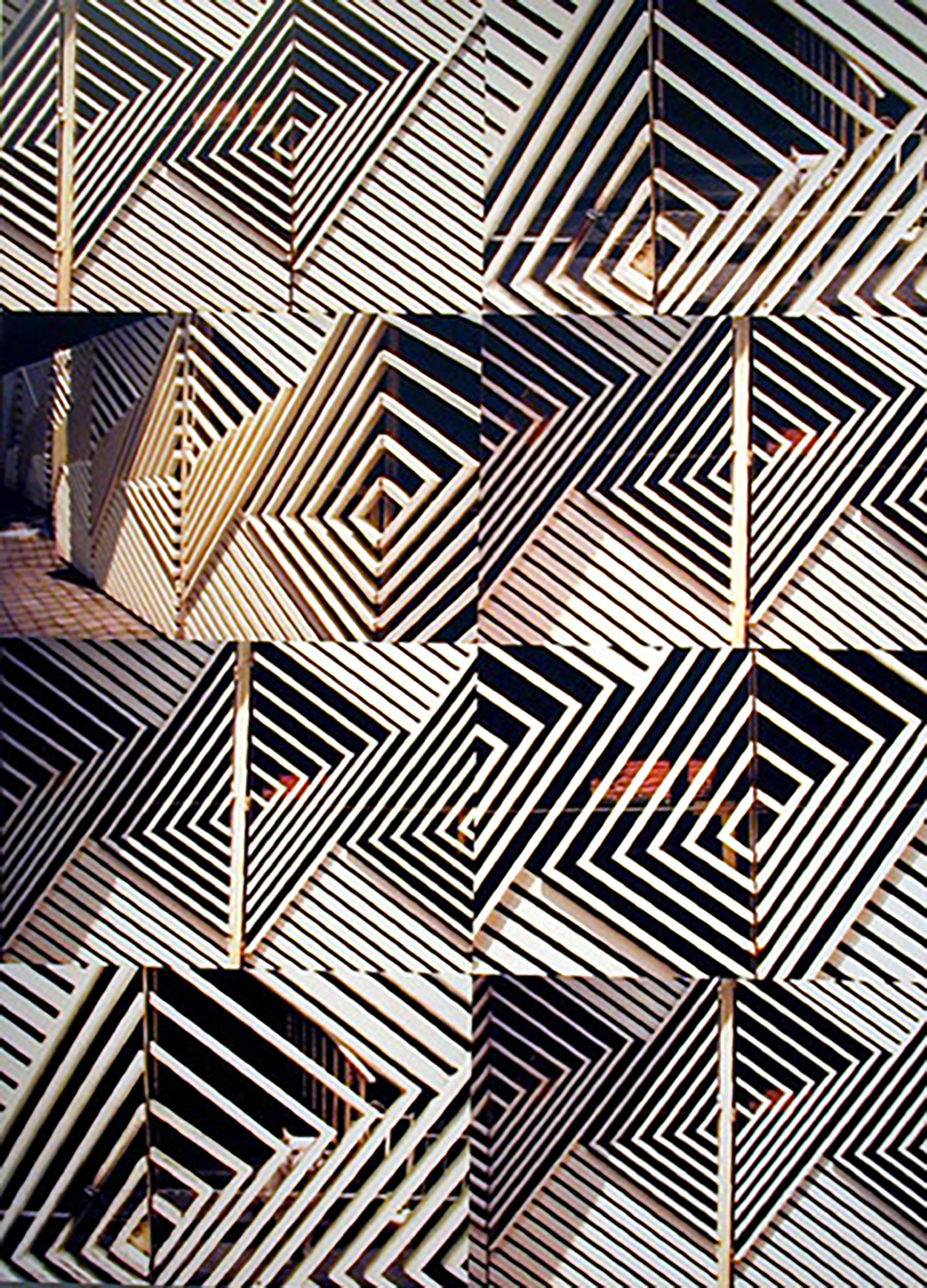
Claudia Ferñandez (b. Mexico City, 1965) works in a variety of media, including painting and video, but is primarily known as a photographer. Over the past several years, she has been captivated by architectural details discovered while driving through Mexico City’s endless middle and upper class neighborhoods, where single-family houses sit behind an almost unbroken line of gates, garden walls and curtained facades. Her photographs highlight patterns and colors that testify to the collision between local forms and atomic age or op art design. But Ferñandez’s images are about more than decoration, for they comment on issues of security, class, and privacy central to contemporary life in Mexico City. The work is presented both as single images and in larger montaged grids. Ferñandez has exhibited widely in Mexico and abroad, and is represented in Mexico City by the Nina Menocal Gallery.

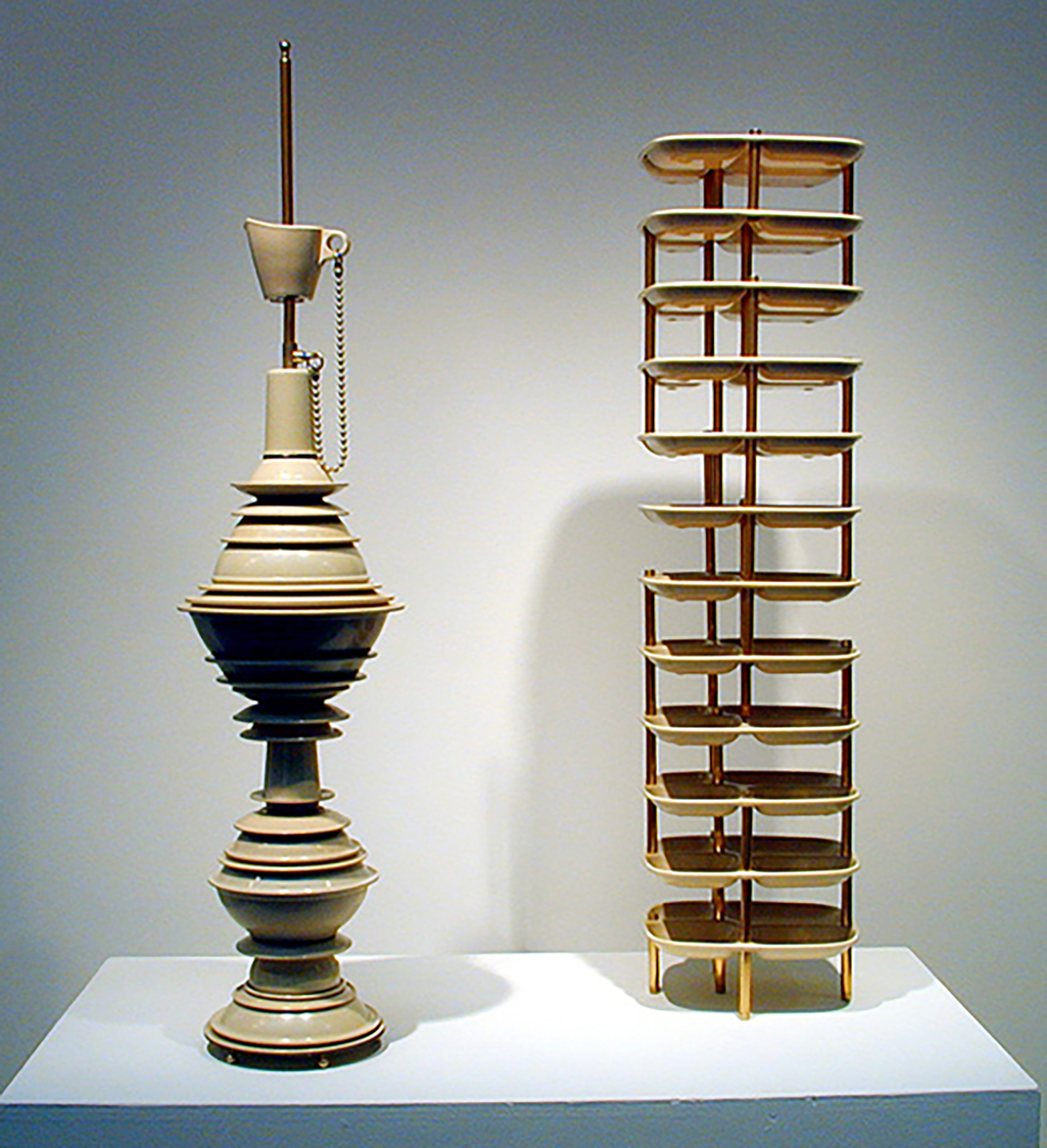
Thomas Glassford (b. Laredo, Texas, 1963) earned his BFA at the University of Texas before moving to Mexico in 1990. Glassford’s early sculptures were based on local and natural materials (dried gourds, leather, chicharrÊn), but he has increasingly turned to more industrial and urban materials. Some of these are found, like embossed vinyl or plastic tableware, while others are modified, like the anodized aluminum siding used architectonically for gates and doorways that he special orders in a range of colors and patterns, and uses to create rhythmic wall reliefs that refer to the city while partaking in a dialogue with the vocabulary of minimalist painting and modernist architecture. The show presents new free-standing sculptures using melamine plates of the type used in school cafeterias and Mexican loncherças, assembled with precision and wit to form towers that can be read as futuristic utopian models, mission architecture, or even stupas. Glassford’s work has also been shown internationally; he is represented by the Galerça OMR in Mexico City.

James Oles is an art historian and curator who specializes in twentieth-century Mexican art. Based primarily in Mexico City, he is also teaches in the art history department at Wellesley College in Massachusetts and is adjunct curator of Latin American art at the college’s Davis Museum and Cultural Center. His publications include South of the Border: Mexico in the American Imagination, 1914-1947 (1993) and Helen Levitt: Mexico City (1997). In 2002 he curated “Colored Surfaces,” an exhibition of contemporary Mexican color photography by four women artists (including Ferñandez) that is currently traveling in Europe.

Exhibition @ Julie Saul Gallery

ARCHITECTURAL CONSTRUCTS
in contemporary photography
July 7 – August 18, 2000
535 West 22 Street, NYC

Manuel Acevedo
Asymptote: Rashid and Couture
Oliver Boberg
Dino Bruzzone
James Casebere
Robert Cumming
Jan Groover
Craig Kalpakjian
Barbara Kasten
Didier Massard
Nic Nicosia
Orit Raff
Glen Seator
Susa Templin
Bernard Voita

Julie Saul Gallery is pleased to announce a summer group show on the theme of architecture in photographs which have been staged, constructed and manipulated. The marriage of staging and architecture in photography is a natural pairing, evolving from the use of architectural models which are often recorded and used as part of the conceptual and design process.

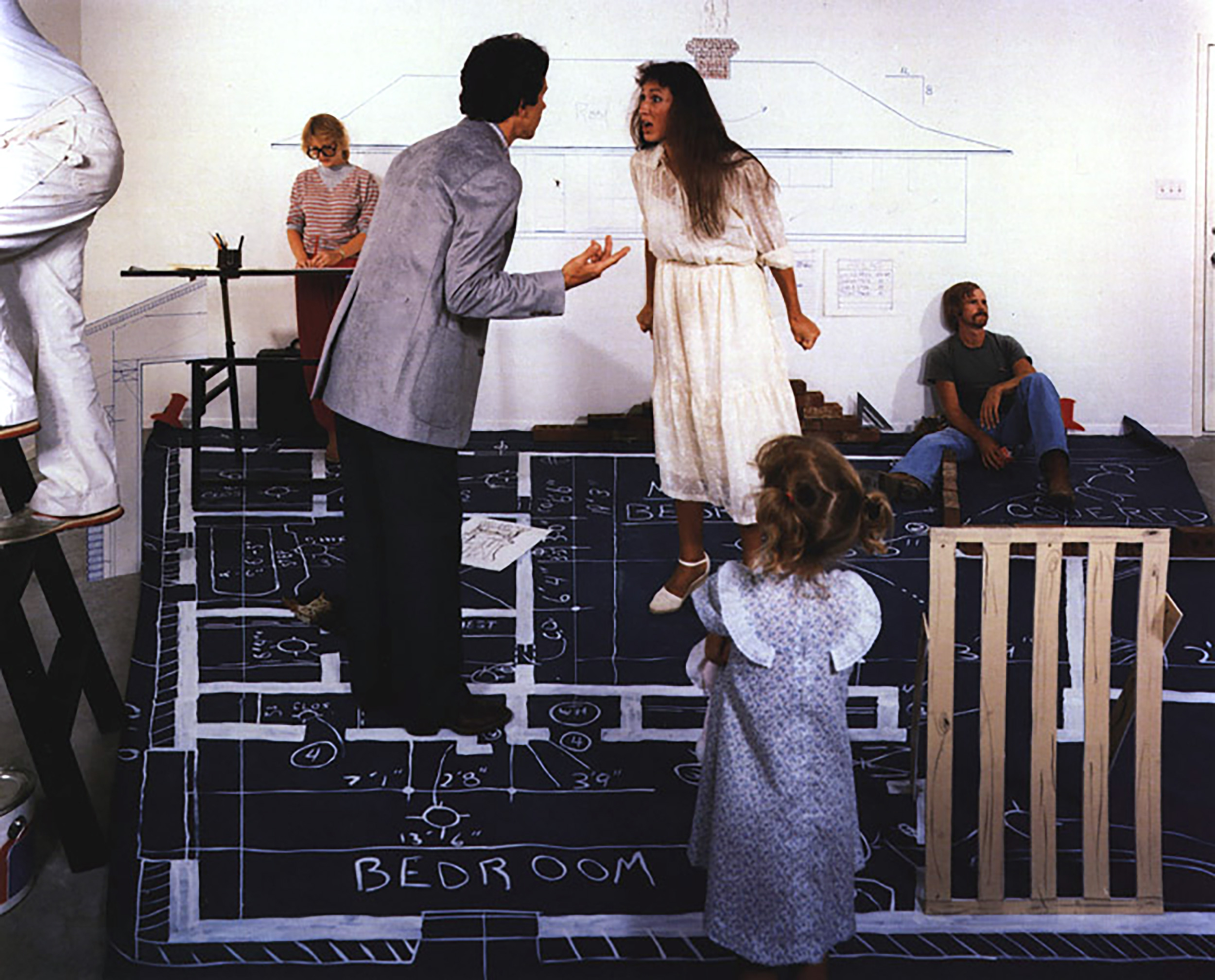
The Bauhaus tradition of manipulated photographs evolved into the postmodern practice of using models as a representation of the simulacrum. James Casebere’s black and white prints from the late ¥70s and Barbara Kasten’s monumental architectural on-site constructions from the early 80s both make use of geometry and archetypal forms. Jan Groover combined architectural views into triptychs for purely formal reasons. The simulacrum and its use as a means of social commentary has been widely exploited using architectural sites- ranging from the dynamics of home life in Nic Nicosia’s “Domestic Disaster” series from the early ¥80s to Oliver Boberg’s recent amusing parodies of the German school of straight photography which he meticulously renders in mind boggling trompe l’oeil. Glen Seator is known for his fictive architectural constructions which function as surrogate environments and sculpture- from which he often creates photographs which further the mediation with reality. Orit Raff conjures up an architectural space through photographs and actual structural elements- in this case a public bathroom. Didier Massard is presents in image based on one of his painstaking maquettes of a western pueblo.

The computer is central to the design process in recent architecture, and it is natural that the same concepts (and software) are applied to photographs, allowing both a tool and commentary on virtual life. The team Asymptote: Rashid and Couture create completely digitally produced architectural environments which constantly morph and Craig Kalpakjian uses the computer to create completely convincing interior spaces.

Manuel Acevedo whose work was recently seen in the “Greater New York” show at PS1 and Susa Templin take a decidedly lo-tech approach to their fantasy driven architectural propositions which combine documentary photographs with collage and drawing. Reference to the child’s play of building and models is used in the highly sophisticated work of Bernard Voita, as well as the playful constructions of Argentinean architect Dino Bruzzone.

Exhibition @ Julie Saul Gallery

Second gallery
Nancy Jackson
Onward!

January 17 – February 16, 2008 
535 West 22 Street, NYC

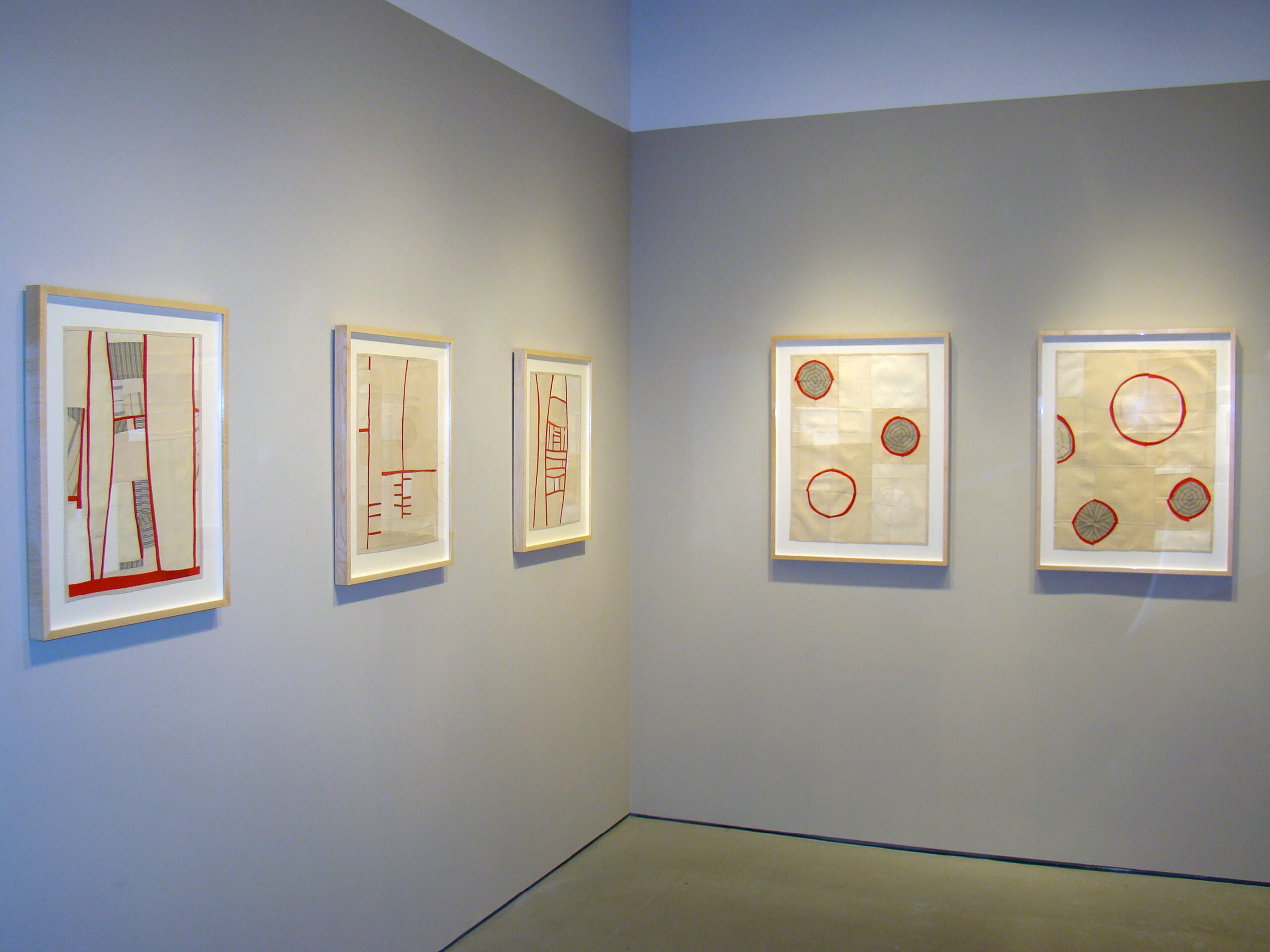
We will exhibit several small paintings and a sculpture in the second gallery in Jackson’s first New York solo exhibition. The subject of the works is nature, landscape and close up, with gouache paintings and a sculpture rendered with infinite delicacy and care. There is a spiritual or even visionary quality to her style linking it to a Victorian sensibility.

Jackson has exhibited extensively in Los Angeles where she lives, with four solo shows with the Rosamund Felsen Gallery and numerous group shows. She has been advocated by LA based critic and curator Michael Duncan, who included her in “LA Post Cool” at the San Jose Museum of Art in 2002. In Fall 2004 the Drawing Center in New York featured her in their selections show entitled “Talespinning”.

Exhibition @ Julie Saul Gallery

John O’Reily
Echo: Recurrent Themes 1965-2007
January 18 – February 16, 2008
535 West 22 Street, NYC

The Julie Saul Gallery is pleased to announce our fifth solo exhibition with John O’Reilly. The exhibition entitled Echo: Recurrent Themes 1965-2007 includes twenty-eight works spanning 42 years, from 1965 in a large work entitled “Self Portrait”, to a recent Polaroid montage from August 2007. What unifies the works are recurring themes, subjects and formal elements including the studio, Greek mythology, feet, flowers, circles and relationships. Although all of the work involves collage elements, the mediums and scale vary dramatically from the large scale early work to tiny recent Polaroids. The show includes several little known color collages from the 1980s.

O’Reilly’s work reached the attention of the American art public when Klaus Kertess included him in the 1995 Whitney Biennial. Sara Rimer profiled him in the New York Times Magazine calling him “The Sixty Five Year Old Sensation.” The public was not aware that the Worcester based artist had been quietly creating powerful collage works for thirty years- and continues to do so.

O’Reilly’s work has been written about extensively by some of the leading art critics of our time, including Michael Kimmelman, Kertess, A.D. Coleman, Ken Johnson, Vince Aletti, Vicki Goldberg, David Deitcher, David Levi Strauss, and Francine Koslow Miller.

His work is featured in eighteen important public collections including The Musuem of Modern Art, The New York Public Library, The Princeton Art Museum, Williams College Art Museum, The Fogg Art Museum at Harvard, San Francisco Museum of Modern Art, and The Addison Museum in Andover which hosted a retrospective in 2002 accompanied by a significant monograph published by Twin Palms.

When Color Was New:
vintage photographs from around the 1970s

July 7 – September 6,2008
535 West 22 Street, NYC

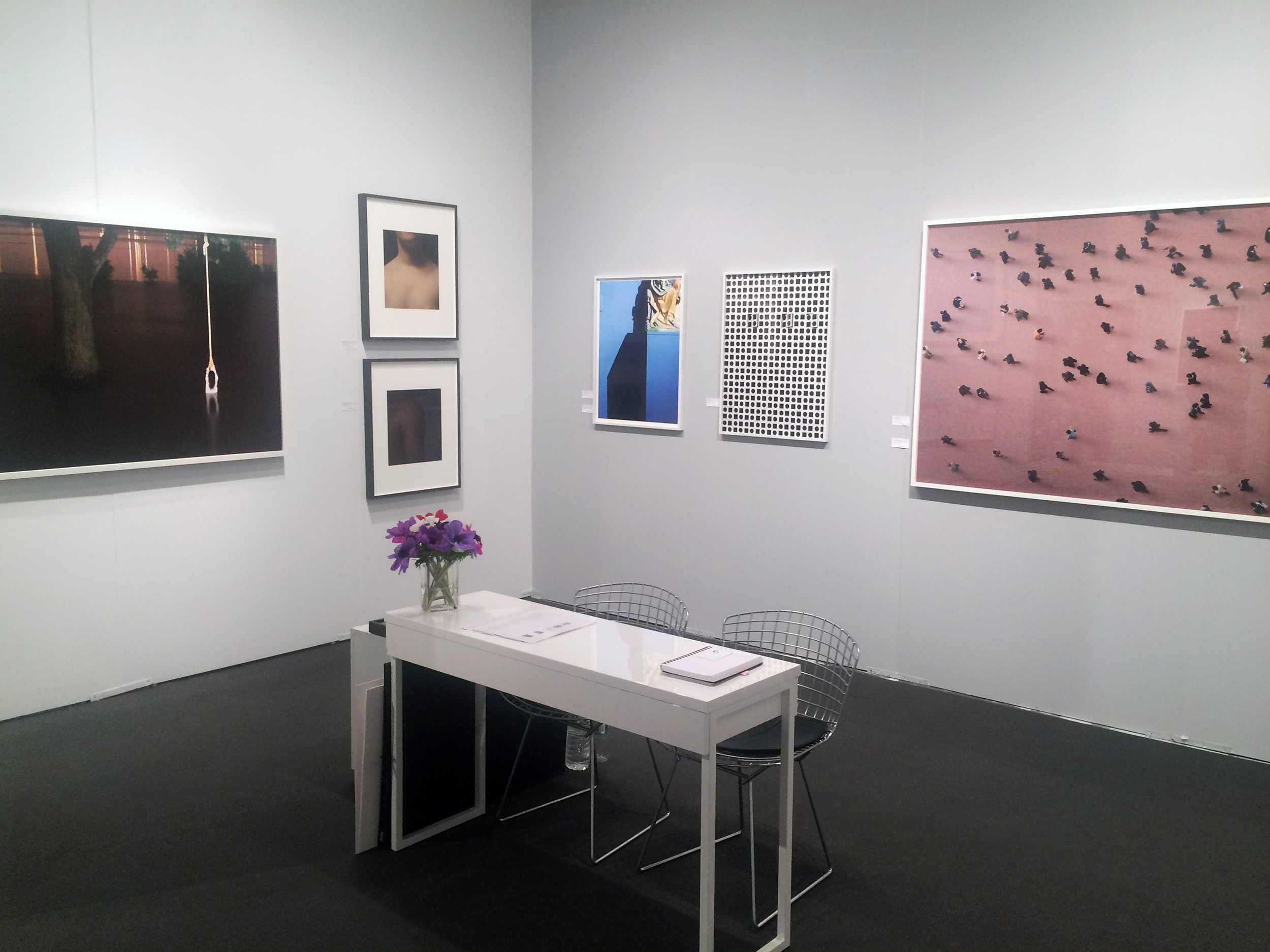
Harry Callahan, William Christenberry, William Eggleston, Mitch Epstein, Walker Evans, Luigi Ghirri, Nan Goldin, Dan Graham, Jan Groover, David Hockney, Helen Levitt, Joel Meyerowitz, Paul Outerbridge, Martin Parr, John Pfahl, Arthur Siegel, Stephen Shore, Joel Sternfeld, Boyd Webb, Terry Wild

The Julie Saul Gallery is pleased to announce our summer exhibition of color work made during and around the 1970s, “when color was new.” The selection is comprised of 40 works by 20 photographers ranging from the straight street or snapshot aesthetic of Helen Levitt, William Eggleston, and Joel Meyerowitz to more conceptually based work of contemporaries Boyd Webb, John Pfahl, Dan Graham and Luigi Ghirri. Hybrids exist as well as in the straight yet formally driven compositions of Jan Groover and David Hockney. The diaristic quality of the snapshot aesthetic, which is such a standard feature of art school production, is beautifully demonstrated by the prints of Stephen Shore.

Self proclaimed art photographers have experimented with the use of color from the mediums’ early days, as seen in the autochromes of Edward Steichen. Some examples of color work made prior to the 1970s are featured in the show to demonstrate the “pre-history” of color art photography, especially as used by cross-over commercial/art practioners Paul Outerbridge Jr, Arthur Seigel and Harry Callahan.

It was only with the imprimatur given by John Szarkowski at the Museum of Modern Art in 1976 with his controversial exhibition of William Eggleston’s Guide, that color became generally accepted within the art canon. The trickle down effect took hold almost immediately within institutions and art schools- and by the mid-1980s color was the most widely used medium in art photography and today it is ubiquitous.

Many mediums were evident within the practice of color photography from its earliest days. The stunning intensity of the color carbro prints of Outerbridge stand out in contrast to the subtle tonalities of even the most vibrant chromogenic prints. The selection includes beautiful examples of the nearly extinct medium of dye transer prints as seen in the work of Meyerowitz, William Christenberry and Joel Sternfeld. In several instances, the exhibition includes both chromogenic prints and dye transfers by the same photographer, enabling one to see the different qualities of the two mediums. The short-lived popularity of the SX-70 Polaroid gave rise to the use of color by Walker Evans- who had previously vowed his lack of interest in color. Australian photographer Boyd Webb made stunning use of the powerful Cibachrome print in his pop still lifes.

Altogether, this group of images, which range from still life to landscape and street photography demonstrate a moment when there was novelty and even shock in the use of color in an art context- while today it certainly represents the norm. Almost all of the prints in the exhibition were made at or around the time of the negative, allowing us to reflect on the historical appearance of color print, which today are almost universally printed digitally.

An illustrated catalog with an essay by Linda Yablonsky is available.

Exhibition @Julie Saul Gallery

Second gallery
Bill Jacobson
New York
July 9-September 12, 2009
535 West 22 Street, NYC

The Julie Saul Gallery is pleased to announce our seventh solo exhibition of photographs by Bill Jacobson. The show will include three large scale prints of New York executed in 2002 and 2003.

Julie Saul Gallery is among a number of galleries specializing in photography who have joined forces this summer to present a related series of exhibtions entitled NEW YORK PHOTOGRAPHS. Participating galleries include: Deborah Bell, Bonni Benrubi Gallery, Janet Borden Gallery, Danziger Projects, Howard Greenberg Gallery, Hasted Hunt, Edwynn Houk Gallery, Robert Mann Gallery, Laurence Miller Gallery, Yossi Milo Gallery, Pace/MacGill, Yancey Richardson Gallery.

A monograph of Jacobson’s first in-focus body of work, A Series of Human Decisions, will be released this Fall by Decode Books.

Exhibition @ Julie Saul Gallery
View artist page @ Julie Saul Gallery

Second gallery
Debra Smith
Looking to the Left

October 30- December 24, 2008
535 West 22 Street, NYC

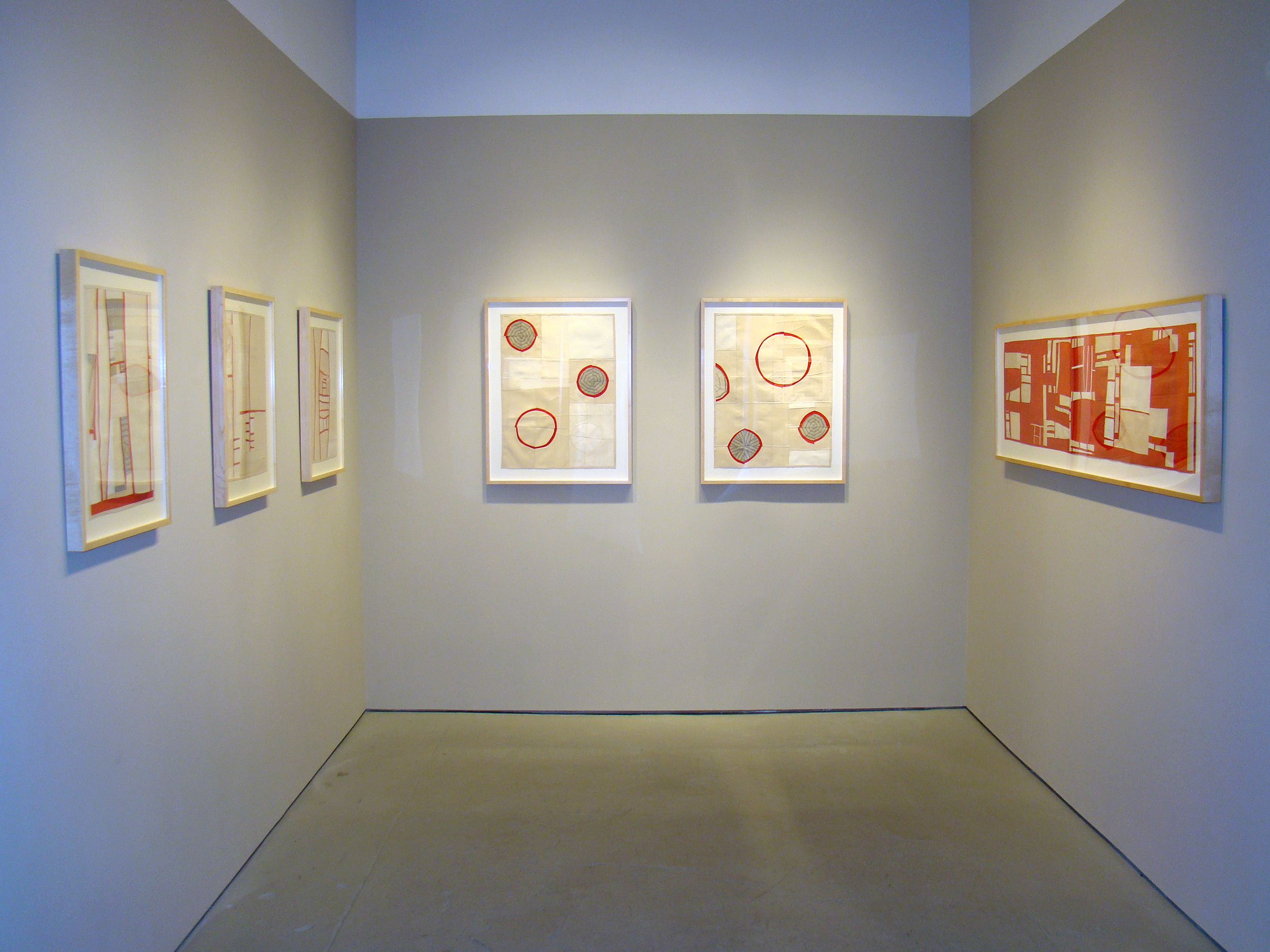
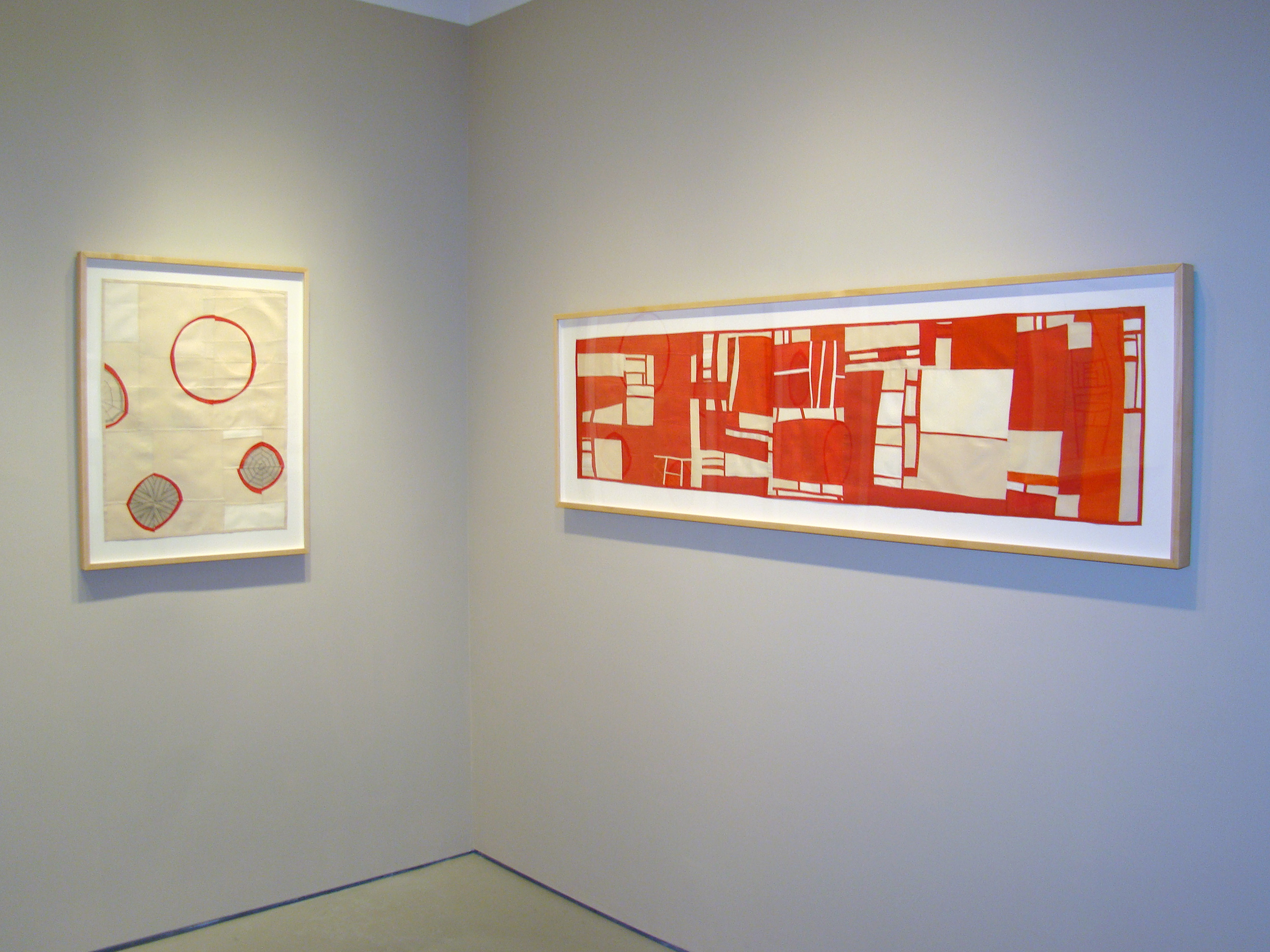
Debra Smith will have her first solo exhibition in New York comprised of nine collages made from antique silk kimono linings and other vintage silks. These fabric collages have the quality of calligraphic drawings- both gestural and graphic. Smith’s use of vintage textiles conveys the warmth and aura inherent to materials that have their own history.  She likens the artistic results to drawing with cloth, which results in a subtle poetry not unlike unexpected variations that occur when attempting to translate one language to another. The markings range from acidic reds (specific to Japanese textiles and specifically the lining of men’s kimonos) to pale shades of white with subtly varying hues. Debra Smith was born in Hannibal, Missouri and currently works and resides in Kansas City, Missouri. She graduated from the Kansas City Art Institute with a B.F.A in textiles and later received an Associate Degree in Applied Science from the Fashion Institute of Technology.  She recently returned to the Midwest after almost living a decade in Brooklyn, New York.

Exhibition @Julie Saul Gallery

Pollination:
Neeta Madahar and Christopher Russell

January 8-February 28, 2009
535 West 22 Street, NYC

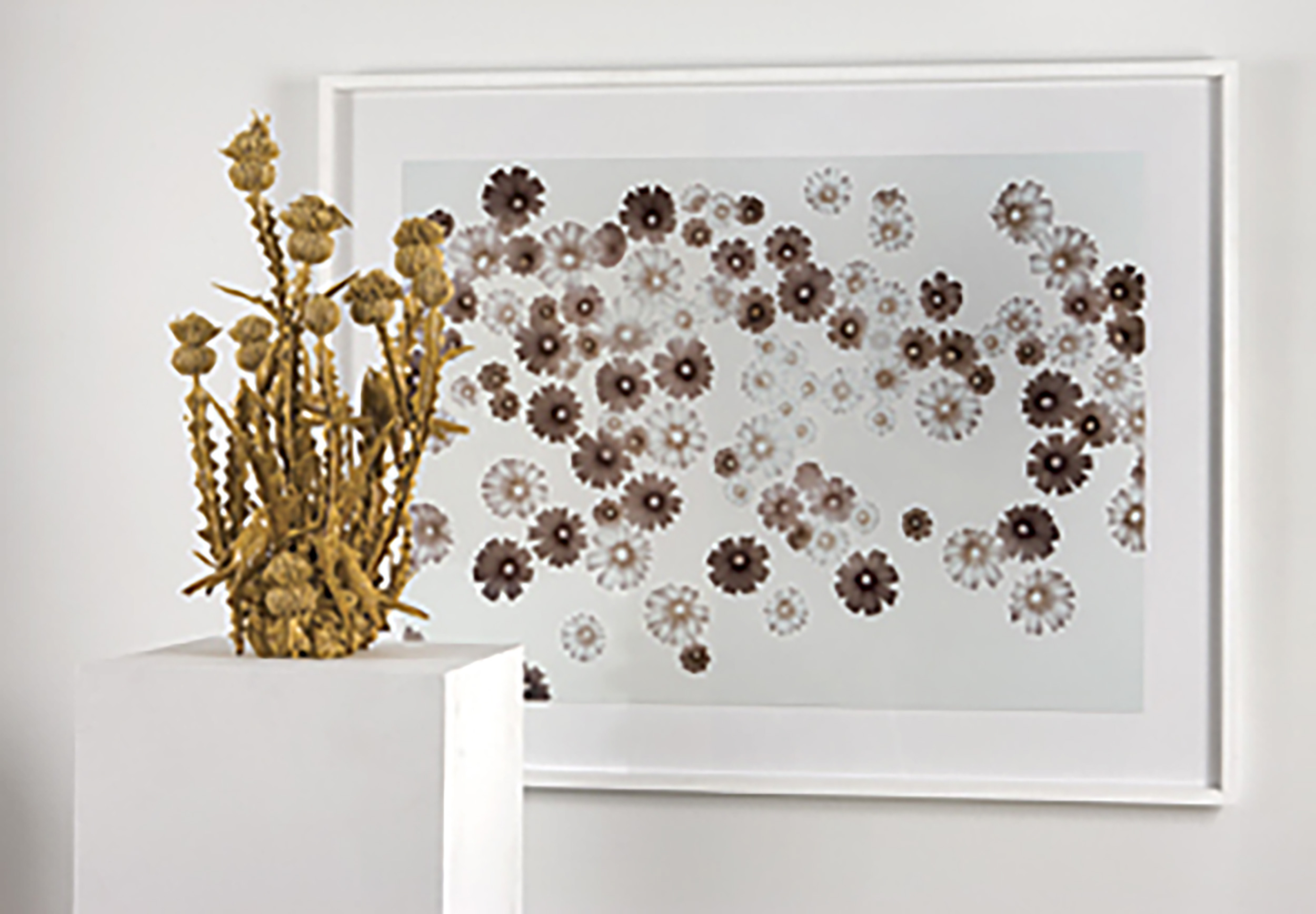
We are pleased to announce a two person exhibition entitled Pollination combining unique Cibachrome photograms by Neeta Madahar and glazed ceramic sculptures by Christopher Russell. This will be Madahar’s third show with the gallery and Russell’s premier show.

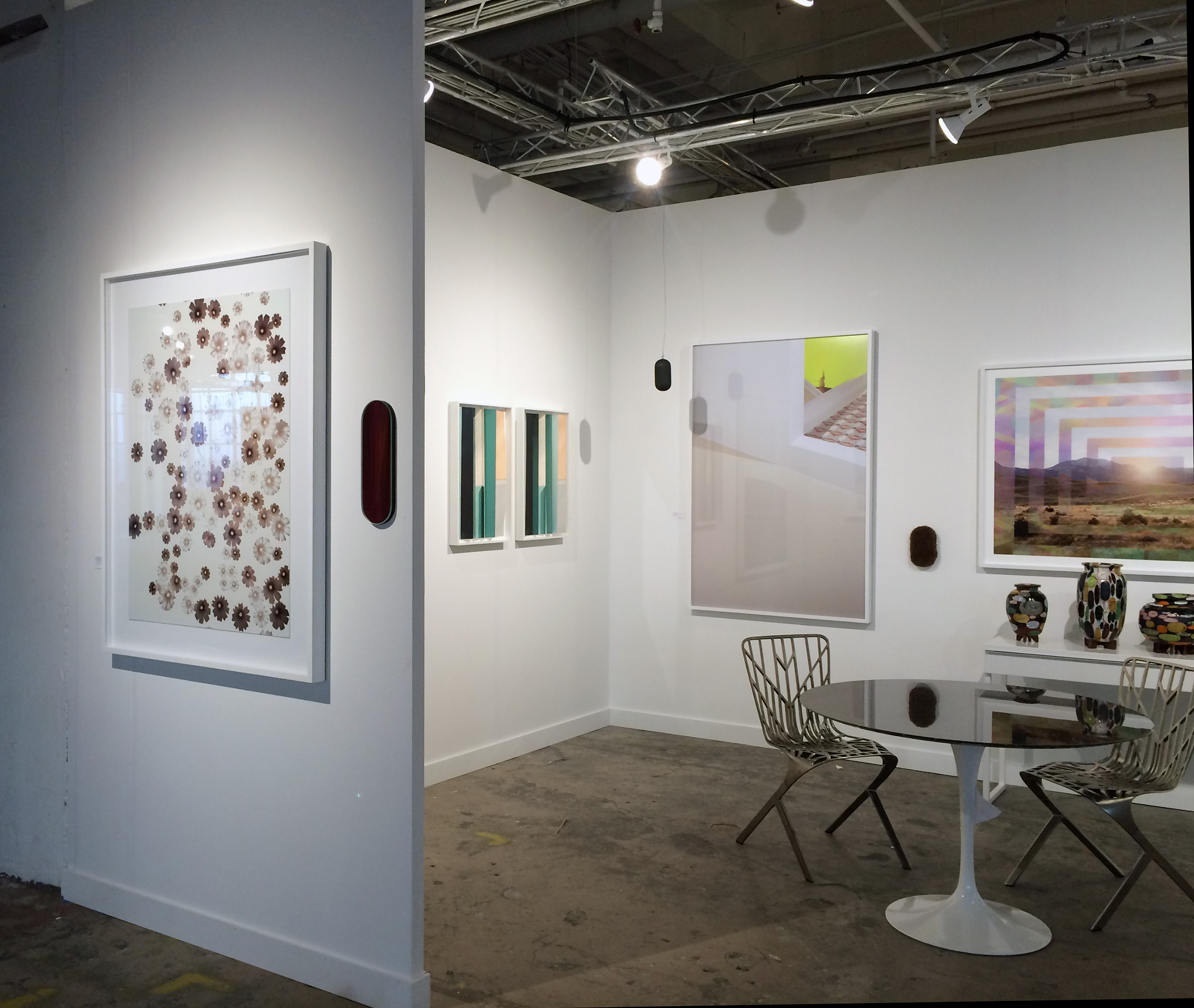
Madahar’s Cosmoses is a series of large-scale unique photograms made of origami cosmos. Each flower was made by the artist- a systematic process that required extreme concentration and a delicate relationship between the eye, hand and mind. The flowers are made in varying paper thicknesses and colors and scattered across the photographic paper in complete darkness, before exposing the paper to light. What appears to be casual and random is actually a rigorous and detailed process. The project was inspired by her work with an astronomer during the course of planning her Falling series in which she combined an image of a star filled night sky with a multitude of falling Sycamore leaves. The overwhelming magnitude of time and distance produced a sublime experience for Madahar which she seeks to recreate in these works. The actual photographic paper used is color, but the works range from monochromatic to brightly colored, depending on the flowers used. They are cameraless and each work is unique.

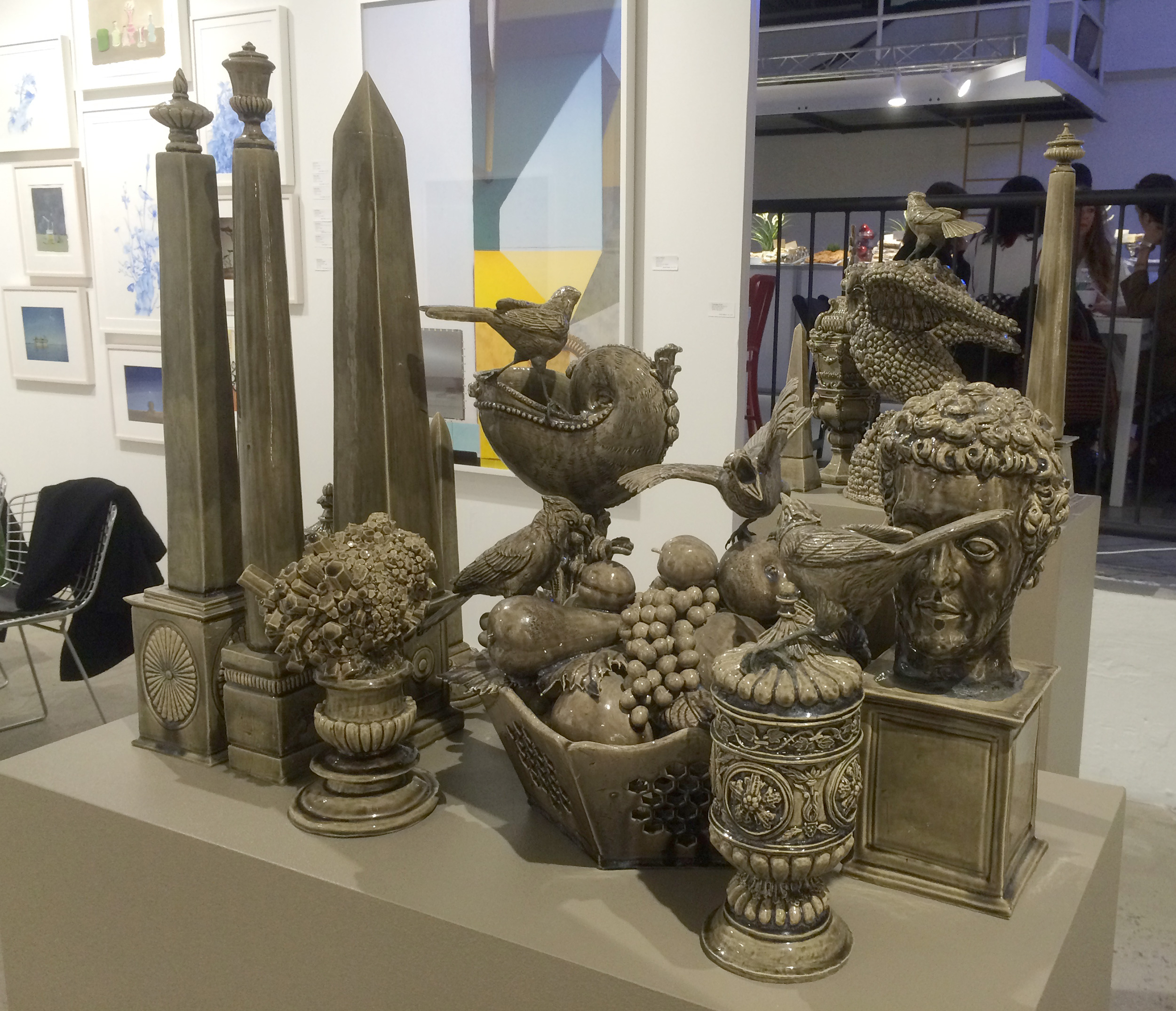
Christopher Russell creates highly detailed incredibly lifelike yet monochromatic ceramic works based on nature. For the last three years he has been exploring the intense world of bees through a series of ceramic sculptures which comes out of a tradition of scientific models and the decorative arts. Some are reliefs representing bees in hives, or dramatically enlarged images of pollen. Others are free standing sculptures which bring together birds, bees, flowers and thistles into highly fanciful and seductive compositions. In the pollen works Russell is using traditional techniques to create objects based on very contemporary sources- electron microscopes. Other compositions are inspired by historical sources such as Audubon prints and Dutch still lives. He uses a deep golden colored glaze, which has the appearance of honey and also separates the work from more traditional glazed ceramic works.

Although in many ways the works of Madahar and Russell are very different, they share a sensual and sublime celebration of nature and an obsession with fabrication and process in their exquisite craft. Like the process of pollination in nature, their work combines seduction and science.

Russell’s work is currently on exhibit in a group show entitled Specimen: representing the Natural World at Rutgers University and was shown last summer at Wave Hill in Riverdale. He studied at Wesleyan University and lives and works in New York.

Madahar lives outside of London and received an MFA from the School of the Museum of Fine Arts, Boston. She has shown extensively in the US and the UK- and she recently had a video called Solstice commissioned by the Film and Video Umbrella and shown at Harewood House and the Aspex Gallery in the UK. Among the many public collections which include Madahar’s work are the Fogg Art Museum at Harvard, The Kemper and Nelson Atkins Museums in Kansas City, the Santa Barbara Museum of Art and the Victoria and Albert Museum in London.

Exhibition @ Julie Saul Gallery

Summer Pictures:
Group exhibition curated by Isaac Mizrahi

Donna Chung, Jane Freilicher, Maureen Gallace, Maira Kalman, Adrianne Lobel, Lisa Sanditz, Wayne Thiebaud and Julia Sherman
July 9-September 12, 2009

The Julie Saul Gallery is pleased to announce a summer group show curated by fashion designer Isaac Mizrahi. The selection of artists is highly personal, even eccentric, and fully represents Mizrahi’s idiosyncratic world view. The artists include Donna Chung, Jane Freilicher, Maureen Gallace, Maira Kalman, Adrianne Lobel, Lisa Sanditz, Wayne Thiebaud and Julia Sherman. He has either collected or long admired each of them. Although extremely diverse in terms of age and aesthetics, the group is unified by an original, sophisticated and compelling sense of color and a sensual, joyful quality. Central to the concept is the Wayne Thiebaud painting representing a confection which he is making specifically for the exhibition A large mural-scale painting by Julia Sherman at the entrance will introduce the show. This rigorous and playful geometric composition by Sherman, a relation of Mizrahi’s who was active painting in the 1960s and ’70s, demonstrates the kind of art and aesthetic sense which influenced him as a young man.

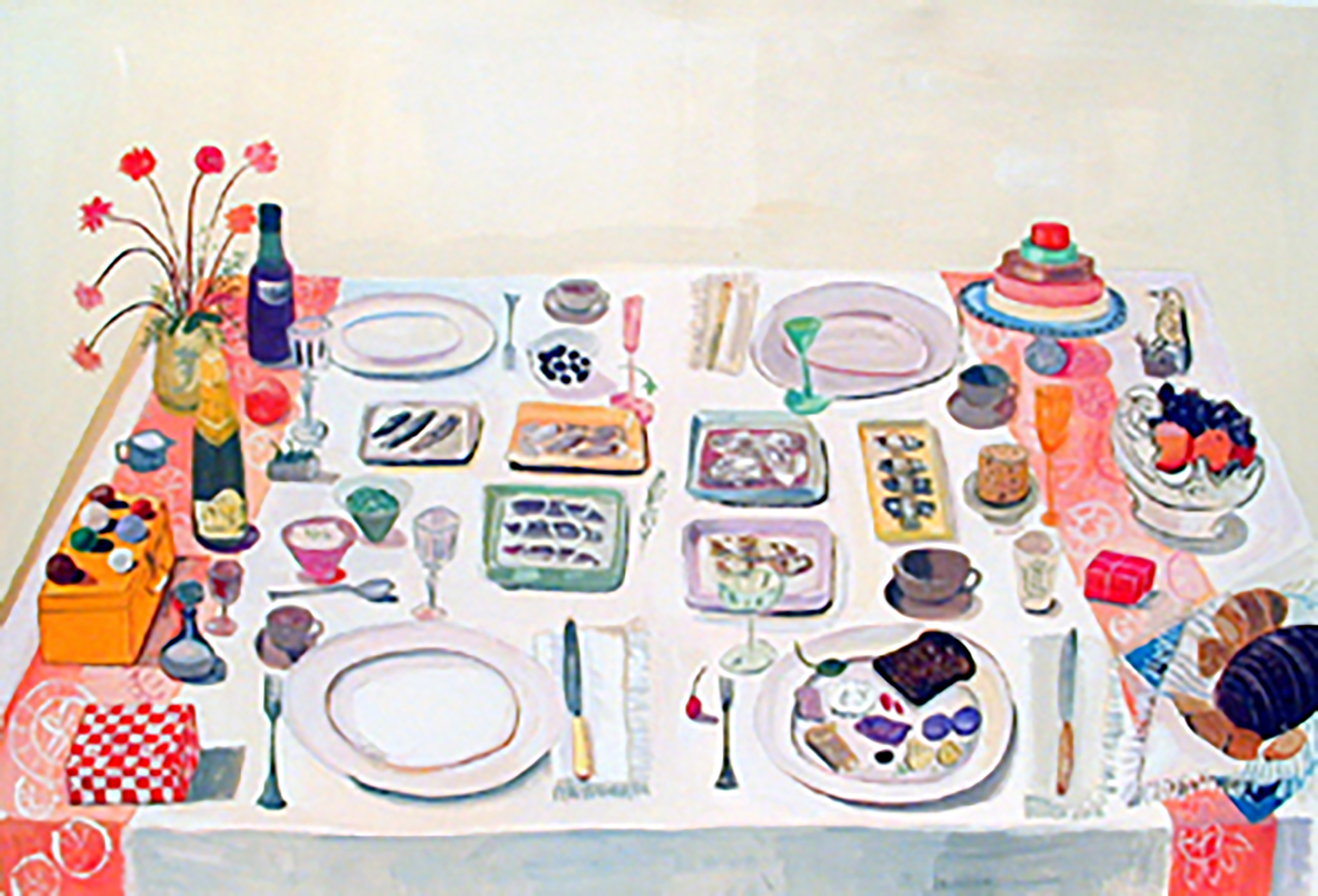
New to the public are the prismatic landscapes of Adrianne Lobel who is well known for her theater set and production design in collaboration with such notables as Mark Morris. Lisa Sanditz creates bold and fanciful paintings which she shows regularly with Chelsea Gallery CRG. She shares a non ironic wit and sense of whimsy with the youngest artist in the show, Donna Chung, who shows her composite/collage works with Williamsburg Gallery Klaus von Nichtssagend. Maira Kalman is a gallery artist who is well known for her editorial paintings as well as those made to illustrate her own books. We will present a small selection of gouache paintings on paper from a Gourmet Magazine project on breakfasts.

Maureen Gallace and Jane Freilicher are both master painters of world renown. Freilicher, the ultimate colorist, recently presented a magnificent show on 57th Street at the age of eighty-four. Gallace, with her landscapes inhabited by prototypical architectural forms, shares with Freilicher a keen observervation of nature.

Mizrahi has designed, directed, hosted cabaret and shown us numerous facets of his personality and talents, but this is his curatorial debut!

Exhibition @Julie Saul Gallery

Roz Chast
Sad Sacks, Worry Warts, Hellions & Bad Eggs
November 19-January 9, 2010
535 West 22 Street, NYC

We will host a booksigning for Chast on Saturday, December 19th from 4-6 with copies of her Theories of Everything which has recently been published in paper back. The public is encouraged to bring their own copies of Chast’s books for signing.

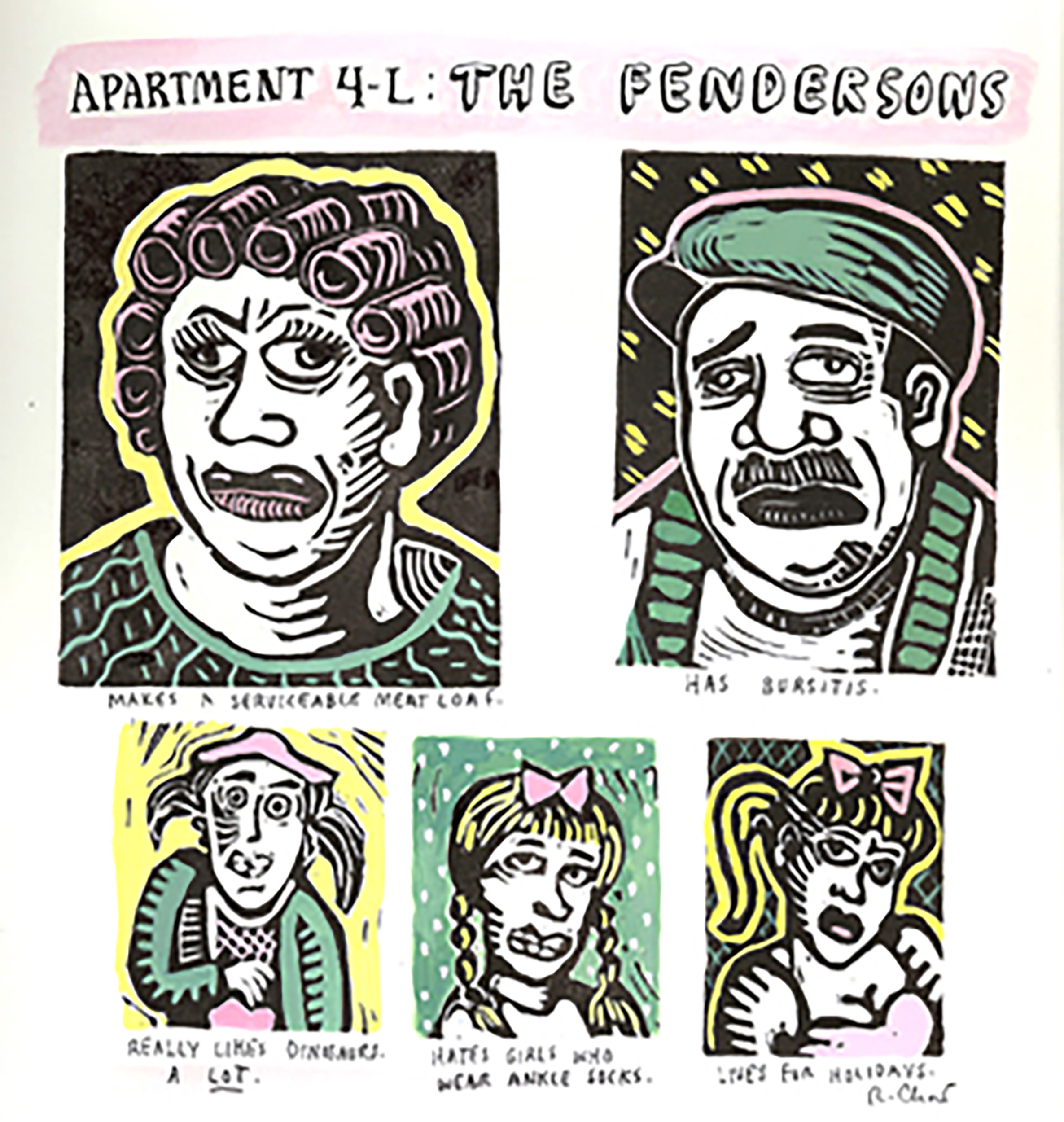
Roz Chast has a new passion: carving rubber stamps with her signature eccentric types. These assorted portraits have been categorized as “Sad Sacks, Worry Warts, Hellions & Bad Eggs”. After creating her cranky characters she has populated various works on paper which combine images, text and painting . One work was recently featured in the cartoon issue of The New Yorker in a piece called “Crankster: the Site for Anti-Social Networking”. In addition to the works on paper we will exhibit a group of Chast’s famous Russian painted eggs which also feature portrait heads.

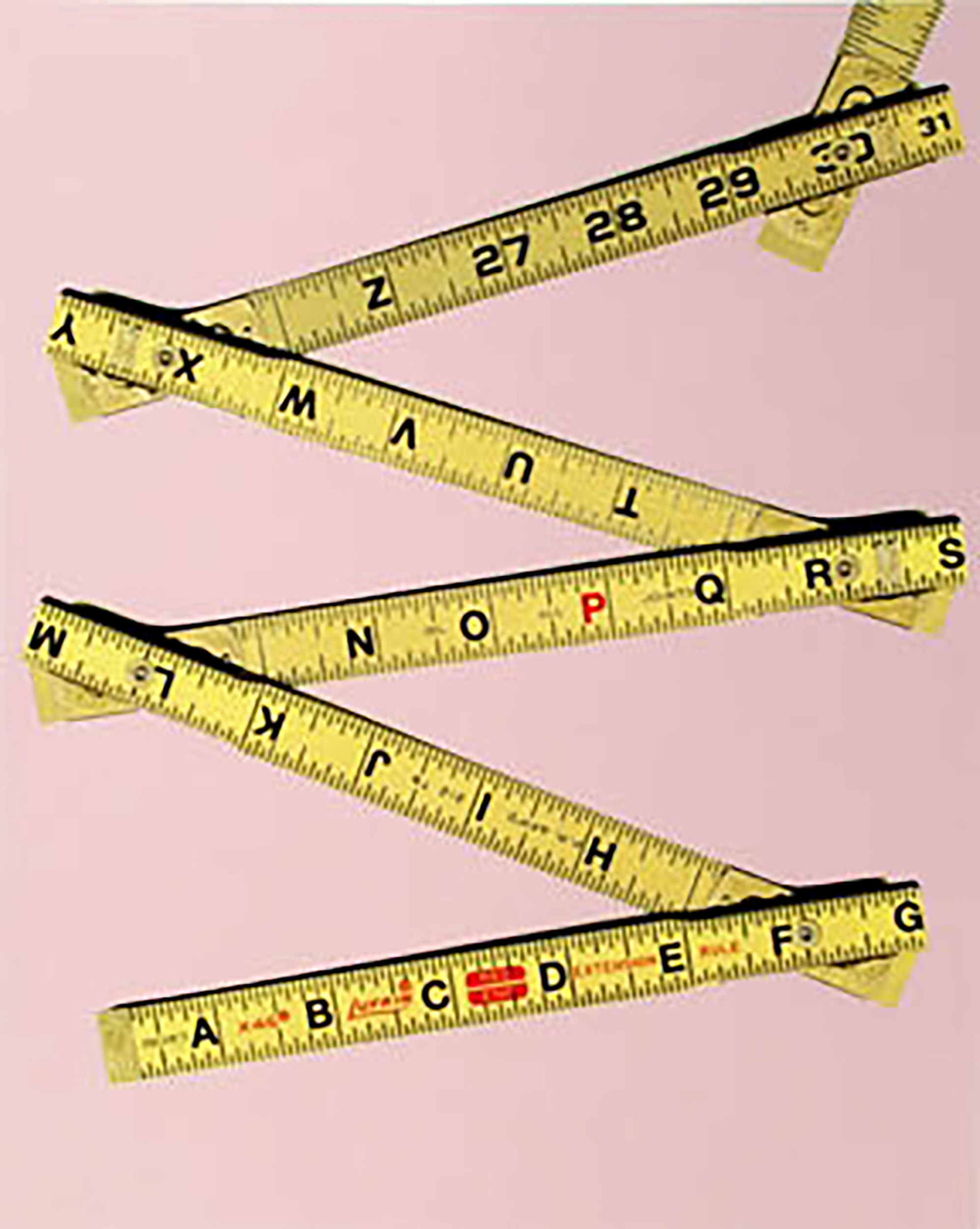
Chast has exhibited at the gallery since 2004 and this will be her third solo exhibition. She is well known for her cartoons and illustrations which are regularly featured in The New Yorker, and almost 50 prominent publications. She is the author and or illustrator of numerous books including most recently “The Alphabet from A to Y with Bonus Letter Z” with Steve Martin.

Exhibition @Julie Saul Gallery

Heads
Morton Bartlett, Valérie Belin, Maria Magdalena Campos-Pons, Rineke Dijkstra, Bill Jacobson, Sarah Anne Johnson, Soo Kim,
Nikki S. Lee, David Levinthal, Tanya Marcuse, Gary Schneider, Arne Svenson, Hellen Van Meene, and Jeff Whetstone
November 19. 2009-January 9, 2010
535 West 22 Street, NYC

The Julie Saul Gallery is pleased to present a group exhibition called Heads which will bring together photographs by fourteen artists working in photography. Portrait representations come in many forms, and this selection explores the idea of what animates or objectifies the human physiognomy.

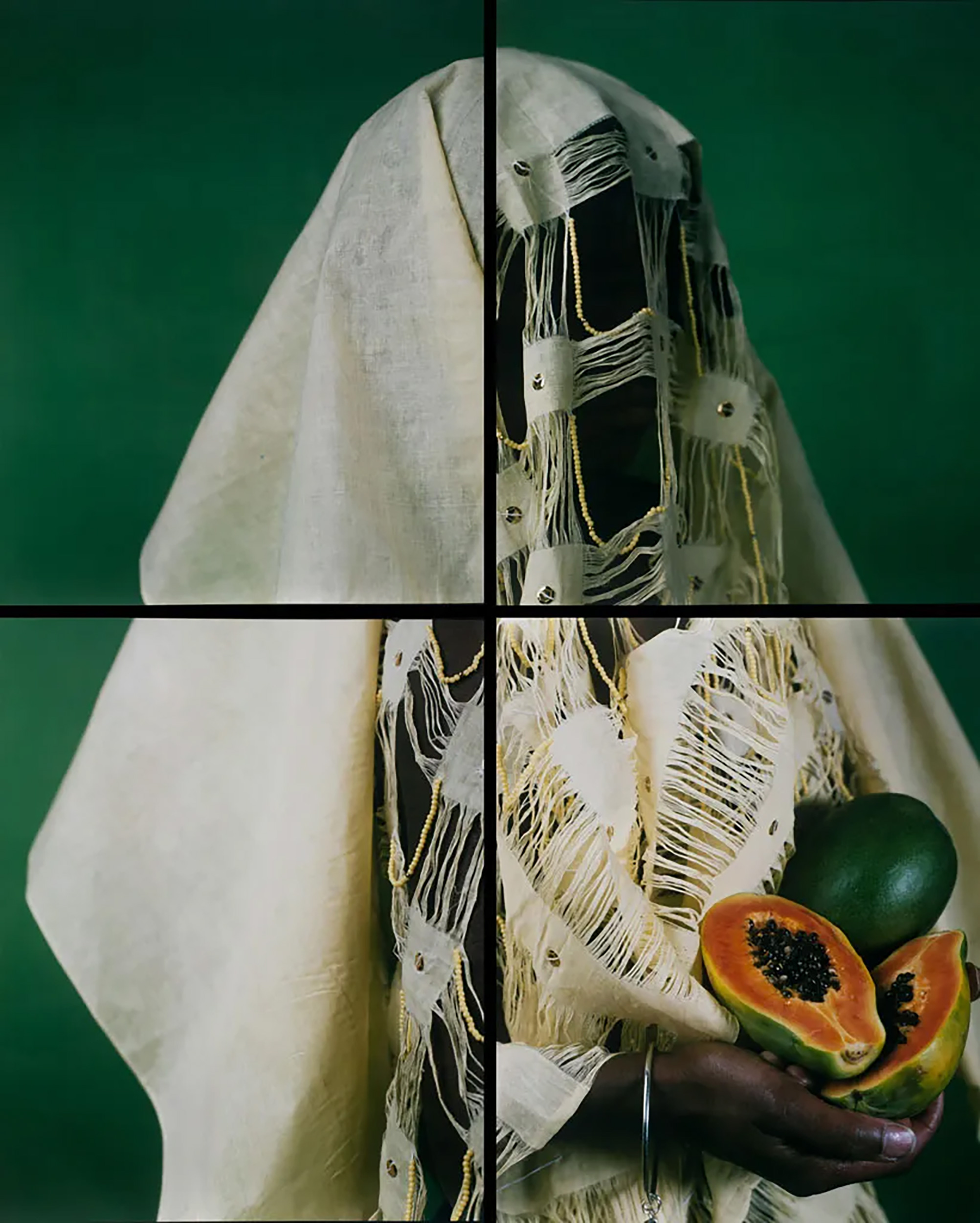
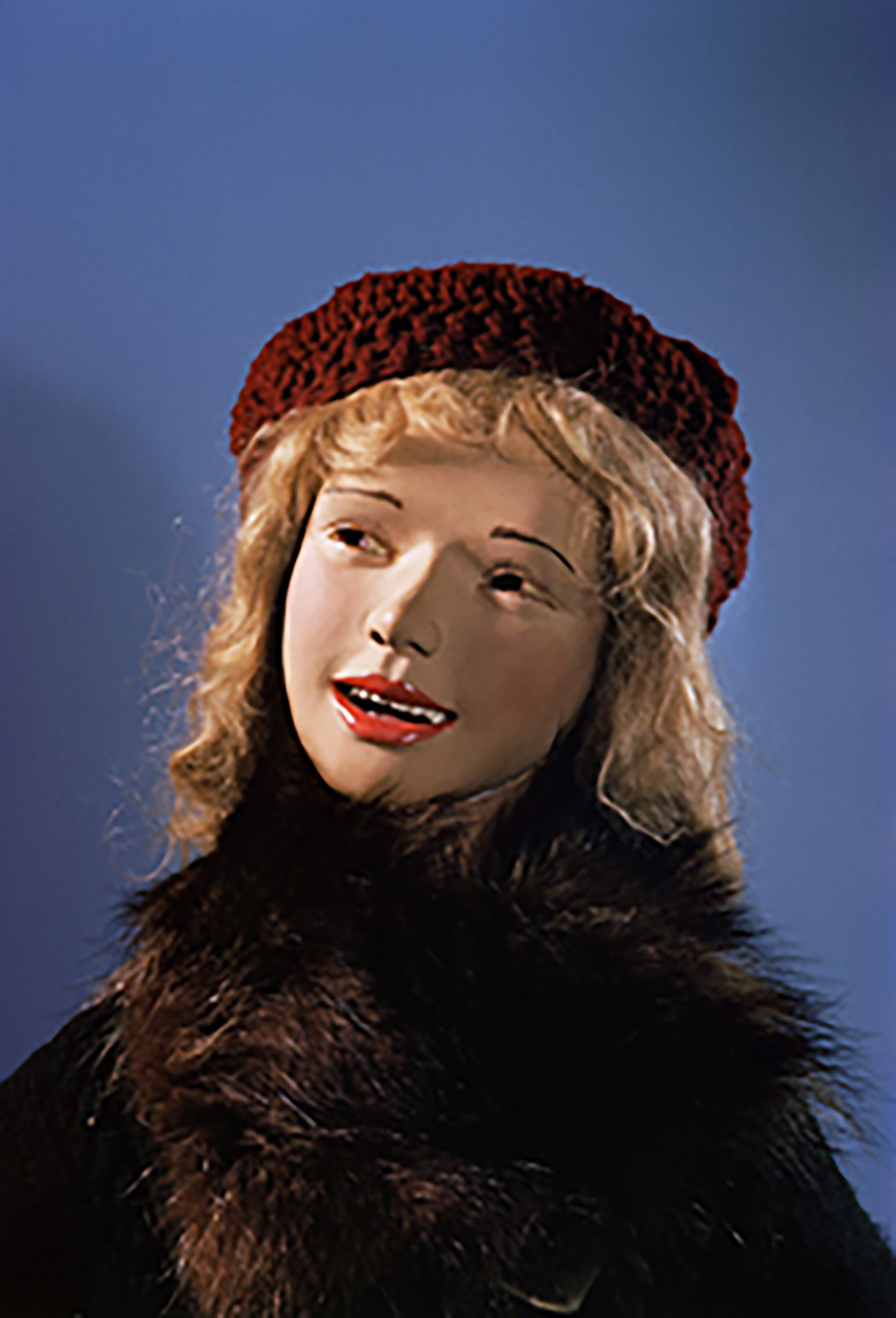
Several of the most lifelike representations are actually models of one kind or another- Arne Svenson’s series of forensic portraits is represented by a little boy who engages the viewer with startling veracity, and Tanya Marcuse’s wax maiden from a Viennese museum has the dewy freshness of a living figure. Helen Van Meene’s elegant young girl and Soo Kim’s contemplative young man have artificial qualities which more closely resemble mannequins. The obscured head is seen in Magdalena Campos-Pons’ Bim Bim Lady where the figure is covered by an African textile but her sensuality is revealed in the fruit she offers. Jeff Whestone’s hunter is camouflaged by a mask but his intense stare animates his persona.

Valérie Belin’s Untitled #06070503 hovers somewhere between life and artifice. Morton Bartlett and David Levinthal demonstrate that even an obviously artificial doll can be brought to life by style and lighting- much like a living model. Gary Schneider’s long exposures of faces render an eerily subjective and very painterly effect, which when seen next to Bill Jacobson’s portrait of a 17th century Dutch painting forms a telling dialogue. The pose of Rineke Dijkstra’s bullfighter is pure Manet- while the immediacy of the expression is pure photography. Finally, a blending of all of the above is seen in Nikki S. Lee’s palimpsest of street portraits which have been photographically blended into one image. While several of the works in the show are well known, several of them have never before been exhibited.

Exhibition @Julie Saul Gallery

Soo Kim
The Corners of the Sea
January 15-February 27, 2010
535 West 22 Street, NYC

The Julie Saul Gallery is pleased to announce our first solo exhibition of Los Angeles artist Soo Kim, which is also her premier exhibition on the East Coast. Kim’s artistic practice blends the making of photographs with the critical interpretation of images on a broader level. Recent bodies of work employ the techniques of cutting and layering prints, introducing areas of absence or disruption to address the issues of photographic transparency and the immediate consumption of images. Kim believes that the lengthy process required to create her photographs infuses them with a “slowness” that finds its counterpart in the amount of time it takes the viewer to read them.

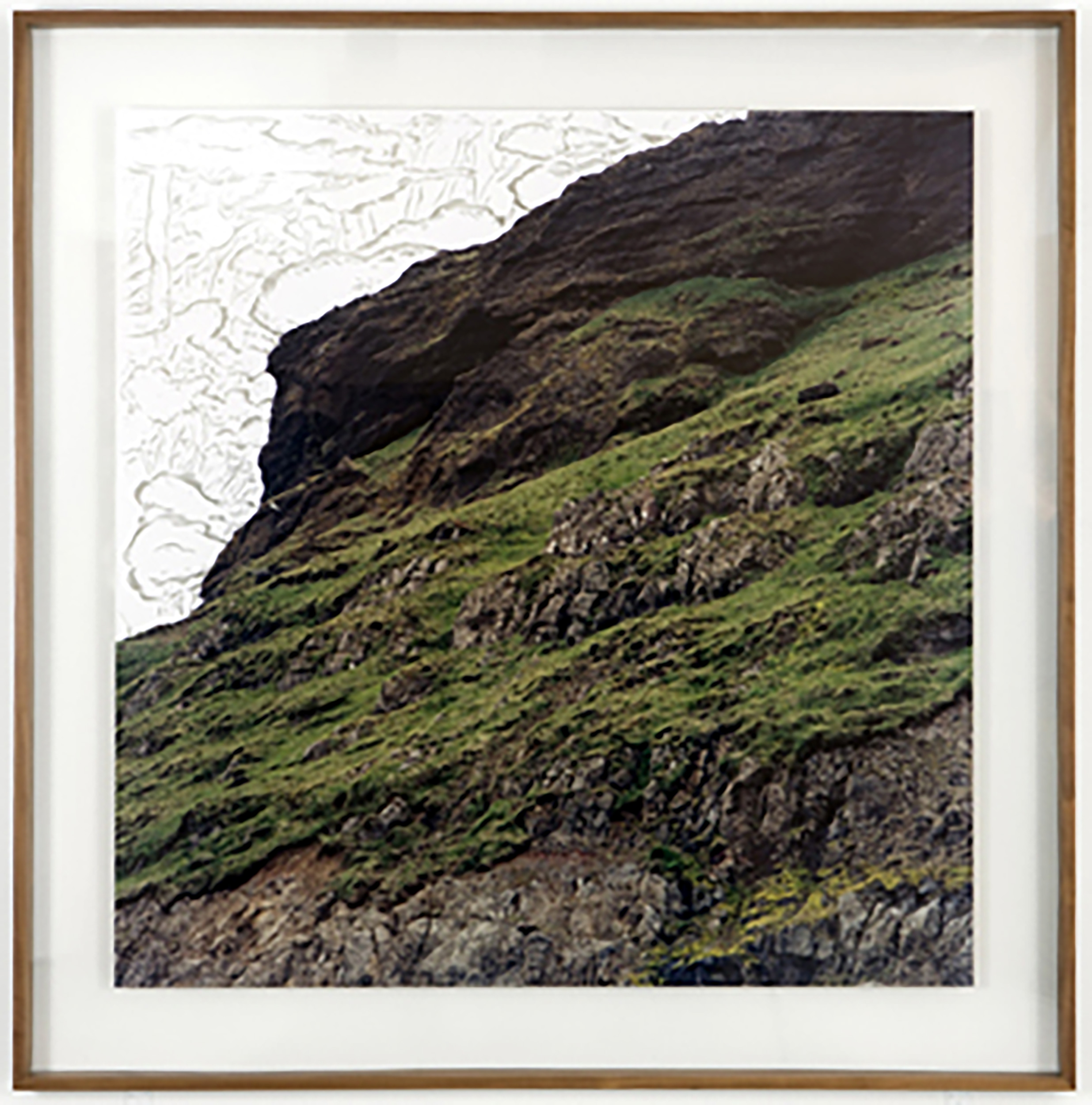
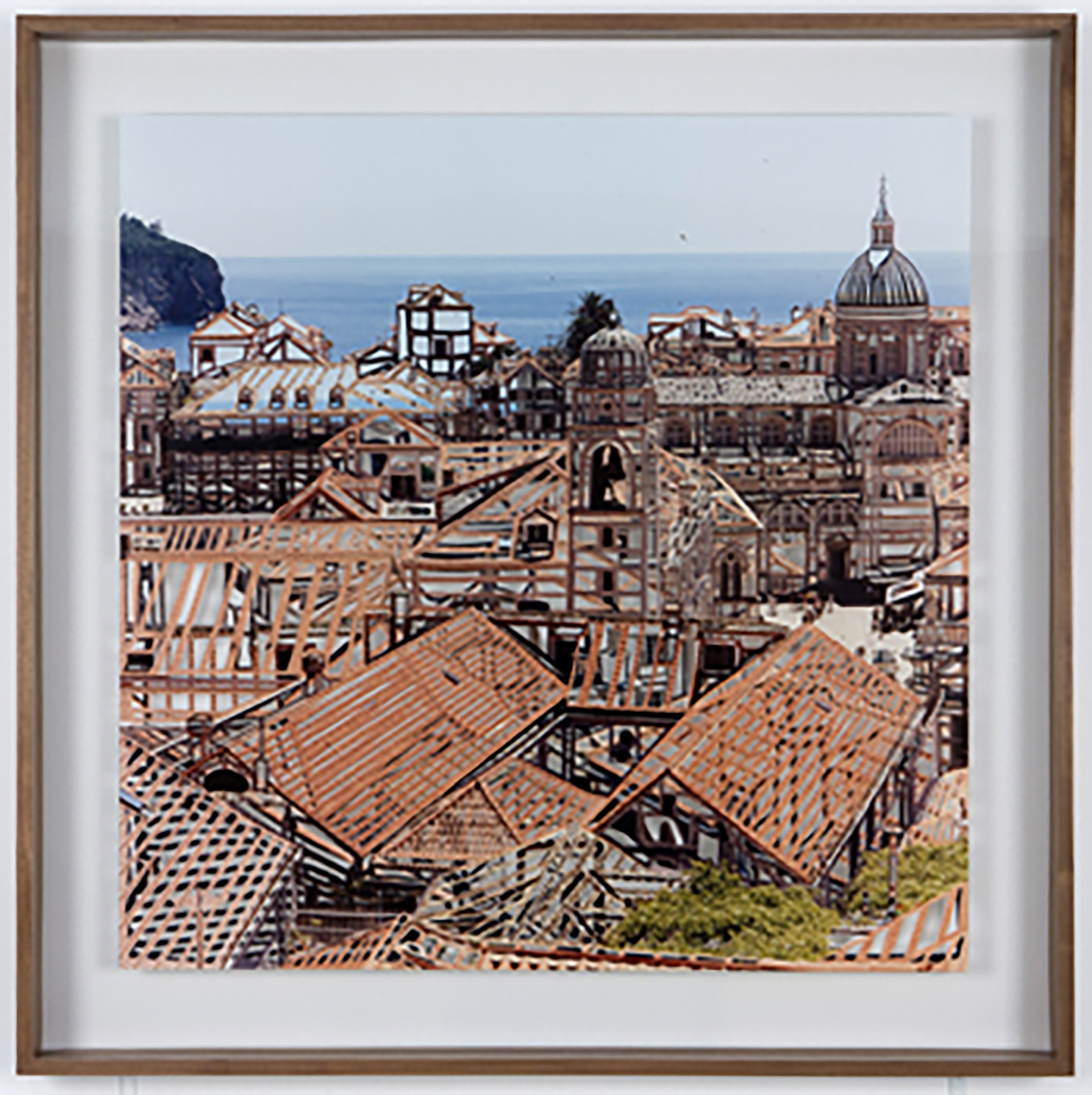
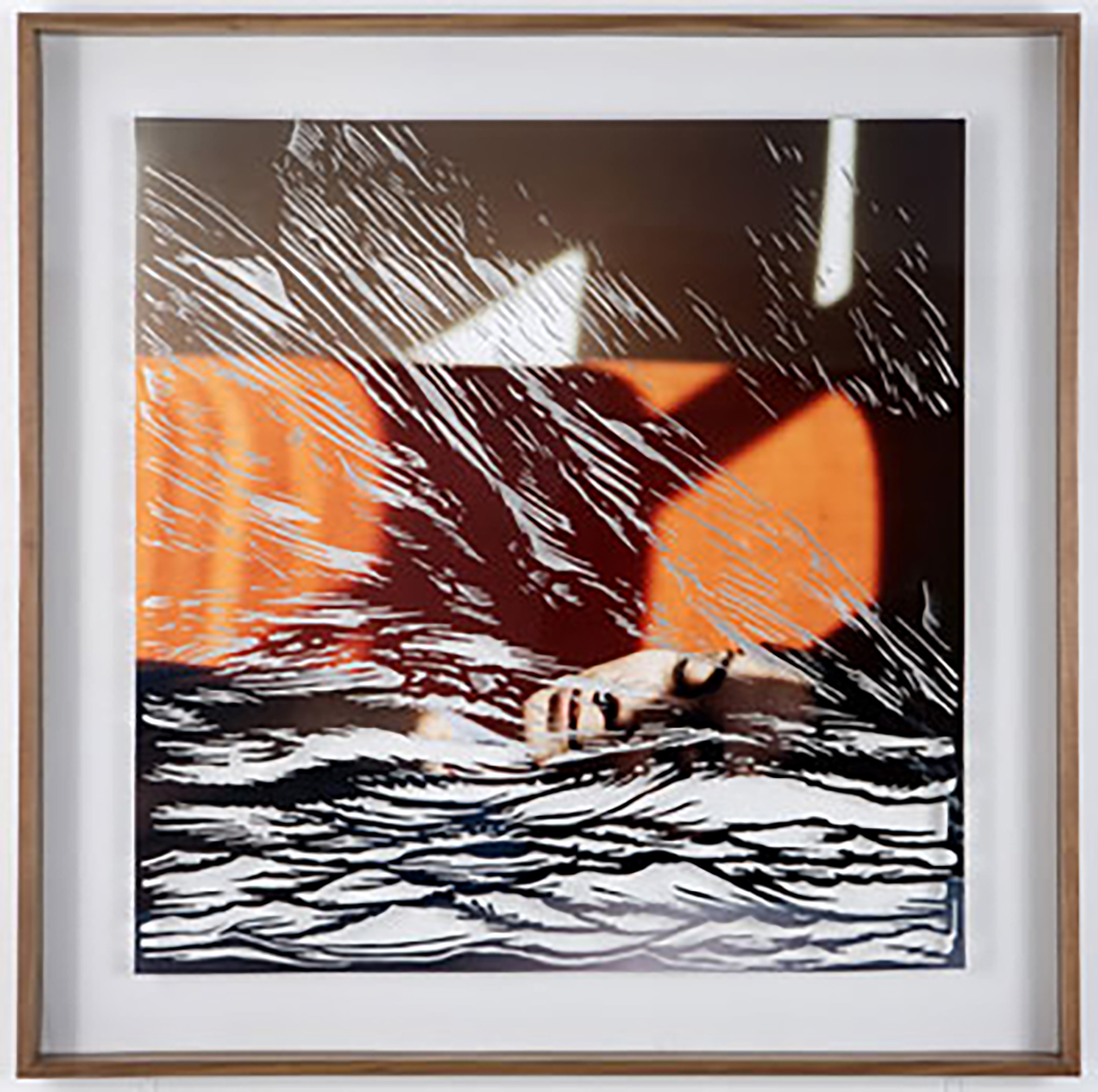
Her new body of work, The Corners of the Sea, combines photographic portraits and landscapes to consider different degrees of stillness and action that can occupy an image. The images are each cut and therefore unique and are presented sandwiched between plexiglass and floating slightly away from the wall. The portraits are photographed to convey a sense of intimacy, quiet, and stillness. Cut into the portraits are ‘actions’ taken from comic books – in the images of the woman, various types of water falling or filling in take up the space of the photograph. Urban landscapes of Reykjavik, Iceland, and Dubrovnik, Croatia are photographed to describe two different cities and ways of looking- one from a stationary position, while the other is taken by traveling along the wall that circumnavigates the city. Four images of the natural world record the slowness of nature, while the cuts in each photograph register a different speed. A diptych of a mountain is inscribed with a stylized forest and a landscape of a clearing in a forest in which the parts of the photograph where the sunlight hits the leaves and landscape have been cut out.

Soo Kim was in born South Korea in 1969 and moved to Los Angeles in 1980. After earning a bachelor of arts degree from the University of California, Riverside, she combined studies in critical writing, art and film at the California Institute of the Arts for her MFA. She has had three solo exhibitions with Sandroni Rey Gallery in Los Angeles and will be one of three artists including Catherine Opie and Jeff Chien Hsing Liao (who also shows with this gallery) in a show on urban panoramas opening at the J. Paul Getty Museum in February 2010. She has participated in group shows at Susan Hobbs Gallery in Toronto, Vassar College, the Yerba Buena Center for the Arts, the North Carolina Museum of Art and many others. Her work is featured in the collections of the Los Angeles County Museum of Art, the Broad Foundation, the Ovitz Collection. For full information on biography and bibliography please consult our website.

Exhibition @Julie Saul Gallery

Maira Kalman
Further Illuminations
March 4- May 1, 2010
Opening reception for the artist, Thursday, March 4, 6-8pm
Booksigning, Saturday, April 24th, 4-6 pm for Various Illuminations (of a Crazy World)
535 West 22 Street, NYC

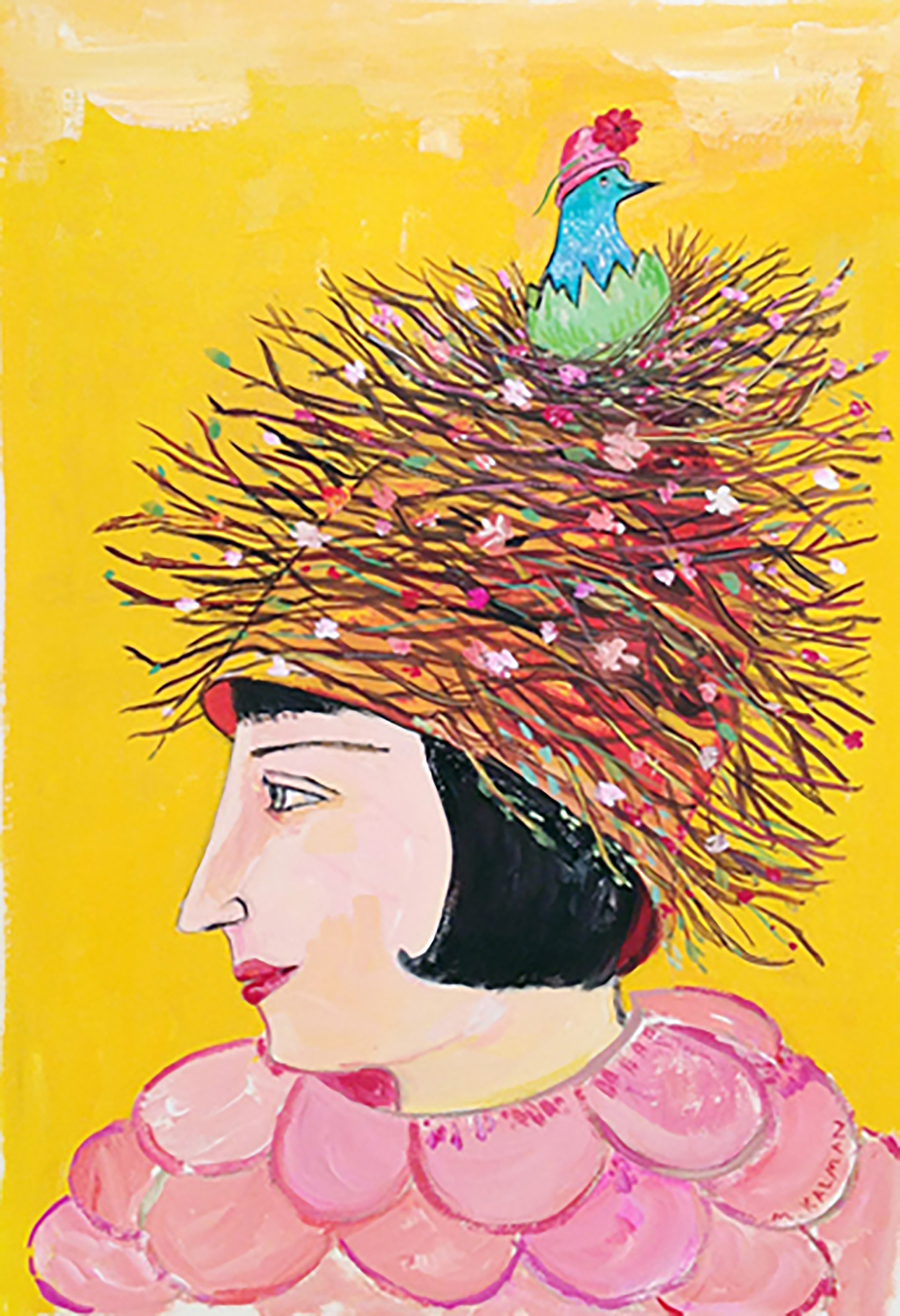
The Julie Saul Gallery is pleased to announce our fourth solo exhibition with Maira Kalman. This exhibition is comprised of over fifty gouache paintings created since 2005, mainly on assignment for various magazines and publications including Departures, The New York Times Magazine, Gourmet, Time, Travel and Leisure, The New Yorker and the recent New York Times blog And the Pursuit of Happiness. The work encompasses Kalman’s signature subjects: fashion (Galliano, Balmain), still lifes (soda bottles, oysters, flowers, crown jewels), great hotel interiors, and portraits (presidents, poets).

In general, Kalman’s style has become more painterly in recent years with the use of broad saturated color field backgrounds. She has also come to use photographs, both her own and others’, more frequently as the basis for her paintings, which is discussed at length in a recent issue of Aperture magazine.

This exhibition coincides with the major survey show of Kalman’s work currently at the Institute for Contemporary Art in Philadelphia through June 6, 2010. That show will travel to three additional venues including the Jewish Museum in New York where it will open in spring 2011. The ICA show has an accompanying catalog co-published by Prestel which will be released in April. We will have a book signing here on April 24th with Maira Kalman and Ingrid Schaffner, Chief Curator at the ICA as well as the editor and main author of the catalog. The public is encouraged to bring their own Kalman publications for signing at the book event.

Kalman has been involved in multiple aspects of art and design for almost forty years. She is self-taught and works in many media including embroidery, installation, photography, product, theater and textile design and performance. She has authored twelve children’s books with text and illustrations, has illustrated the “Elements of Style” and authored two blogs for the New York Times, “The Principles of Uncertainty” which was subsequently published as a book and was the subject of our last exhibition in 2007. She is perhaps best known for the 2001 cover of The New Yorker entitled Newyorkistan which she coauthored with Rick Meyerowitz.

The Pencil of Nature
Amy Adler, Alice Attie, Zeke Berman, Sebastiaan Bremer, Marco Breuer, Vija Celmins, Justin Francavilla, Sally Gall, David Goldes, Christine Hiebert, Royce Howes, Soo Kim, Maria Marinez-Cañas, Rob Matthews, Robert McCann, Vik Muniz, Nic Nicosia, Tokihiro Sato, Joseph Stashkevetch, Evelyn Rydz, Phil Whitman, Brian Wood
July 1-August 20, 2010
535 West 22 Street, NYC

The Pencil of Nature is a group exhibition exploring the dialogue between drawings and photographs. The title of this show is borrowed from the first illustrated book of commercial photographs which Fox Talbot published between 1844-1846. One of the inventors of photography, he was motivated by way of his lack of skill in sketching. However, in the context of this group show, “the pencil of nature” alludes to the symbiotic relationship between photography and drawing in current practice.

As far back as the 1840s, painters used photographic studies as an aid. Many painters such as Corot and Degas have made their own photographs for use as studies as well as independent works. However, in the 150 years that have passed since the invention of photography, and with digital technology monopolizing the field, there seems to be a look back at the play between works on paper and photography. Certainly Rauschenberg can be seen as the patron saint of this vision, particularly with his use of manipulative techniques which form a hybrid of photography, drawing and printmaking. By singling out individual artists with unique visions who are all in some way straddling the media, it is hoped that we will have a new awareness of this historic alliance.

This show brings together artists who are fully aware of the history and uses of reproduction and graphic representation and work with them in a variety of innovative ways. Several of the graphic artists employ highly realistic imagery that is thoroughly based in photography, as seen in the drawings of Joseph Stashkevetch and Rob Matthews and Vija Celmins. In a sense, they are using the photograph in much of the same way as the 19th century painters. But today, with photographs readily accepted as an independent and valued medium there must be other reasons for these choices. In the case of Amy Adler, the artist mediates between mechanical and graphic reproduction in a theoretical way. Matthews makes subtle changes in the photographic imagery. In all cases, the carrying out of a detailed representation of a photograph, whether in a minute or grand scale, meditates on the abstract qualities of any depiction. Not surprisingly, most of these graphic works are in black and white, adding another level of abstraction.

Alice AttieBrian WoodSebastiaan Bremer and Royce Howes actually combine media together into an integrated image using the photography as the matrix. Because the photograph represents objects in the world, the presence of sculpture is always implied and becomes the third medium in the dialogue. In Vik Muniz’s “For the Good Times” he uses the literal and photographic representation of rubber tubing to create a linear drawing. David Goldes recreates a drawing by Picasso in three dimensions using wire netting and then compresses it back into two dimensions by photographing it. Zeke Berman has historically woven together drawing and sculptural renderings recorded photographically, while Nic Nicosia illustrates the pictorial space as “an arena in which to act” through photographically depicting himself making a large action drawing. Abstraction as found in nature and in the materials of photography is explored photographically by Robert McCann and Marco Breuer, while Christine Hiebert suggests the transparency of film by sweeping a brayer across her gestural drawings.

Exhibition @Julie Saul Gallery

Maira Kalman
37 Paintings
May 10-June 23, 2012
535 West 22 Street, NYC

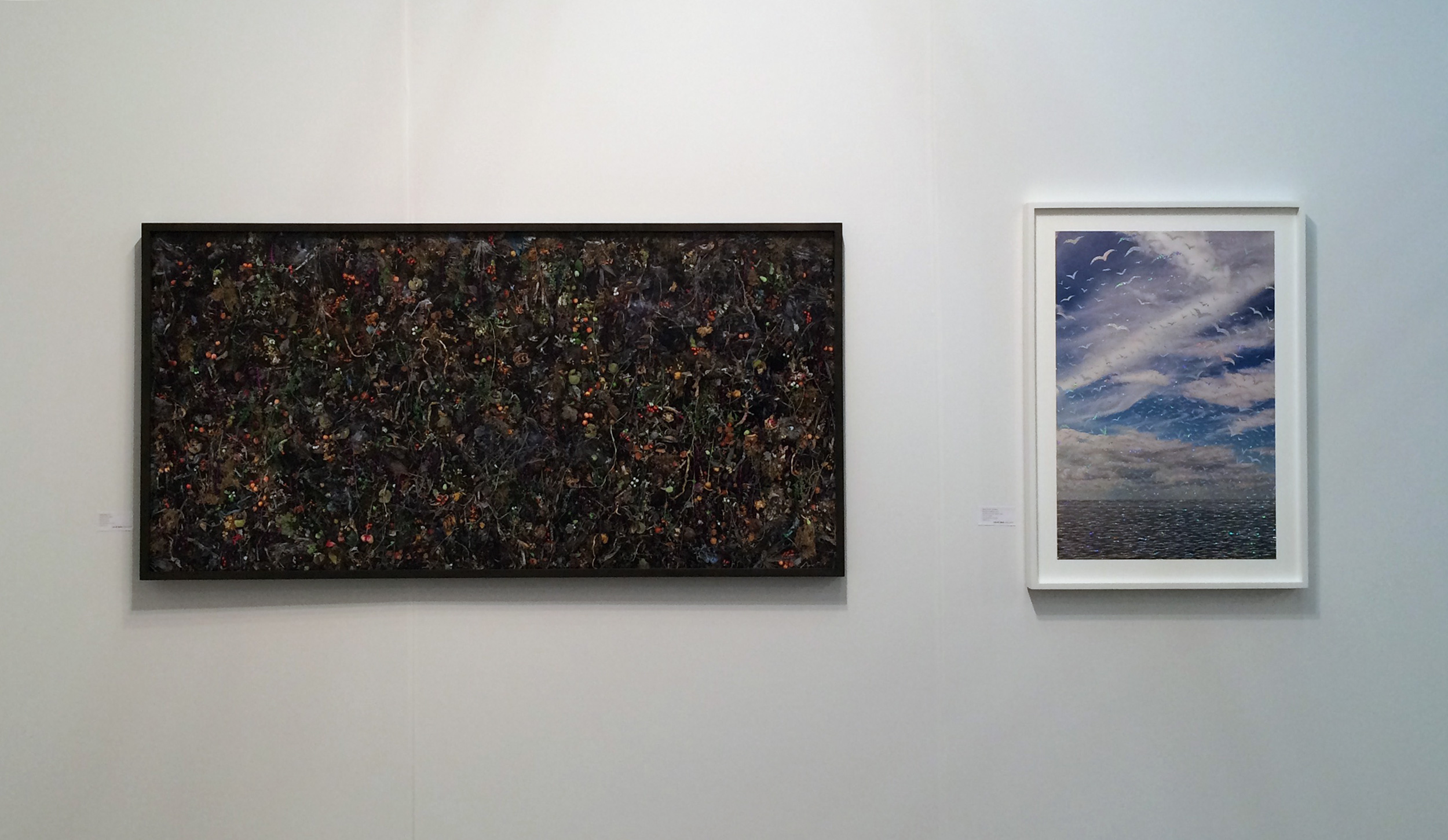
We are proud to announce our fifth solo exhibition with the painter, illustrator and author Maira Kalman. Kalman is known for her numerous books, as well as magazine work for The New YorkerThe New York Times and other publications. Her set designs for Mark Morris Dance Group include Four Saints in Three Acts by Gertrude Stein/Virgil Thompson and Rénard by Stravinsky. Since her last exhibition with the gallery in spring 2010, Kalman has produced a number of books including an illustrated edition of Michael Pollan’s Food Rules, a children’s biography Looking at Lincoln and collaborations with Daniel Handler (aka Lemony Snicket) on 13 Words and a young adult novel Why We Broke Up.

This exhibition will include a selection of paintings drawn from her books of the last two years, as well as a series of paintings executed while Kalman was a resident at the American Academy in Rome during the fall of 2011. In addition, we will exhibit two paintings, which appeared on the cover of The New Yorker in March 2012 and 2005 respectively. This is the first time Kalman has made her New Yorker covers available for sale and serves as an introduction to our next exhibition scheduled for fall 2013 which will be comprised entirely of magazine work.

In addition to the thirty-seven paintings, the show will include an embroidery Kalman began in Italy last fall. She will continue to develop this work in progress at the gallery throughout the course of the show.

Describing her inspiration and working methods, Kalman says: “in my wanderings there are moments of rapture. moments of despair. moments of celebration. it is a full time job just to sort it all out. you need to wear friendly shoes. and make frequent coffee stops.”

Kalman’s survey show curated and originated by the ICA in Philadelphia finalized its four city tour in New York last summer at the Jewish Museum. Signed copies of all of Kalman’s recent books will be available at the opening and while they last during the show.

Exhibition @Julie Saul Gallery

Nikolay Bakarev, Gerard Petrus Fieret, and Misoslav Tichy
February 2-March 17, 2012
535 West 22 Street, NYC

We are pleased to announce this exhibition that combines the work of three powerful and enigmatic photographers who came of age in postwar Europe. Each of them has created very personal and idiosyncratic bodies of work shaped by a particular political environment.

Nikolay Bakharev (b.1946 Altai Region of Russia) is the youngest, only living, and least well known to American audiences, of the group. His work was featured in the “Ostalgia” exhibition last summer at the New Museum which gathered art from Eastern European countries with a curious nostalgia for a painful past. As a critic in the Economist said: “All of this art is political, by the simple act of its creation.” In the case of Bakharev, he was an orphan (his parents died when he was four) who worked as a mechanic until he developed his profession as a self-trained photographer. He grew up in East Russia near Mongolia, and still lives in Siberia.

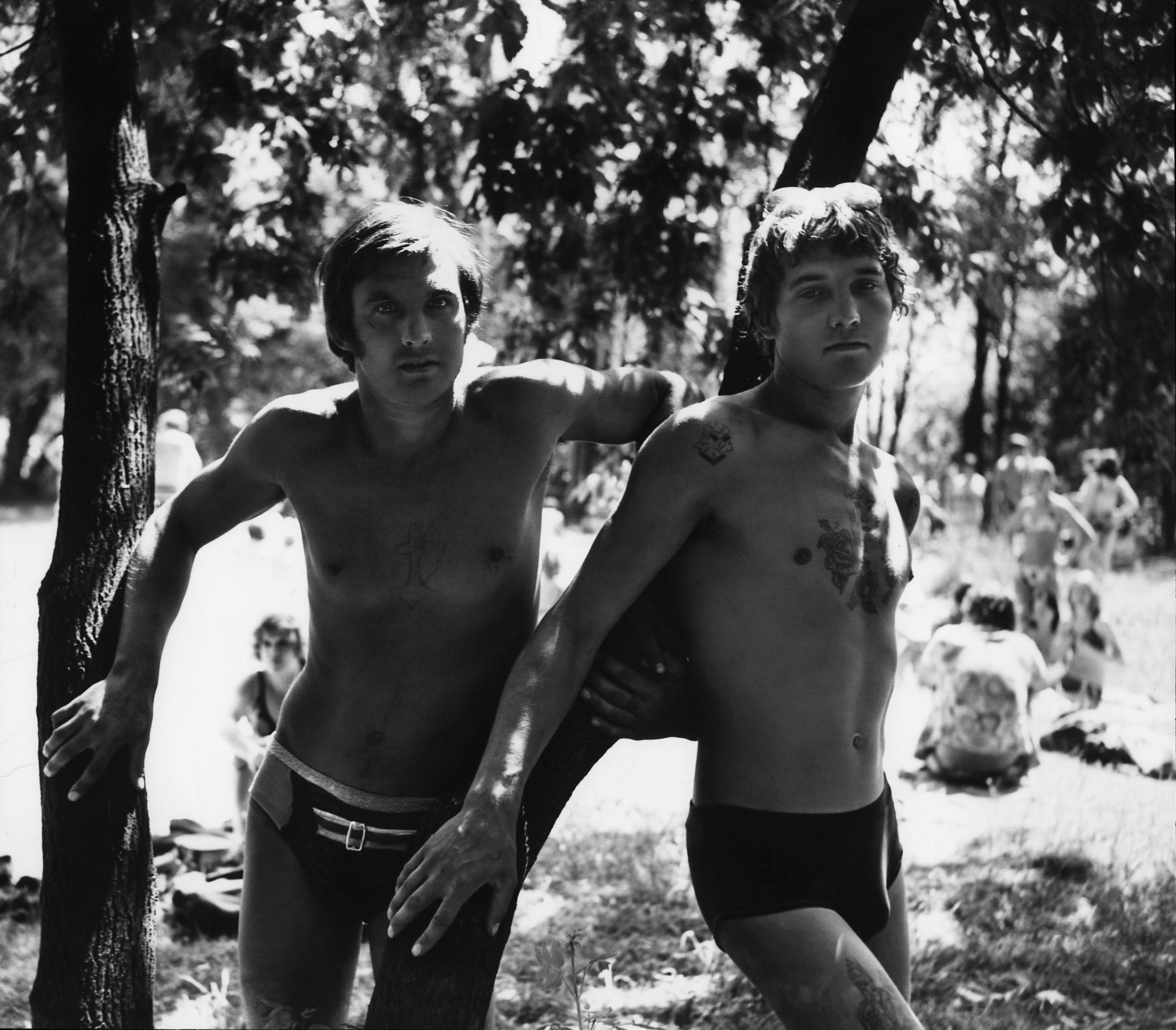
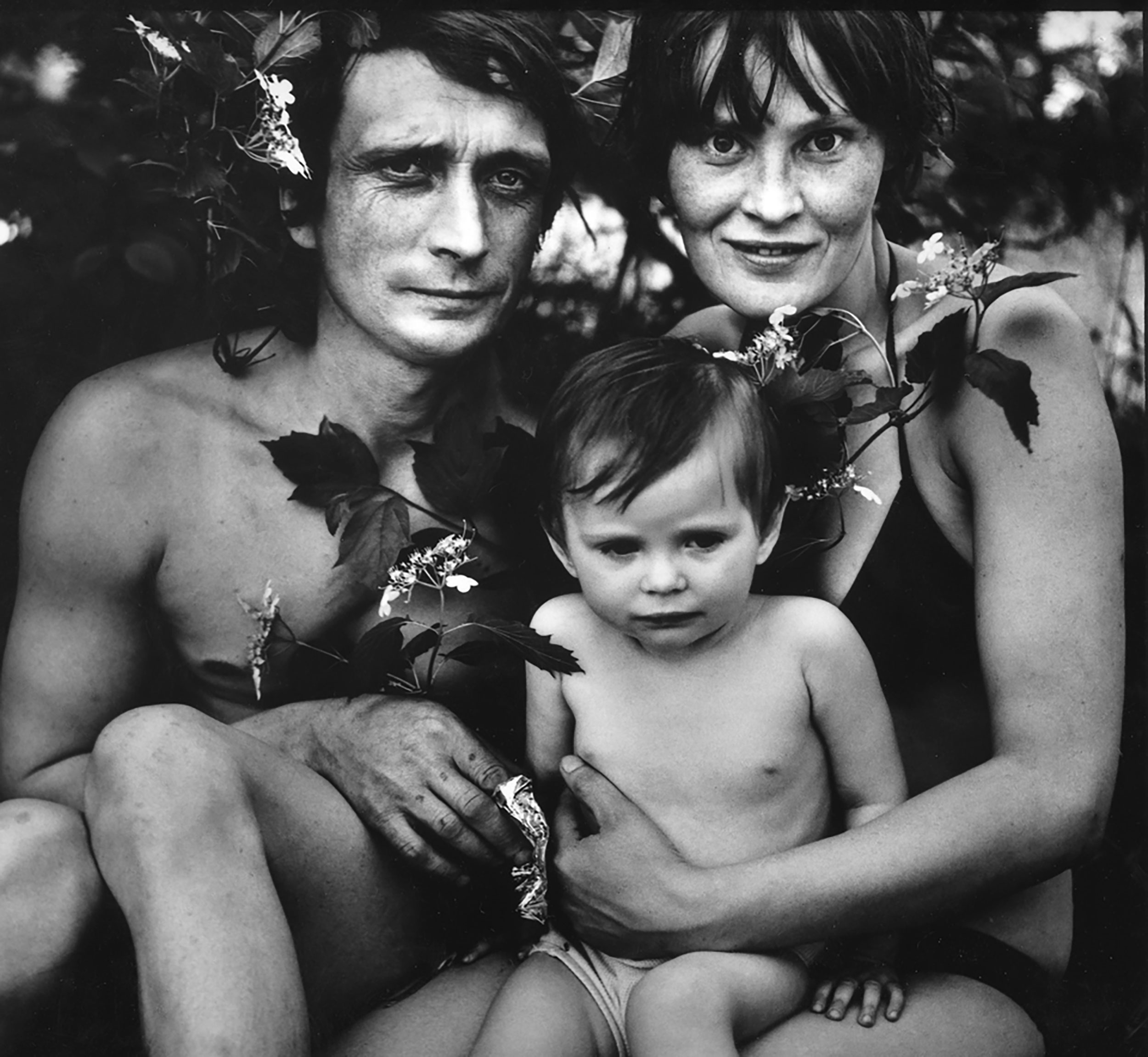
Bakharev’s models are the people among whom he lives and his depictions can be divided into two distinct bodies of work: private and public. The private images are generally women or couples photographed in their homes, and the public are couples and larger groups in swimsuits photographed in the woods. During the 60s and 70s it was illegal to photograph nudes so the swimmers provided a surrogate. Taking on the role of “beach photographer” enabled Bakharev to both earn a living and depict his subjects in a much more revealing way then was officially allowed.

Bakharev carefully arranges his subjects into compelling poses in which the physical contact is erotically charged, and at the same time display vulnerability and elegance. In this show we have selected works from the “public” realm, although the settings for these images are so constricted within their leafy environments that they almost feel like studio environments.

Gerard Petrus Fieret (Amsterdam 1924-2009) lived in the Netherlands and like Tichý, he was trained as a painter at the Academy and self taught as a photographer. However unlike Tich? and Bakharev he was active in a milieu with no societal restrictions. Fieret maintained a studio practice where he directly engaged with his sitters in a raucous confrontational and experimental mode. There is an open dialogue that is ambiguous and has a performance aspect. Unlike Bakharev’s conventionally printed black and white prints, Fieret worked in a completely inconsistent and fearless way with creased, strangely exposed prints made in a great range of sizes, with dashing signatures in felt tip pen and studio stamps contributing to their strong graphic presence and dada spirit. It is said that Fieret was paranoid and very difficult to work with, but that is not what comes through in his sensual and exuberant work.

Miroslav Tichý (Czech Republic 1926-2011), unlike Bakharev and Fieret, depicted women surreptitiously with eccentric hand made cameras. Only in recent years has his work been discovered and he has been regaled as a visionary with exhibitions at the Kunsthaus Zurich, the Pompidou and the ICP in New York. Following the communist takeover of the Czech republic, Tichý returned from Prague where he attended the Academy of Fine Arts to his small home town of Kyjov, and abandoned his training as a modern painter due to the restrictions placed by the regime who regarded him as a dissident. He began to fabricate cameras from cardboard and photographed women at the local public swimming pool, in parks and made thousands of photographs, up to eighty a day, and each unique. They accumulated in the shack where he lived and worked in squalor, with no running water. There he worked exclusively in photography from around 1972 until 1985 when he returned to painting. A decade later his neighbor and friend brought Tichý to the public eye. The voyeuristic aspect of the work can be unsettling, yet the necessary cropping and distorted perspectives give the prints a strong graphic quality and a great deal of sophistication.

Bakharev in Siberia, Tichý in Kyjov and Fieret in Amsterdam, each engaged obsessively with the subject of women, and each shaped by a strikingly different environment.

Concurrently on view through March 24th at Nailya Alexander Gallery “Underground: Russian Photography 1970-1989” includes work by Bakharev.

Exhibition @Julie Saul Gallery

second gallery
Carter Potter
Film Paintings
September 9-October 28, 2010
535 West 22 Street, NYC

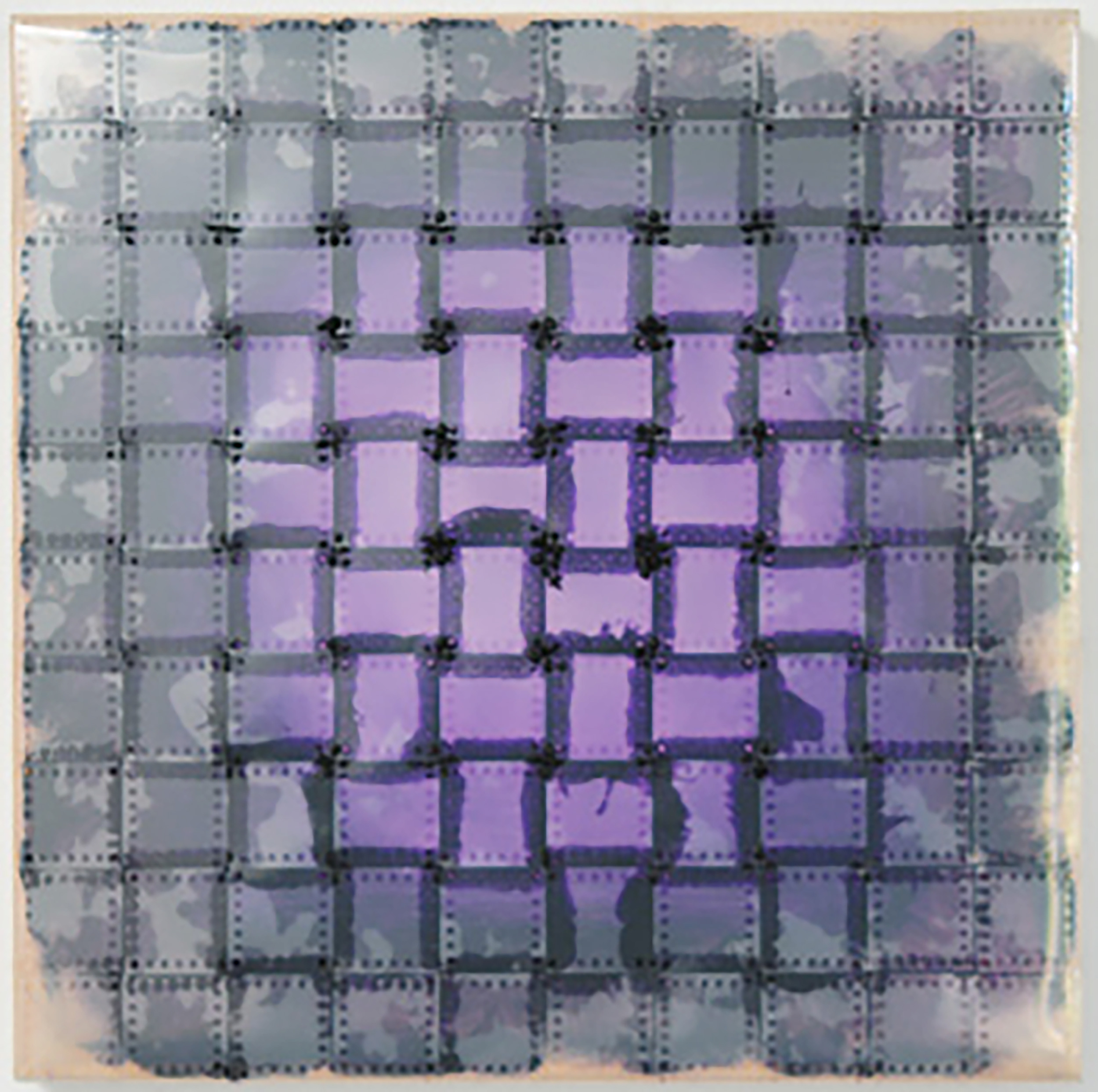
We are also pleased to present our third exhibition with Los Angeles based artist Carter Potter with a series of new works called Backpainting, our first since 2003. Appropriately titled, this exhibition embodies Potter’s shift “back to painting” as well as his efforts to “paint from the back.” As in previous projects, Potter references his hometown of Los Angeles in his choice of the film strip medium. However, Backpainting marks a stylistic reversal as Potter moves away from painting oils on top of film stills in his earliest work to painting on the backs of each still.

Potter was inspired to paint from the back when he closely examined the back sides of his older film paintings, noting the sculptural quality of the paint as it oozed from front to back. By reversing the location of the paint, Potter creates sculptural friezes with a Braille-like quality. Each work in the show is comprised of 10 horizontal strips (x-axis) and 10 vertical (y-axis). Potter basket-weaved these strips and painted each composition with a single color straight from the tube. He recycled some of the film stretchers, explaining why some appear to exhibit a differing color from the rest of the composition.

Potter’s works are poised in an equilibrium of ambiguity, as neither photographs nor paintings. The underlying cinematic structure in each of his pieces is evident as he combines and layers film strips to create empty landscapes, intersected by bright splashes of activity. Potter seeks to create a complex and mysterious narrative in his monochrome works, comparing his pieces to “contests with previous and present ‘Gods’ of monochrome paintings.”

Potter’s work is featured in the collections of the Santa Barbara Museum of Art, the Addison Gallery of American Art, and the Panza Collection in Lugano, Switzerland. Potter studied at the University of California Los Angeles where he received his BA and MFA.

Exhibition @Julie Saul Gallery

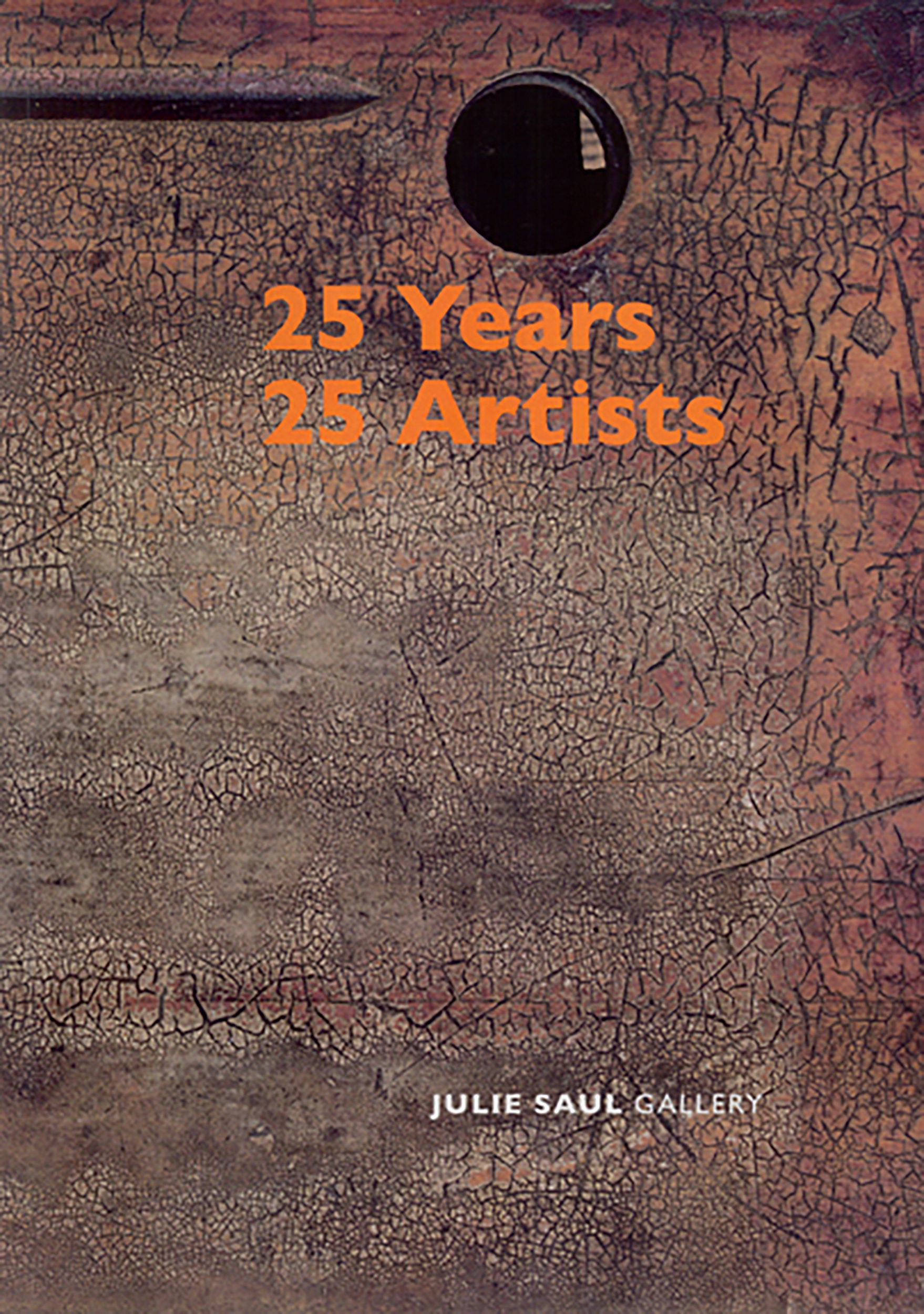
25 Years/25 Artists
Organized by Bonnie Yochelson
July 13-August 26, 2011
535 West 22 Street, NYC

25 Years/25 Artists
July 13-August 26, 2011
Opening celebration, Wednesday, July 13, 6-8 pm

The Julie Saul Gallery is pleased to announce an exhibition and catalogue celebrating 25 years as a public gallery in New York City. The show, “25 Years/25 Artists”, features one artist shown during each year of the gallery’s exhibition history, from 1986 through 2010.

About the show:
“25 Years/25 Artists” provides a glimpse into the evolving history and program of the Julie Saul Gallery, while celebrating the artists, collectors, critics, curators, dealers and friends who have made it all happen over the last quarter-century. The force behind the exhibition and accompanying catalogue is Saul’s friend and colleague, art historian Bonnie Yochelson. She has collaborated on the selection of works and written a biographical essay about Saul for the catalogue. The publication will also include an illustrated history of the twenty-five year exhibition program and plates of the works in the show.

In addition to the many solo shows highlighted in “25 Years/25 Artists”, the catalogue will feature illustrations from a number of group shows organized by colleagues including “A Visible Order” (1986) Paul Laster and Renee Riccardo, “Photomontage in Spain 1930/1980” (1987) Marta Gili, Director of the Jeu de Paume, “Foreign Ferns: Botanical Studies from Talbot to the Present” (1994) co-curated with Mia Fineman, Assistant Curator, Photography Department, MMA and “Contructing Images: Synapse between Photography and Sculpture”(1991) and “Richard Artschwager: Photo/Works 1945-1996” (1996) both curated by Ingrid Schaffner, Senior Curator at the Institute of Contemporary Art in Philadelphia.

Complete list of artists in the exhibition:
Andrew Bush, James Welling, Andrea Modica, Zeke Berman, Sally Gall, Robert Yarber, Brian Wood, Penelope Umbrico, Bill Jacobson, John O’Reilly, Tseng Kwong Chi, Rineke Dijkstra, Didier Massard, Luigi Ghirri, Orit Raff, Karin Apollonia Müller , Paul Shambroom, Maira Kalman, David Stephenson, Sarah Anne Johnson, Jeff Chien-Hsing Liao, Morton Bartlett, Jeff Whetstone, Julie Evans, Soo Kim

Exhibition @Julie Saul Gallery

Out of Nowhere: A Group Show of Winnipeg Artists
Curated by Sarah Anne Johnson and Meeka Walsh
December 15, 2011-January 28, 2012
535 West 22 Street, NYC

Out of Nowhere: a group show of Winnipeg artists
(selected by Sarah Anne Johnson and Meeka Walsh)
December 15, 2011-January 28, 2012


For the exhibition, “Out of Nowhere”, gallery artist Sarah Anne Johnson and Border Crossings editor Meeka Walsh have selected a group of ten artists from their native city of Winnipeg. The work of these Winnipeg born artists represents a range of media: painting, drawing, photography, video, and collage. Drawing on Winnipeg native Marshall McLuhan as source, these artists have clearly massaged their mediums. Most are relatively young and several were shown in the acclaimed “My Winnipeg,” an extensive exhibition that premiered at La maison rouge in Paris and recently opened at the Musée International des Arts Modestes in Sete, France. This show, however, marks the first US exhibition for most of them.

Winnipeg enjoys an almost mythical reputation as a creative center. The region has produced the internationally recognized Royal Art Lodge collective – a group of artists that included Marcel Dzama, Neil Farber, Michael Dumontier and Jon Pylypchuk, among others. The noted filmmaker and director of ten feature length and countless short films, Guy Maddin, is a Winnipegger, as are painters Tim Gardner and Karel Funk and photographer Laura Letinsky.

The most senior artist in our show is Neil Farber, one of the founders of the Royal Art Lodge who is well known for his distinctive style of densely populating worlds filled with a curious cast of characters. Some are human and others not, and in his works he combines a fulsome intensity with wry and particular humor. The video team of Lasha Mowchun and Rachel Schappert also produce work which is intense and their video provides a Surrealist’s lampoon of the artist’s role in society. With Ted Barker, they are the youngest participants in the show but Barker’s work, densely drawn and closely rendered in its exactitude shows a careful and precise representation of a history which is at once personal, historic and specific to place. Simon Hughes applies a mid century aesthetic to playful materials such as stickers and building blocks and adds a repertoire of Canadian iconography from ice flows and snow to the dazzling Aurora Borealis.

Erica Eyres is interested in the fragile and resilient, inventive human condition. Her drawings and videos examine, with uncanny psychic accuracy how we perceive others and how we portray ourselves but her scrutiny is off-set with a certain humane generosity. Lisa Wood’s painting and graphic works center on the subject of self-portraiture, rendered up-close and personal. Her gaze is unflinching.

There are two photographers in the exhibition, Steve Ackerman and Elaine Stocki. After having lived in New York Ackerman has now returned to Winnipeg, working on occasion with Guy Maddin and also producing his own work which often reflects the rough setting and indigent characters in his community. Elaine Stocki, who, like Sarah Johnson has an MFA from Yale lives in New York but identifies Winnipeg as home. Stocki theatrically challenges the expected limits of documentary photography and will be showing platinum-printed images of gymnasts who appear, like many of Stocki’s figures, to inhabit a space of their own time and making. They are unique and other-worldly. Paul Robles, using a sharp blade and a fine hand, renders porn magazine images into lacy fret-work moths and butterflies, mounting their small forms in boxes that would have Vladimir Nabokov applauding.

Located in the geographic center of the country, Winnipeg sits on a vast flood plain that was once prehistoric Lake Agassiz. The wind sweeps across the wide expanse which, in winter, becomes what noted poet Robert Kroetsch called “the white erasure of snow”. Artists are impelled each year to re-inscribe this clean sheet. It’s this sense of opportunity, necessity and vulnerability that draws Winnipeggers together to work collectively and at the same time to assert an iconoclastic individuality. The city is both isolated and central. Its inhabitants have a strong sense of themselves and this generative quality produces the art which is attracting attention wherever it is seen.

Presented in association with the Consulate General of Canada’s Upper North Side Canada in Conversation Series.

Exhibition @Julie Saul Gallery

Deborah Buck
What’s Inside
March 22-May 5, 2012
535 West 22 Street, NYC

Deborah Buck
What’s Inside
March 22-May 5, 2012

We are pleased to announce our first exhibition of recent acrylic paintings on paper by Deborah Buck. The exhibition corresponds with a survey show of her work at the Garrison Art Center (April 7 to May 6th, Inside Out) . An illustrated catalog with an essay by Lilly Wei is being published in conjunction with both shows. Copies are available to the press on request.

The title of our show refers to the centralized forms, which are the “subject” of her paintings; wrapped objects at the same time very anthropomorphic that are both inviting and slightly sinister. Her vocabulary of form is distinctive and grows out of organic surrealism. The push and pull between attraction and repulsion in Buck’s forms Wei suggests is “about decay, about past present and future states, a comic book Pop Surreal version of the theme of vanitas.” The combination of rich colors (burgundy and turquoise), deep tones and the occasional glitter also add to the dark but playful allure of her work.

Wei suggests “there is a remarkable continuity in Buck’s output, in her wrapped ripening, morphing shapes with their inner secrets.” She also suggests that the development of the image is almost sculptural with the drawing moving towards painting in a layering process from which the final form emerges.

Buck has been painting since her youth and after befriending Clyfford Still she was a resident of Skowhegan at the age of 18. She also has involved herself with design, collecting and selling antiques, and teaching (at SVA). Buck’s energy is barely contained by her paintings.

Exhibition @Julie Saul Gallery

Project gallery
Roz Chast
New Cartoons and a Hooked Rug
October 25, 2012-January 5, 2013
535 West 22 Street, NYC

We are pleased to announce our fourth exhibition with renowned cartoonist Roz Chast including a selection of recent cartoons from The New Yorker. We will also show the two September 24th covers of “The Cartoon Issue” entitled “Bring in the Clowns” (Republican and Democrat) ” in which she designed two separate covers for the Reds and the Blues and each subscriber received one or the other.

Chast has developed many craft enthusiasms over the years (origami, pysanka (Ukrainian painted) eggs, and recently she has begun making hooked rugs which feature her classic cast of characters. We will be showing her most recent 5’5” hooked rug on the theme of the four seasons as part of the show.

Chast has received innumerable honors and awards in her career and published over 50 notable books. She was most recently an Honoree in New York City’s first “NYC Literary Honors” in the category of humor. At the ceremony Mayor Bloomberg described Chast as always finding the perfect balance between the literary and the visual.

Exhibition @ Julie Saul Gallery

Maira Kalman
Girls Standing on Lawns and Other Projects
April 23-June 14, 2014
535 West 22 Street, NYC

Girls Standing on Lawns and Other Projects is our fifth solo exhibition with renowned artist and bestselling author Maira Kalman. Kalman based the paintings on a collection of vernacular
photographs in the collection of the Museum of Modern Art (many of which were donated from her personal collection). These have just been published as a monograph with New York Times bestselling writer Daniel Handler providing the text. Our show is scheduled to coincide with the release of the book, which is the first in a scheduled series edited by MoMA photography curator Sarah Meister.
Poetic and thought-provoking, Girls Standing on Lawns is a meditation on memories, childhood, nostalgia, home, family, and the act of seeing. The gorgeous visual material sets the stage for what Handler succinctly describes as “a photograph, a painting, a sentence, a pose.”

In addition to the Girls, we will exhibit a selection of paintings which illustrate the 2012 New Directions/Christine Burgin publication Robert Walser: Microscripts. Walser was a little known but major European writer of the early twentieth century who worked as a bank clerk, butler, an inventor’s assistant, and spent the last twenty-three years of his life confined to an institution. He wrote seven novels and more than a thousand stories. Much of his writing was done as “microscripts” virtually impossible to read with the naked eye but with enlargement yields amazing texts. The book is translated from German by Susan Bernofsky and text and images were appended by Kalman.

A small selection of independent gouache paintings will complete the selection for the show.

Both books will be available for sale at the gallery, and Kalman will be present at the opening to
dedicate them.

Exhibition @ Julie Saul Gallery

Project gallery
Carolyn Janssen
Small Baptism
July 10-August 16, 2013

We are pleased to announce a solo exhibition of digital photographs and a mural by Carolyn Janssen. The images which comprise Small Baptism are photographic and painterly hybrids built from elements gleaned from personal photographs which she applies and builds up like brushstrokes. The dense universes that Janssen creates are science fiction tableau populated by roaming packs of women (self portraits) who nourish and commandeer the landscape, engaging in narratives and mini-dramas in which they build, ritualize, climb and rest. Building on the tradition of the sublime, the landscapes are otherworldly, decaying, thriving and inviting at the same time. The colors are psychedelic, fuchsia and florescent greens, unabashedly digital high octane.

In Massive Failure which measures over 9 feet, rituals are enacted, barcodes float over a seductive yet threatening terrain, and an enigmatic smile presides over the scene. Three smaller works, including the title work of the show and Healing CNTR, are gleaned from her 2011 giant billboard project in the sculpture park of the North Carolina Museum of Art as part of their Park Pictures program. Janssen deploys the priestesses to explore domesticity and desire as they wade, dive and nest.

Janssen studied textile design for her undergraduate degree from the Rhode Island School of Design and photography for her MFA from the University of North Carolina in Chapel Hill in 2011. Massive Failure featured in our show will also be on exhibition at the Contemporary Art Museum in Raleigh this summer in a show called Currents.

Exhibition @ Julie Saul Gallery

ADAA: The Art Show
Booth D22

Nikolay Bakharev, Sarah Anne Johnson, Arne Svenson
March 5-March 9, 2014
Park Avenue Armory, NY

AIPAD: The Photography Show
Nikolay Bakharev, Harry Bowers, Sally Gall, Charles Johnston, Adam Magyar, Tanya Marcuse, Catherine Nelson, Gonzalo Puch, Arne Svenson
April 10-13, 2014

EXPO Chicago 2014
Nikolay Bakharev, Simon Hughes, Sarah Anne Johnson, Maira Kalman, Adam Magyar, Maria Martinez-Cañas, Chloe Sells, Arne Svenson
September 18-September 21, 2014

Miami Project 2014
Charles Johnstone, Shai Kremer, Alejandra Laviada, Adam Magyar, Rafael Domenech, Maria Martinez-Cañas, David Molander, Orit Raff, Arne Svenson, Brian Ulrich
December 2-December 7, 2014 
Miami, FL

Art Fair, Julie Saul Gallery

AIPAD The Photography Show
April 14-April 17, 2016

Art Fair, Julie Saul Gallery

Zeke Berman
Still Life Photographs: 1980’s
January 9-February 20, 2016
535 West 22 Street, NYC

Julie Saul Gallery is pleased to announce a survey exhibition of still life photographs from the 1980s by Zeke Berman. Berman’s formal yet playful images evoke both Surrealism and Constructivism. Combining everyday objects easily found in the Chinatown/ Lower East Side neighborhood where he lived at the time, we find teapots, rubber balls, canes, and newspapers (a witty reference to cubist collage.) Berman’s theatrical use of lighting, black velvet and ordinary out-of context elements present a mysterious theatrical place. The richness and precision of these illogical spaces is enhanced by the increasingly rare silver print medium.

Between 1985 and 1995 Julie Saul Gallery (previously Lieberman & Saul Gallery) mounted five shows of Berman’s distinctive, studio based, large format studies. Saul first saw Berman’s Still Life with Necker Cube in the early 1980s at the Museum of Modern Art. When Lieberman & Saul was formed in 1984, Berman was one of the first artists to be represented by the newly formed partnership. We are excited to present Berman’s work to a new audience and generation.

During the decade when these works were first shown, Berman had solo shows at the Art Institute of Chicago, The Cleveland Museum of Art, The Museum of Modern Art in Bern, and San Francisco Camera Work. He was represented in the first New Photography show at MoMA in 1985, and the Counterparts show at the Metropolitan Museum in 1982. He has received grants and fellowships from the Guggenheim Foundation, the National Endowment for the Arts, The New York Foundation for the Arts, and the MacDowell Colony.

Berman’s work is represented in virtually every important museum collection in the United States including The Museum of Modern Art, the Whitney Museum, the Brooklyn Museum and the Metropolitan Museum, New York, The Art Institute of Chicago, The Los Angeles County Museum, The Philadelphia Museum, The San Francisco Museum, the MFA, Houston, the Nelson Atkins , and the National Museum of American Art.

Thirty years later, Berman’s early still lifes remain as beautiful, fresh and evocative as they when they were first seen.

Exhibition @ Julie Saul Gallery

ADAA
Pavel Pepperstein
The Secret Drawings of Jacqueline Kennedy

March 1-March 5, 2017
Park Avenue Armory, NYC

AIPAD
Morton Bartlett, Andrea Grützner, Bill Jacobson, Sarah Anne Johnson,
Adam Magyar, Tanya Marcuse, Arne Svenson, Jeff Whetstone

March 29-April 2, 2017

Art Fair, Julie Saul Gallery

Collective Design
May 2-May 7, 2017

Project gallery
Forsyth Harmon
The Art of the Affair
January 7-March 11, 2017
535 West 22 Street, NYC

Julie Saul Gallery is pleased to present in our project gallery a selection of watercolor portraits by Forsyth Harmon from her latest publication, The Art of the Affair: An Illustrated History of Love, Sex and Artistic Influence.

Harmon’s series of watercolor portraits embodies the likenesses of some of the most influential creators of the twentieth century, radiating the love and heartbreak they enjoyed, endured, and ultimately poured into the great works that survived them. The selection of drawings weaves its way through the long chain of love, affections, and artistic influences among writers, musicians, and artists — from Frida Kahlo to Colette to Hemingway to Dali; from Coco Chanel to Stravinsky to Miles Davis to Orson Welles.

Exhibition @ Julie Saul Gallery

Collective Design
Richard Artschwager, Andrea Grützner, Bill Jacobson, Sarah Anne Johnson, Alejandra Laviada, Zachari Logan, Neeta Madahar,
Adam Magyar, Maria Martinez-Cañas, Chloe Sells, Christopher Russell
March 9-March 11, 2018

AIPAD
Sally Gall, Andrea Grützner, Bill Jacobson, Sarah Anne Johnson,
Adam Magyar, Chloe Sells, Arne Svenson, Jeff Whetstone

April 5-April 8, 2018
535 West 22 Street, NYC

Art Fair, Julie Saul Gallery

Sarah Anne Johnson
The Cave
November 8-December 15, 2018
535 West 22 Street, NYC

Sarah Anne Johnson has created an installation depicting a cave in which she will both enact a performance and alternatively place surrogate figures representing her grandmother and her doctor. The active installation has evolved from Johnson’s 2009 House on Fire series and is being shown in conjunction with the exhibition Everything is Connected: Art and Conspiracy, 1969-2016 at the MET Breuer, running through January 6th, 2019.

The gallery space has been transformed into an enormous cave structure with the performance taking place within it. In addition, Johnson has created a series of three small porcelain sculptures depicting her grandmother and the doctor that eerily revolve on their bases. Johnson has previously created several installations and performances relating to House of Fire throughout Canada.

This installation has evolved from Johnson’s House on Fire series, based on a personal family story. In the 1950s Johnson’s maternal grandmother Velma Orlikow sought treatment for postpartum depression and unwittingly took part in the experiments of CIA funded American Doctor Ewen Cameron at MacGill University. Patients were subjected to a series of mind-control experiments including shock and drug therapies and induced prolonged sleep. The effects were permanently disabling to her, and have had a multigenerational effect on the entire family. In 1979 a class action suit was initiated by a group of nine patients, and was settled out of court in 1988.

Sally Gall
Heavenly Creatures
January 3-March 2, 2019
535 West 22 Street, NYC

Julie Saul Gallery presents Heavenly Creatures, our thirteenth solo exhibition with Sally Gall during our thirty-two year representation of her work. The exhibition marks the publication of her third monograph, Heavenly Creatures. Both exhibition and book combine her most recent work Heavenly Creatures (2016-2018) with her related and previous series, Aerial (2014-2016.) A “meditation” by Eric Fischl accompanies the monograph that features 45 plates and will be released by Powerhouse in January 2019. Fischl notes “this book…weaves together two stories, both having to do with wind, air and colorful shapes, but to this she brings a new perspective: these stories can only be seen from below.”

Heavenly Creatures are kites, billowing in the air, as observed at festivals in Italy, Denmark, Washington and New Jersey. She records the skyward movement of cloth and paper flying machines, fragile objects connected to earth by tenuous strings – and like laundry, a universal human occupation. As in Aerial, these images are transformative, a celebration of color and suggestive abstract form. Both Aerial and Heavenly Creatures continue Sally Gall’s lifetime investigation of the sensual properties of the natural world; light, air, wind, and sky. Abstracted by composition, context, and color, these anthropomorphic photographs suggest sea creatures, constellations and other planetary forces, blooming flowers, microscopic amoebas.

Gall states “…I’m drawn to abstract painters that reference a landscape just by a few strokes of paint…” Indeed, the abstract forms against bright and atmospheric sky evoke Joan Miro, Wassily Kandinsky, Georgia O’Keefe and Howard Hodgkins, among others. Both Aerial and Heavenly Creatures embody Sally Gall’s search for poetry in the everyday, the miraculous in the ordinary, and as Fischl observes “capturing the elusive distractions of fleeting beauty.”

Sally Gall received a BFA in photography from the Rhode Island School of Design in 1978. She has taught and lectured internationally including at the School of Visual Arts, and the International Center of Photography, in New York. She has been the recipient of two Macdowell Colony Fellowships, a Rockefeller Foundation Residency, Bellagio Study Center, and a Director’s Guest at the Civitella Ranieri Foundation. Her two previous monographs are The Water’s Edge, Chronicle Books, 1995, and Subterranea, Umbrage Editions, 2003.

Exhibition @ Julie Saul Gallery
View artist page

Portraits of Colette
March 7-April 20, 2019
535 West 22 Street, NYC

The Julie Saul Gallery to present vintage portraits of the French author Colette in our Project Gallery by the great photojournalists of her era including Irving Penn, Edward Steichen, Henri Cartier-Bresson, Andre Kertesz, Louise Dahl-Wolfe, Cecil Beaton, Lee Miller and others.

The images range from the young Colette gazing coquettishly into the camera, to an elderly grande dame engaging the viewer with a sage glower. In one image, she sits in the garden at the Palais Royale with Jean Cocteau, where they both lived for many years, united by their long friendship and lifelong adoration of publicity.

The collection was assembled by the late Mary Lee Fletcher, an independent woman who lived her life in the fashion world as Executive Vice President of Christian Dior-New York. Her work frequently brought her to France, and Parisian bohemia in the years between the wars were of particular interest to her. She was undoubtedly drawn to Colette by her free spirit and literary accomplishments. The portraits of Colette collected over several decades were prominently displayed in her Beekman Place apartment.

Exhibition @ Julie Saul Gallery

DIY: Made In The Studio
Zeke Berman, Stephen Frailey, Maria Martinez-Cañas, Didier Massard, Gonzalo Puch, Ana Samoylova
July 6-August 17, 2018

Our summer group show presents new or previously un-exhibited work made in the studio. Assemblage, collage and construction techniques are used to create photographic works that all maintain a material and often sculptural quality.

Zeke Berman and Stephen Frailey both exhibited with Lieberman & Saul Gallery in the 1980s. Berman showed work from that period here in 2015 and now we are showing new color still life constructions that hark back to his use of simple materials and mysterious spaces. Frailey’s constructions have a pop sensibility in his choice of color and materials but his roots in the Pictures generation can also be seen. Both artists suggest a poetic narrative in their juxtaposition of materials. Gonzalo Puch makes photographic images that he then brings back to the studio, and through the use of photoshop transforms them into surrealistic landscapes. In earlier years he created elaborate studio constructions that were then photographed, he now uses digital techniques to achieve his vision.

For over 25 years Didier Massard has created elaborate studio constructions that evoke past civilizations, and imaginary and exotic landscapes. Although viewing his work today one would assume they were created digitally, Massard’s method is to conceive, plan and execute 3-D dioramas, and he often reuses elements as in theatrical sets.

In 2012 Maria Martinez-Cañas and Raphael Domenach collaborated on the Bunker series using a technique of passing appropriated photographs of German bunkers back and forth and adding graphic elements, and cutting and pasting additions and subtractions. We are presenting two of the unique remaining works of the original ten in the series.

Ana Samoylova trolls the internet to find images that represent certain themes linked to the environment, such as a rainy day. She then prints and combines them into cubistic constructions that are then re-photographed. As the youngest artist in this group she represents a conceptual approach that incorporates the ubiquity of images available on the web.

What unifies this diverse group of artists is the subjectivity of their vision- the selection, manipulation and ultimate crafting of the works. They are private, even intimate, glimpses into the artists’ thought and hand.

Exhibition @ Julie Saul Gallery

Zachari Logan
A Blooming Absence
April 25-June 15, 2019
535 West 22 Street, NYC

Zachari Logan who has shown here since 2016 will have his first solo show with the gallery opening Thursday, April 25th. A Blooming Absence incorporates works on paper ranging in scale from tiny, incredibly delicate blue pencil drawings on mylar, to a pastel on paper scroll that will span 33 Feet within the gallery. Last summer, Logan completed a series of collaborations with painter Ross Bleckner in his Hamptons studio. These were recently exhibited in Canada in the 2-person exhibition Shadow of the Sun: Ross Bleckner & Zachari Logan. Several works that exemplify their shared interest in the mystery and sensuality of nature will be included in the show.

The intricacy of Logan’s blue pencil drawings for which the artist is best known, increases dramatically in these new iterations, evoking the borders of medieval manuscripts, vignetting voids where text traditionally rests. Logan has been pursuing these drawings for a decade, weaving together body parts and botanical specimens in surprising and delightful combinations. Here, the human skeleton enters the story evoking a series of memento mori. This theme is picked up in the large scale pastel on black paper in which a silhouette of a falling (or hovering) man, likely a self portrait, filled with luscious foliage and flowers like a tattooed skin, a reference to the 18th Century paper-cuts of English artist, Mary Delany.

Logan’s work has been exhibited widely in his native Canada, as well as in the United States, across Europe and Asia. Logan has attended residencies in Paris, London, Vienna and in New York, both in 2015, at the International Studio and Curatorial Program (ISCP) and in 2016, in the Bronx at Wave Hill, where Shadow of the Sun: Ross Bleckner & Zachari Logan will be exhibited in 2020. His work will be featured this summer in Venice in the exhibition Friends, at Spazio Thetis, a collateral project of the Venice Biennale.